 El Grecoギリシャ, 1541–1614
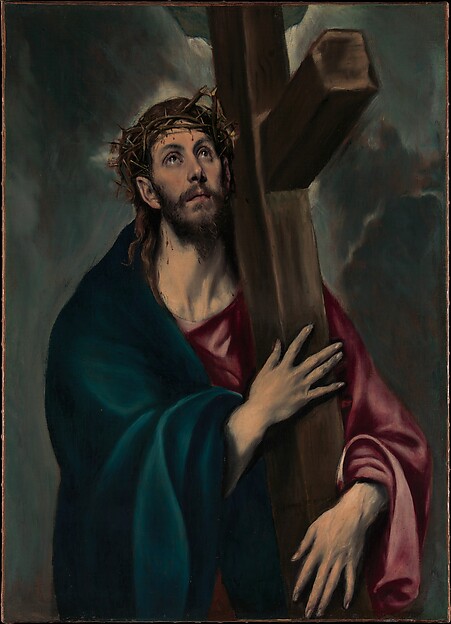
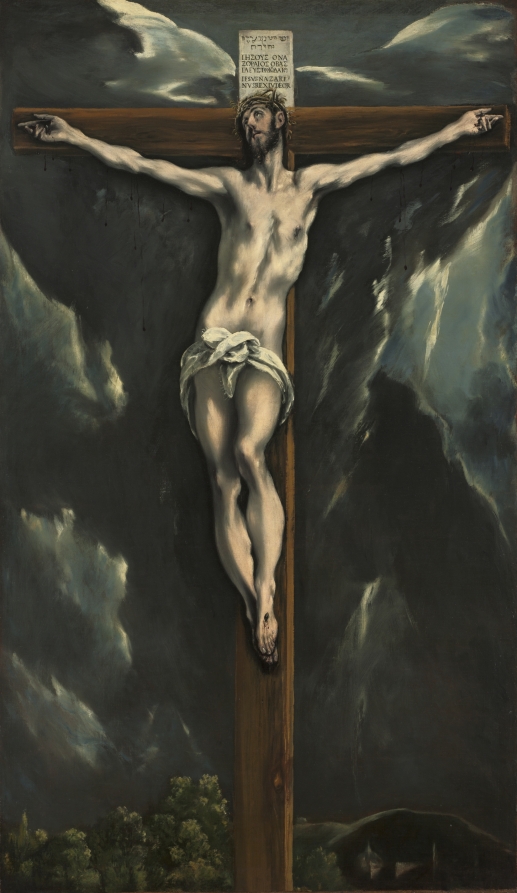
Christ on the Cross
お目にかかれますか?
はい、お客様をお迎えしています

一般公開されています。裏付けとなる出典は下に記しています。
- 確認
- この状態になった日
- 出典
- 美術館
この絵画について
El Greco (Spanish for "the Greek") was trained on his native island, Crete, as a painter of small-scale devotional images (icons). In the late 1560s he moved first to Venice, where he may have worked with Tintoretto (1518-1594), and then to Rome. Finally, he settled in Toledo, Spain. Tintoretto's influence is visible here in the colors and in the elongated figural proportions. The graphic depiction of blood, however, may reflect the Spanish interest in Christ's sufferings as a subject for meditation.
クリーブランド美術館
作品データ
- 収蔵番号
- 1952.222
その頃、El Grecoの人生では
生涯をすべて見る1597–1607
A decade of intense activity
The decade from 1597 to 1607 was a period of intense activity for El Greco: his workshop made pictorial and sculptural ensembles for religious institutions — three altars for the Chapel of San José in Toledo (1597–99), three paintings for the Colegio de Doña María de Aragón in Madrid (1596–1600), and the high altar, four lateral altars and St Ildefonso for the Hospital of Charity at Illescas (1603–05).
1604
Birth of his grandson Gabriel
In 1604 El Greco's son Jorge Manuel and Alfonsa de los Morales had a son, Gabriel; his godfather was Gregorio Angulo, governor of Toledo and a personal friend of the artist.
13 December 1604
Death of his brother Manoússos
El Greco's elder brother Manoússos, a wealthy merchant, spent the last years of his life (1603–04) in the painter's Toledo home and died on 13 December 1604.
1607–1608
The lawsuit with the hospital at Illescas
In 1607–08 El Greco was involved in a protracted legal dispute with the Hospital of Charity at Illescas over payment for his work, which included painting, sculpture and architecture. This and other disputes contributed to the economic difficulties of his last years.
1608
His last major commission: the Hospital of Saint John the Baptist
In 1608 El Greco received his last major commission, for the Hospital of Saint John the Baptist in Toledo.