 Pablo Picassoスペイン王国, 1881–1973
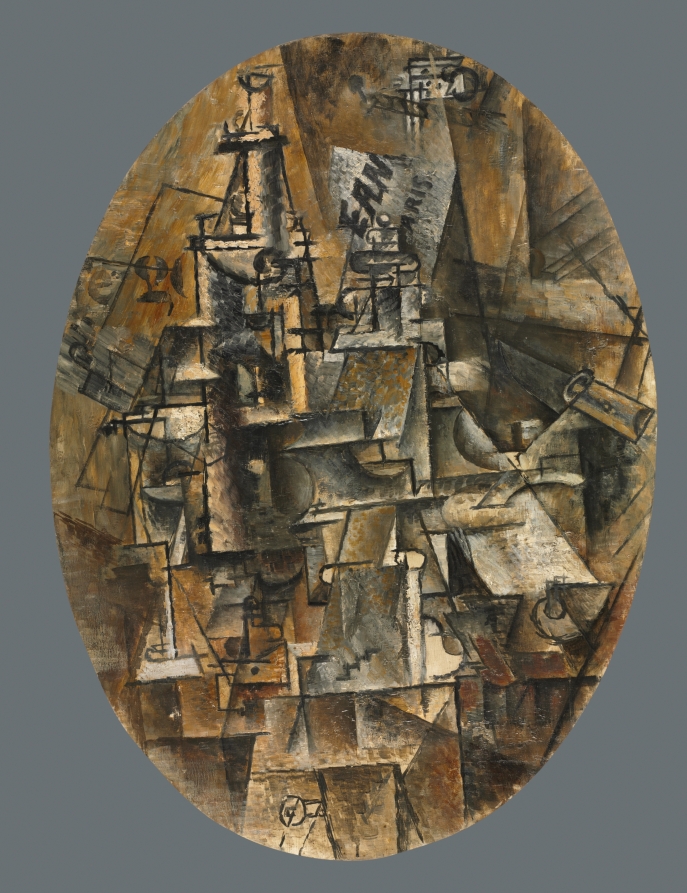
Bottle, Glass, Fork
お目にかかれますか?
ただいまはお迎えしていません

クリーブランド美術館
クリーブランド, アメリカ合衆国
コレクションに属していますが、現在は展示されていません。
- 確認
- この状態になった日
- 出典
- 美術館
この絵画について
Bottle, Glass, Fork (French: Bouteille, Verre, et Fourchette) is an oil on canvas painting by Pablo Picasso (1881–1973). It was painted in the spring of 1912, at the height of the development of Analytic Cubism. Bottle, Glass, Fork is one of the best representations of the point in Picasso's career when his Cubist painting reached almost full abstraction. The analytic phase of Cubism was an original art movement developed by Picasso and his contemporary Georges Braque (1882–1963) and lasted from 1908-1912. Like Bottle, Glass, Fork, the paintings of this movement are characterized by the limited use of color, and a complex, elegant composition of small, fragmented, tightly interwoven planes within an all-over composition of broader planes. While the figures in Bottle, Glass, Fork can be difficult to discern, the objects do emerge after careful study of the painting. The painting is displayed in the Cleveland Museum of Art.
美術館の言葉で
This still life depicts a variety of objects found on a café table: a bottle, glass, folded newspaper, and utensils. Intricate in its composition and subtle in palette, this painting exemplifies Analytic Cubism, an artistic style devised by Picasso and Georges Braque between 1908–12 characterized by the fragmentary appearance of multiple, simultaneous viewpoints and overlapping planes. Maintaining a connection to the real world, Picasso inserted letters and numbers with personal and political meanings. The “fe 20” could refer to the word “café” and a street address. “EAN” above [P] ARIS may allude to the newspaper L’Intransigeant founded in 1880 in Paris; but ultimately, the meaning of these fragments remains mysterious and known only to the artist.
クリーブランド美術館
作品データ
- 収蔵番号
- 1972.8
カタログ収録
出典
- クリーブランド美術館
- 画像: クリーブランド美術館 — © Estate of Pablo Picasso / Artists Rights Society (ARS), New York