Paul Kleeドイツ, 1879–1940
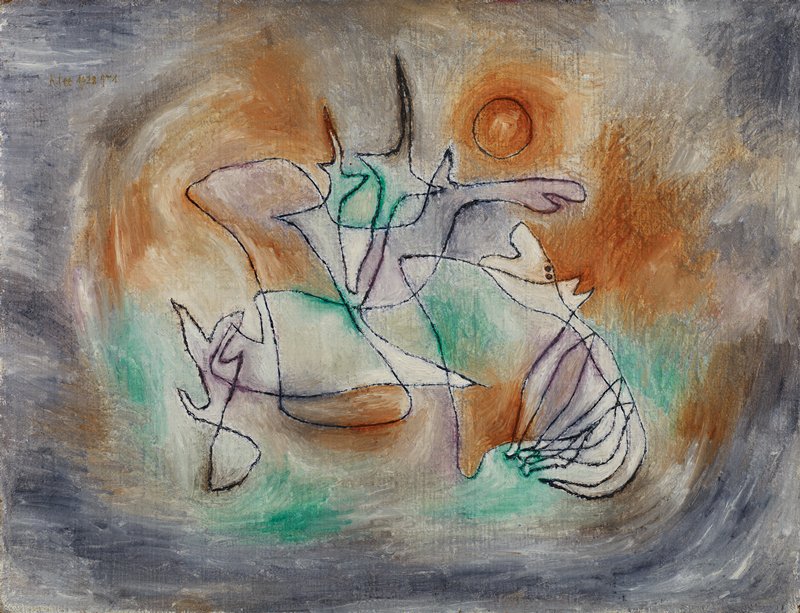
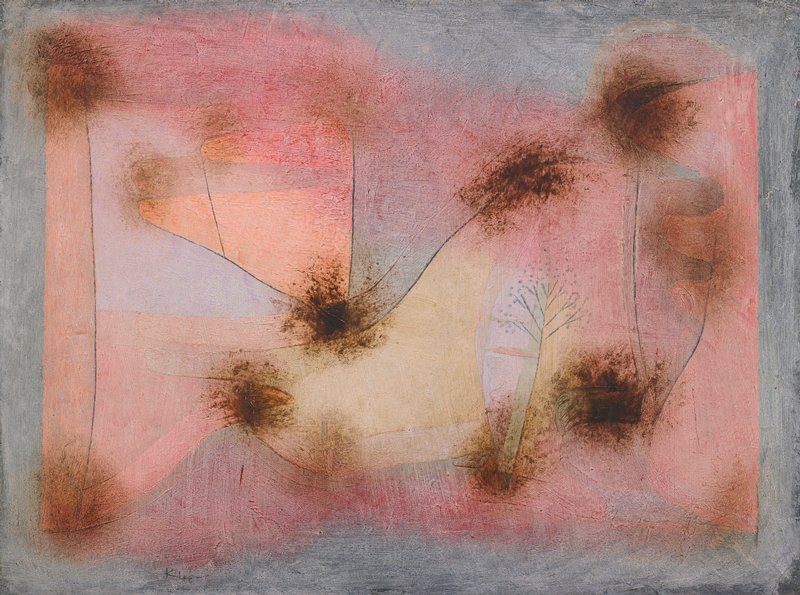
Bird Comedy
お目にかかれますか?
ただいまはお迎えしていません

シカゴ美術館
シカゴ, アメリカ合衆国
コレクションに属していますが、現在は展示されていません。
- 確認
- 昨日
- この状態になった日
- 2026年8月19日
- 出典
- 美術館自身の所蔵データ
作品データ
- 収蔵番号
- 1970.254
カタログ収録
出典
- シカゴ美術館: the museum's own open data · 5 日前に取得
- 画像: シカゴ美術館 — © the artist or rights holder
その頃、Paul Kleeの人生では
生涯をすべて見るMarch 1916
First exhibition of abstract watercolours at Walden’s
Herwarth Walden’s gallery held the first exhibition of Klee’s abstract watercolours, a success with the public. He gave the works new titles, marking his break with war themes, and Walden asked him for more.
5 March 1916
Called up, and the news of Franz Marc’s death
On 5 March 1916 Klee, who had been expecting mobilisation since 1914, was called up; the same day he learned that Franz Marc had been killed at the Battle of Verdun. From March to August he went through military training at Landshut.
February 1917
Second show at Walden’s: the first commercial success
Klee showed the watercolours of the past year; many works were sold, and critics called him the most important German artist since Marc’s death. The success was made possible by a changed market: collectors had appeared who were ready to buy modern art.
1919
A rejected candidacy for the Stuttgart Academy
Oskar Schlemmer and Willi Baumeister put Klee forward, unsuccessfully, for a teaching post at the Stuttgart Academy of Fine Arts. Some of those who opposed the appointment hinted at the artist’s Jewish origin.
1920
Retrospective at Goltz’s: over 300 works
In 1920 Hans Goltz showed Klee’s works at his Munich gallery — a retrospective of more than 300 works.
October 1920
Gropius invites Klee to teach at the Bauhaus
In October 1920, on behalf of the Bauhaus staff, its director Walter Gropius invited Klee to teach; from January 1921 to April 1931 he was a “form master” — first in the bookbinding workshop, then, together with Kandinsky, in the stained-glass and mural-painting workshops, and later he ran a painting class.