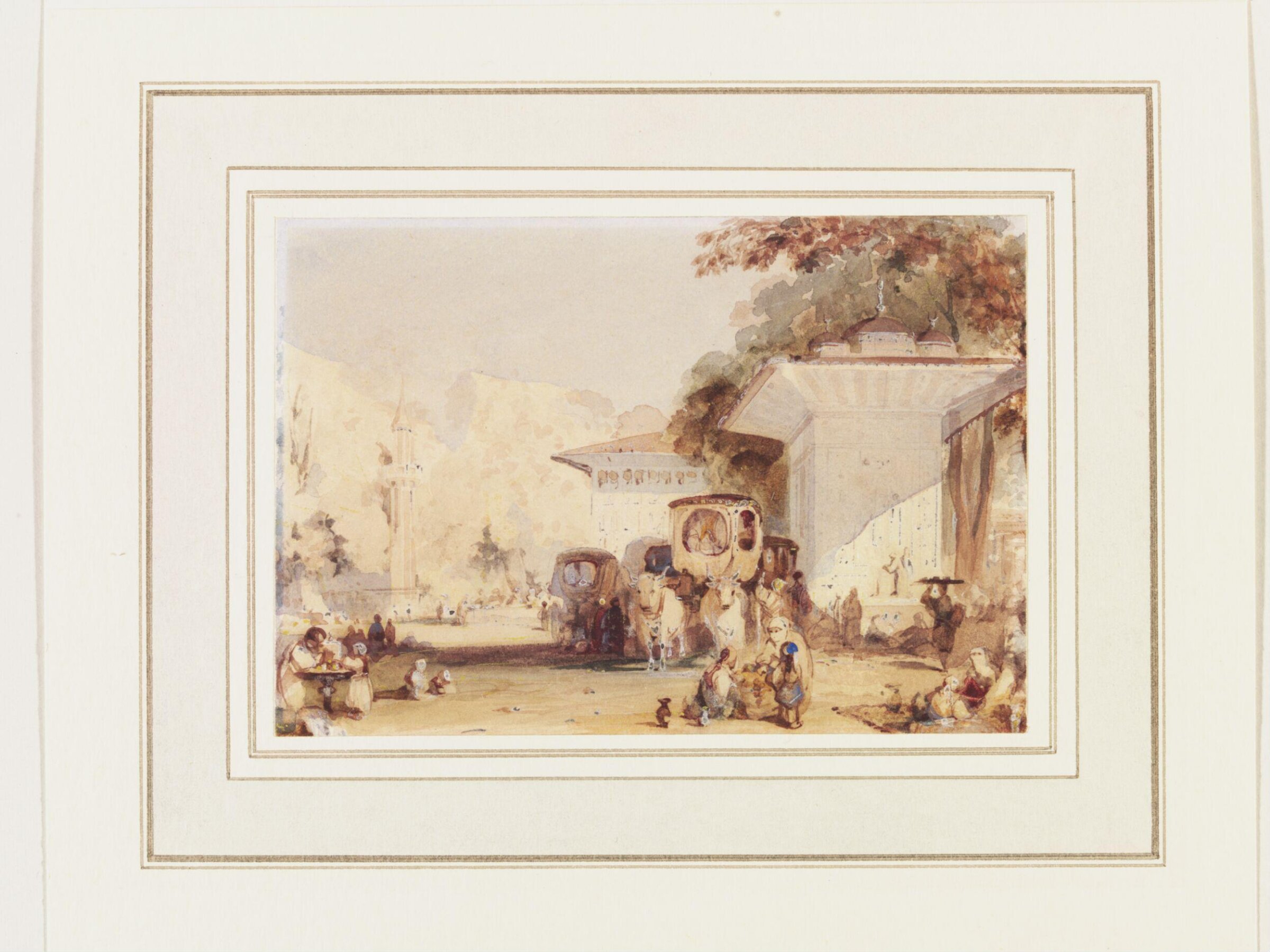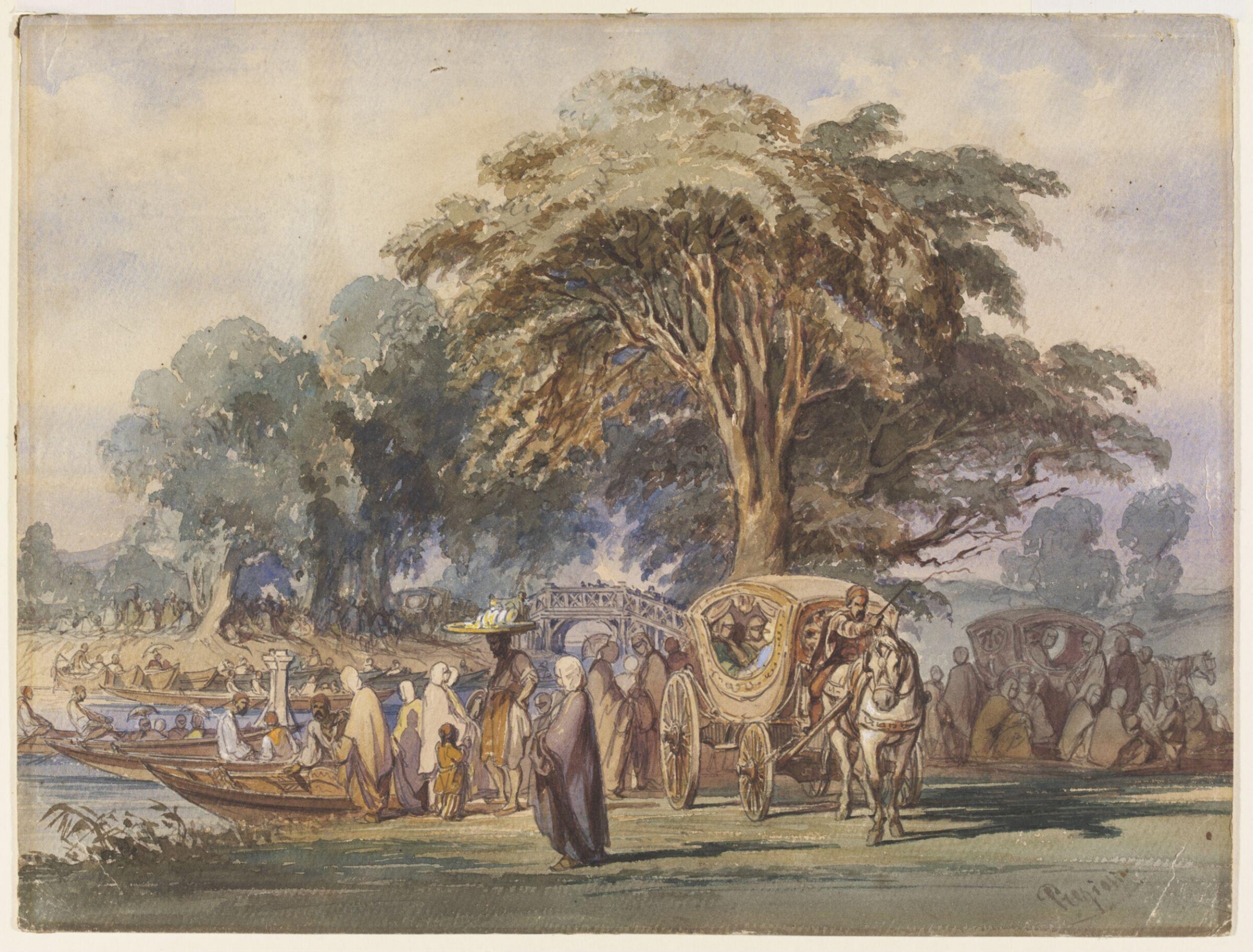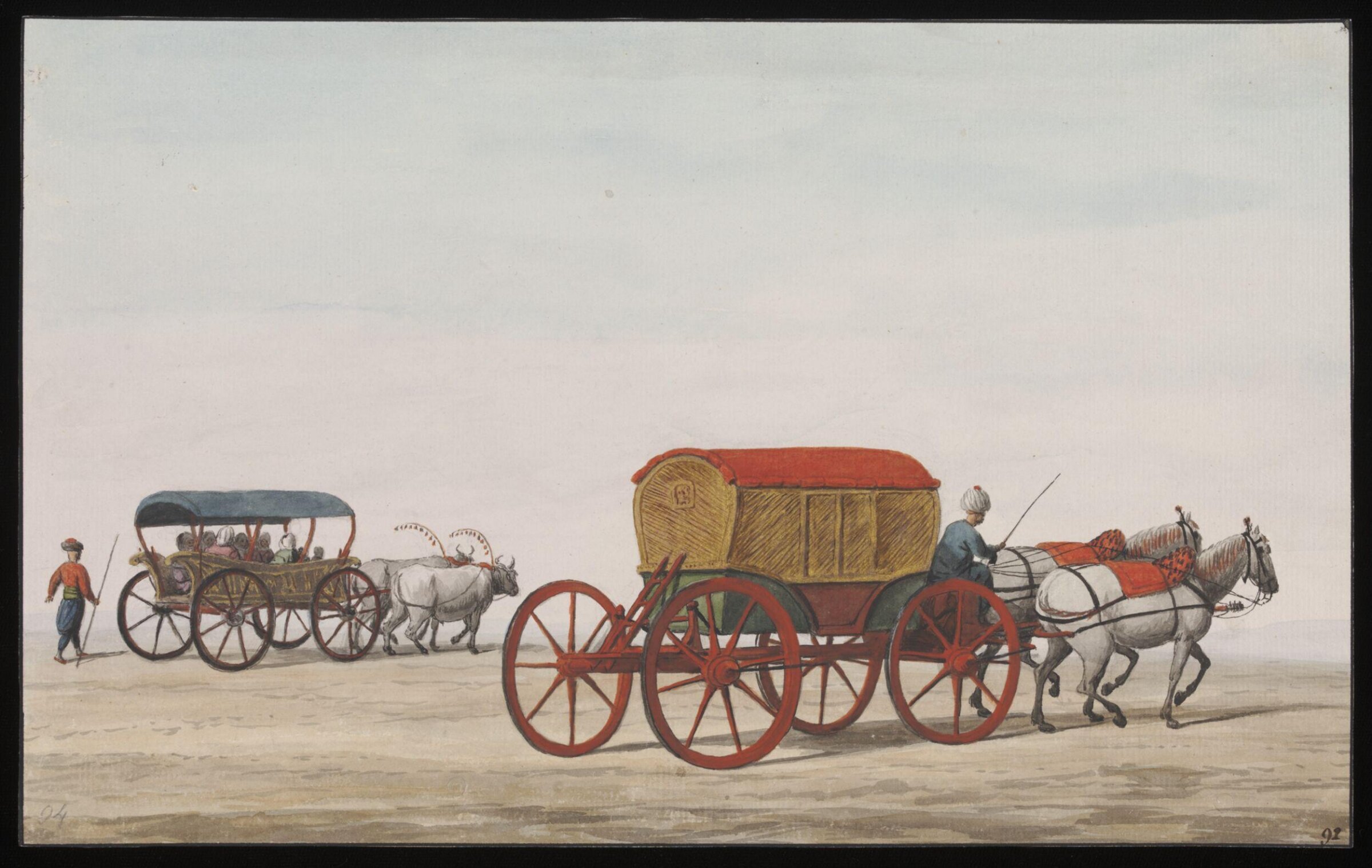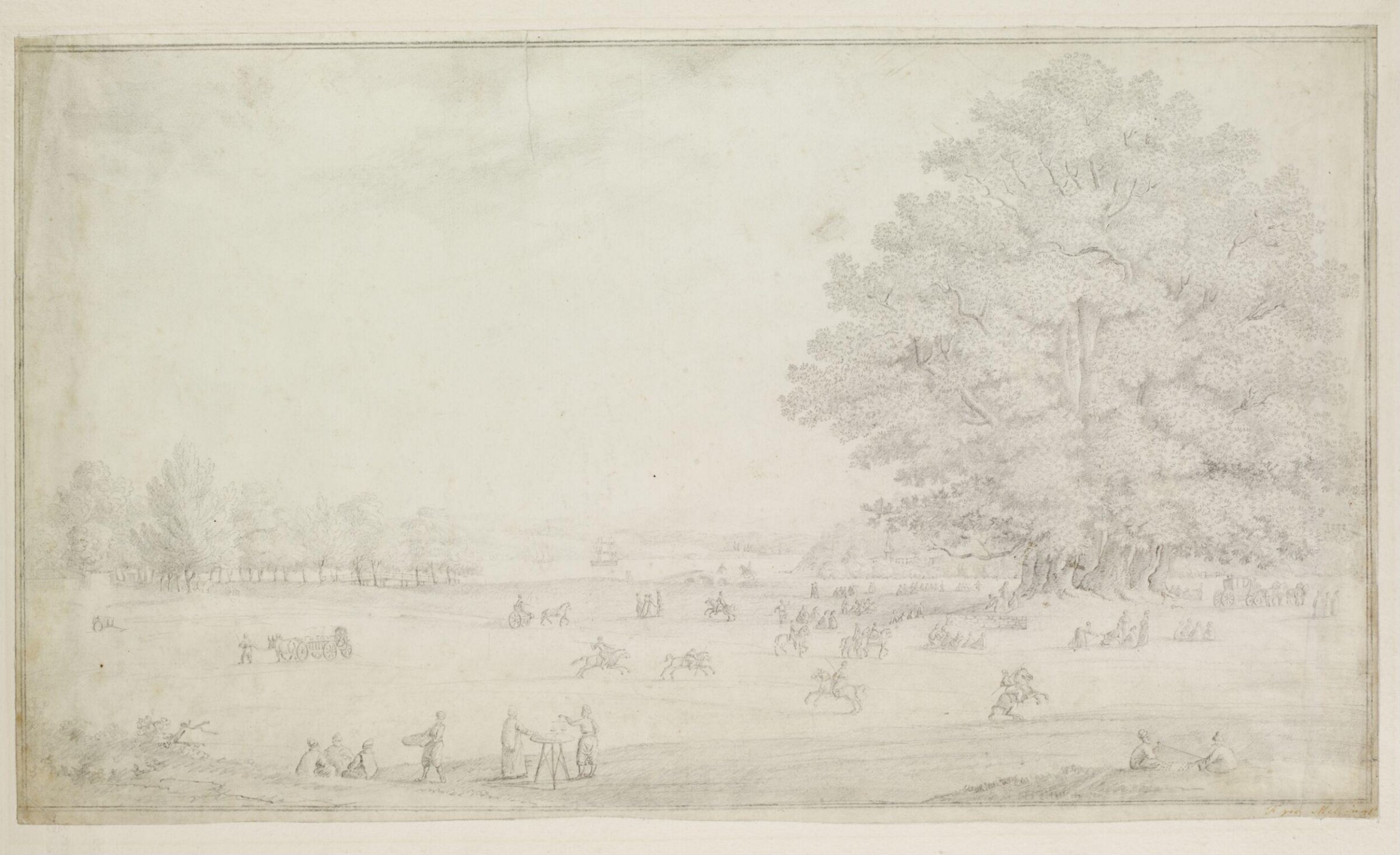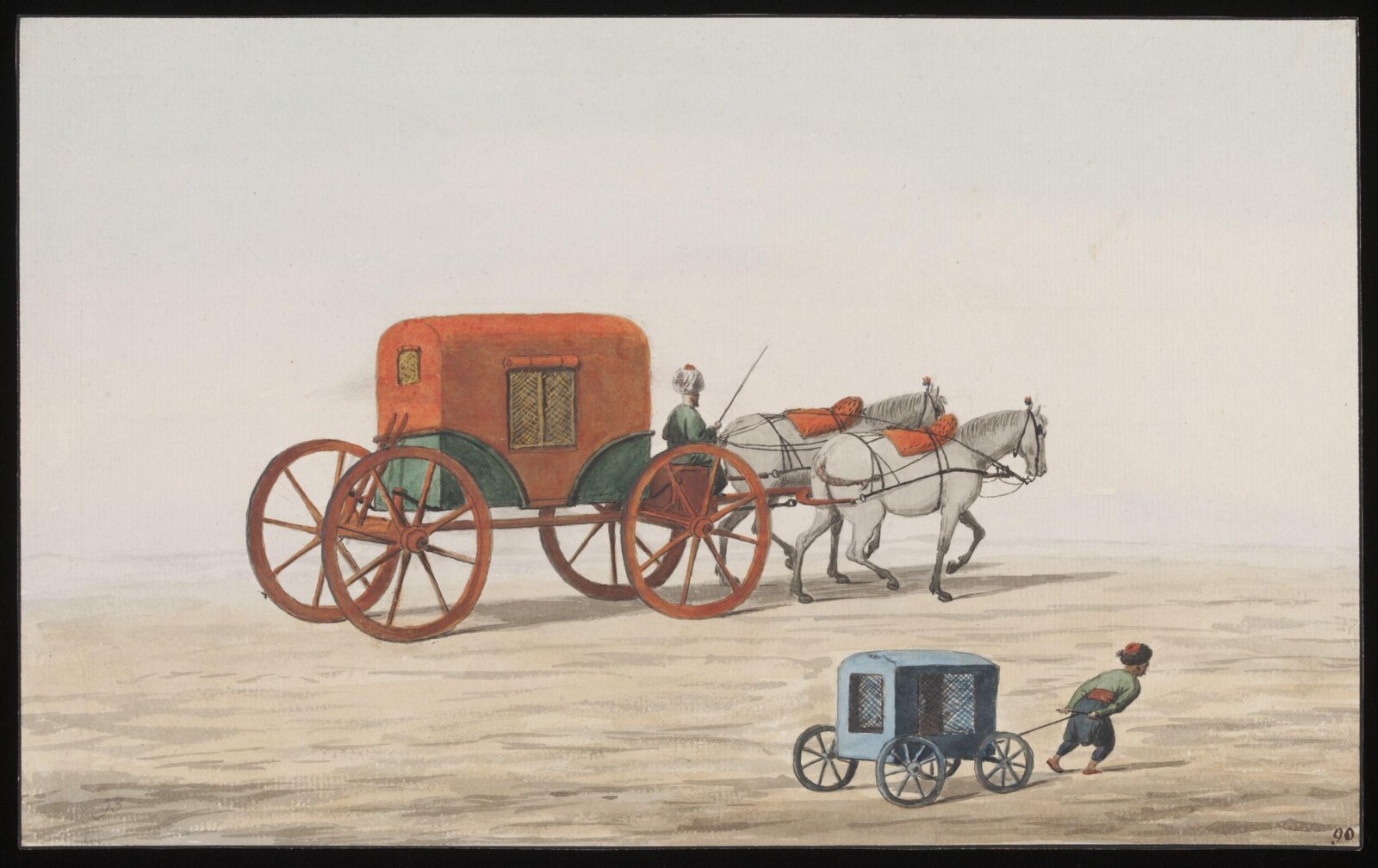
Araba or carriage, and a small araba for children
見られますか?
現在は展示されていません
『Araba or carriage, and a small araba for children』は今どこに? 所蔵: ヴィクトリア&アルバート博物館, ロンドン. 現在は展示されていません. 確認 2026年9月25日.

ロンドン, イギリス
コレクションに属していますが、現在は展示されていません。
- 確認
- この状態になった日
- 出典
- 美術館
作品について
This araba was a closed carriage designed for women wanting to go out in privacy. The windows were fitted with a lattice, so they could see out, and the public were unable to see in.
続きを読む
This picture was one of a series commissioned by Stratford Canning (later Viscount Stratford de Redcliffe), 1786-1880. He began his long diplomatic career in Turkey as first secretary to Robert Adair on his mission to Istanbul in 1808. On arrival Canning soon arranged to see officially (and unofficially) all manner of Ottoman institutions, buildings and customs. What made his curiosity really valuable is that he hired a local artist to make this large series of views and studies of what he had seen. The identity of the artist is unknown, though Turkish scholars believe that he was part of the studio or circle of Konstantin Kapidagli. His style combines the dense and brilliant water and bodycolour used by Ottoman artists with European conventions of representation and perspective.
As a young man, the artist and future neo-classical architect Charles Cockerell went to Istanbul in 1810, stayed at the embassy, and even met Byron there. There Cockerell (with an interpreter) met and discussed painting technique with this Greek artist whom, frustratingly, he did not name in his letters. Cockerell's copies of the Greek's architectural views are now in the British Museum. The Victoria and Albert Museum finally acquired the original set of drawings from Canning's daughter Charlotte in 1895.
ヴィクトリア&アルバート博物館
作品データ
- 収蔵番号
- D.112-1895
描かれているもの
カタログ収録
出典
- ヴィクトリア&アルバート博物館
- 画像: ヴィクトリア&アルバート博物館 — © Victoria and Albert Museum, London