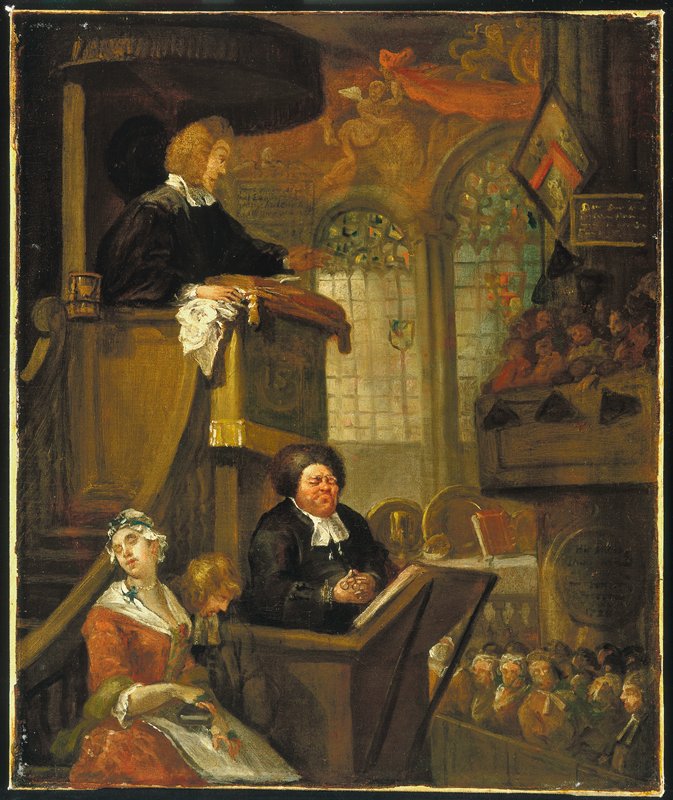
William Hogarthイングランド, 1697–1764
After
見られますか?
はい、現在展示中
『After』は今どこに? J・ポール・ゲティ美術館, Museum South Pavilion, Gallery S203, ロサンゼルス. はい、現在展示中. 確認 2026年10月5日.
開館中· 18:30まで
一般公開されています。
- 確認
- この状態になった日
- 出典
- 美術館
この絵画について
Hogarth painted After in 1730–1731 as the companion to Before; it belongs to the J. Paul Getty Museum, Los Angeles. The man hurriedly adjusts his breeches while the dishevelled woman asks him to keep their encounter private. An overturned table and shattered mirror signify the ruin associated with her loss of virginity. A sleeping dog suggests exhaustion after sex. The Duke of Montague was reportedly the patron, and tradition linked the male figure to Sir John Willes. Hogarth's own engravings followed the paintings more closely than other artists' versions. After is displayed in gallery S203.
美術館の言葉で
In this companion piece to [Before](http://www.getty.edu/art/collection/objects/660/william-hogarth-before-english-1730-1731/) [the Seduction], a man stands and hurriedly pulls up his breeches after successfully seducing a young woman. Cap and clothing askew, the disheveled woman implores his discretion. The overturned table and broken mirror symbolize the woman's shattered life now that she has lost her virginity. The dog sleeping in the foreground refers to post-coital exhaustion. In the Biographical Anecdotes of William Hogarth, published in 1785, John Nichols wrote that a "certain vicious nobleman," the Duke of Montague, supposedly commissioned this painting and its partner. According to an old tradition, the scene's protagonist was said to have been Sir John Willes, later Chief Justice of the Court of Common Pleas. Many artists created engravings, some of them scandalous, after these two paintings. Hogarth's own engravings stayed truer to his paintings.
J・ポール・ゲティ美術館
作品データ
- 収蔵番号
- 78.PA.205
カタログ収録
出典
- J・ポール・ゲティ美術館
- 画像: J・ポール・ゲティ美術館 — Open Content
その頃、William Hogarthの人生では
生涯をすべて見る1712–1764 · 活動地
London
1727 – 28 May 1728
A lawsuit against the weaver Morris: “an engraver, and no painter”
In 1727 the tapestry worker Joshua Morris commissioned from Hogarth a design for “The Element of Earth”, but on hearing that he was “an engraver, and no painter” refused the finished work. Hogarth sued him in the Westminster court and won: judgment was given in his favour on 28 May 1728.
until 1728
Initiated as a Freemason
Before 1728 Hogarth was initiated as a Freemason in the lodge at the Hand and Apple Tree Tavern in Little Queen Street, and later belonged to the Carrier Stone Lodge and the Grand Stewards’ Lodge; for the latter he designed the “Hogarth Jewel”, the badge of the Lodge’s Master (the original is now in storage and a replica is worn by the present Master). Freemasonry is also a theme of “Night”, the fourth print of the “Four Times of the Day”.
23 March 1729
A secret wedding to Jane Thornhill
Not hoping for Sir James’s consent — he saw the match as unequal, Hogarth being a rather obscure artist then — William and Jane married in secret at Paddington Church. Jane and her mother helped to reconcile him with his father-in-law: they hung the first paintings of “A Harlot’s Progress” in his house, and on learning the artist’s name Sir James admitted that a man who could produce such pictures could also keep a wife without a dowry.