Gustav Klimtオーストリア, 1862–1918
Adam und Eva
見られますか?
不明
『Adam und Eva』は今どこに? 所蔵: オーストリア・ギャラリー, ウィーン. 不明.

ウィーン, オーストリア
所蔵者は判明していますが、現在展示中かどうかは不明です。
- この状態になった日
- 出典
- 美術館
この絵画について
美術館の言葉で — ドイツ語
Nur selten in seiner Karriere beschäftigt sich Gustav Klimt mit biblischen Themen. In einem seiner letzten Werke, das infolge seines Todes unvollendet geblieben ist, zeigt er das erste Menschenpaar – Adam und Eva. Doch interessiert ihn nicht die Episode des Sündenfalls, sondern die Figur der Eva als Inbegriff alles Weiblichen. Adam hat die Augen geschlossen, den Kopf liebestrunken geneigt und schmiegt sich zärtlich an sie. Evas Blick gilt aber uns. Die Anemonen am Boden sind als Sinnbilder für Fruchtbarkeit bekannt, das Leopardenfell galt im antiken Griechenland als Symbol für ungezügeltes Begehren. In Klimts Interpretation erscheint also Eva – und nicht etwa die Schlange – als Verführerin.
オーストリア・ギャラリー
作品データ
カタログ収録
出典
- オーストリア・ギャラリー
- 画像: オーストリア・ギャラリー — CC BY-SA 4.0
その頃、Gustav Klimtの人生では
生涯をすべて見る1897–1917
Society portraits of Viennese ladies
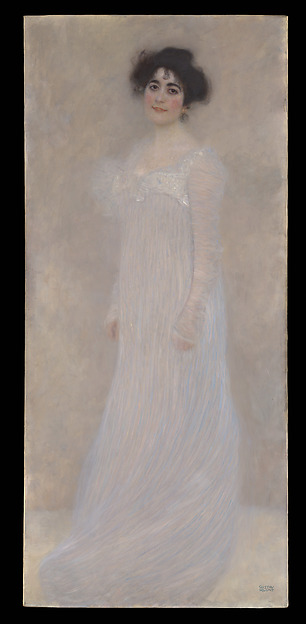
Over twenty years Klimt painted nearly twenty society portraits of women, which gave him financial independence; Carl Moll introduced him to many of the sitters, most of them from the Jewish upper bourgeoisie. In the portraits the ladies are hidden in sumptuous clothing, their heads and hands seeming to float detached from reality.
1908–1914
Galerie Miethke: a portfolio of reproductions of Klimt's work
Galerie Miethke, headed by Carl Moll and Klimt's exclusive agent, began after the 1908 Kunstschau to issue a portfolio of reproductions to promote Klimt abroad — five instalments of ten plates each. Klimt chose the works and approved the quality of the reproductions himself; the fifth instalment was never produced.
1914–1918
The war: colourful ladies and a good income
As if pushing the war out of his world, Klimt again painted the “beautiful Viennese women” — “Lady with a Fan”, “The Bride”, both “Dancers”; “Death and Life” is his only picture on a topical subject. His notebook shows that he earned well in the war years, collectors readily buying his portraits of elegant strangers.
1915
Death of his mother
His mother, Anna Klimt, died; Gustav continued to live on Westbahnstrasse with his two unmarried sisters.
11 January 1918
A stroke, the hospital, pneumonia
A stroke paralysed Klimt's right side; in hospital, where he was put on a water bed for bedsores, he caught influenza and pneumonia. For three weeks the press printed bulletins, and on his deathbed he demanded that his sisters send for Emilie Flöge.
1918年2月6日
Died