 Nicholas RoerichRussia, 1874–1947
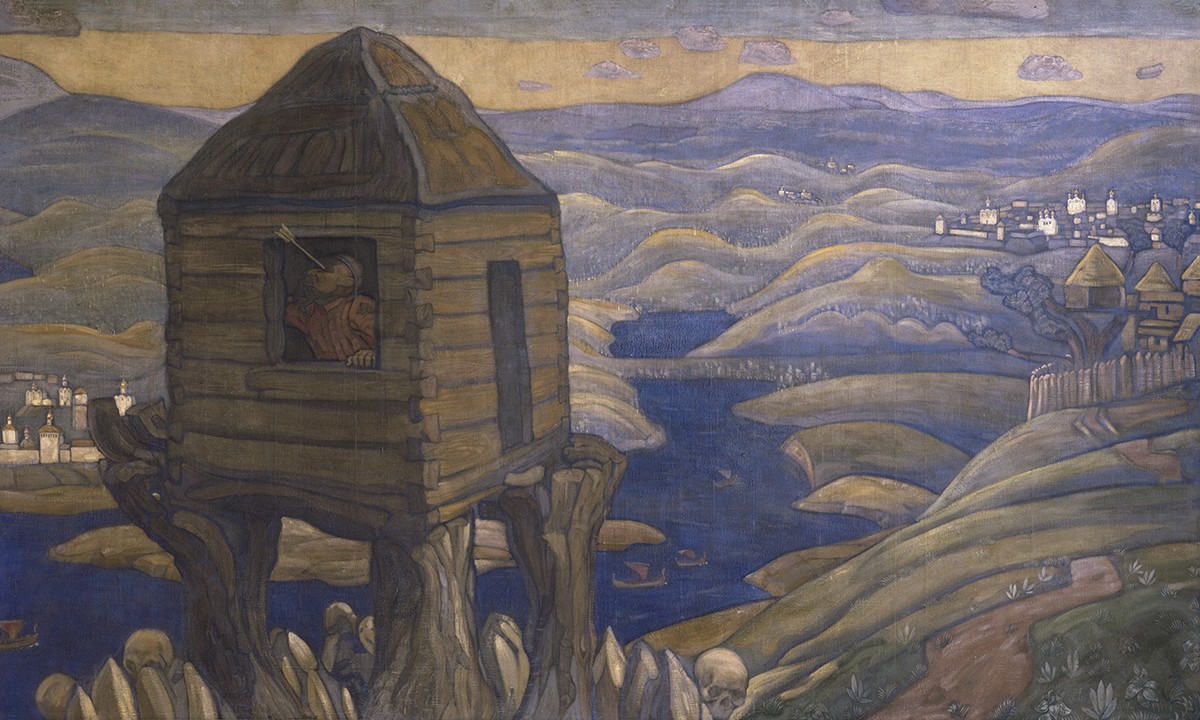
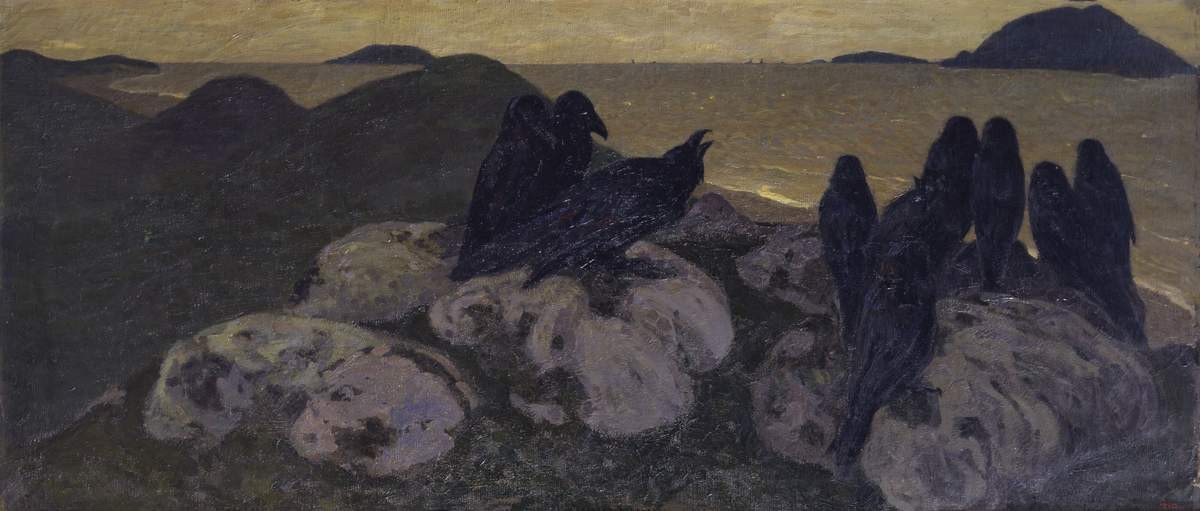
Зловещие
Si può ammirare?
Non si sa

San Pietroburgo, Russia
Il proprietario è noto; non si sa se oggi sia esposta.
- Ultimo cambio di stato
- Fonte
- Il museo
Sul dipinto
Con le parole del museo — in russo
В эскизе к этой картине был изображен старинный город, обнесенный бревенчатыми стенами с дозорными башнями, на первом плане которого вороны, предвещающие добычу с поля боя. Рерих изменил композицию после разговора с Архипом Куинджи, одним из своих учителей. Художник убрал верхнюю часть с городским фоном. Ее композиционной, эмоциональной и смысловой доминантой стали огромных размеров черные птицы, олицетворяющие зло. Галина Кречина // Николай Рерих. В поисках Шамбалы. СПб, 2020. С. 17.
Museo russo
Scheda
- Numero di inventario
- Ж-1958
Che cosa raffigura
In catalogo
Fonti
- Museo russo
- Immagine: Museo russo — © State Russian Museum
Nel frattempo, nella vita di Nicholas Roerich
Tutta la vitac. 1898 – 1901
Working for the Society for the Encouragement of the Arts
At 24 Roerich becomes assistant director of the museum of the Imperial Society for the Encouragement of the Arts and at the same time assistant editor of the magazine “Art and Art Industry”; three years later he becomes the Society's secretary.
1898–1903
Lecturer at the Archaeological Institute
From 1898 Roerich works with the St Petersburg Archaeological Institute: he teaches a course titled “Artistic Technique as Applied to Archaeology”, directs training excavations and compiles the “Archaeological Map of St Petersburg Province”. He digs in the provinces of St Petersburg, Pskov, Novgorod, Tver, Yaroslavl and Smolensk.
1899
Meets Elena Shaposhnikova
At Prince Putyatin's estate Roerich meets Elena Ivanovna Shaposhnikova, his future wife, a faithful companion and source of inspiration.
28 October 1901
Marries Elena Shaposhnikova
Roerich and Elena Ivanovna are married in the church of the Imperial Academy of Arts; they will go through life hand in hand, complementing each other creatively and spiritually.
3 agosto 1902
Son born: George de Roerich
1903–1904
A “journey through antiquity”: over forty towns
With his wife Roerich visits more than forty towns with ancient monuments to study the roots of Russian culture. The result is about 90 architectural studies, a collection of photographs of old Russia and articles in which he is among the first to raise the question of the great artistic value of early Russian icon painting and architecture.