 Kuzma Petrov-VodkinRussia, 1878–1939
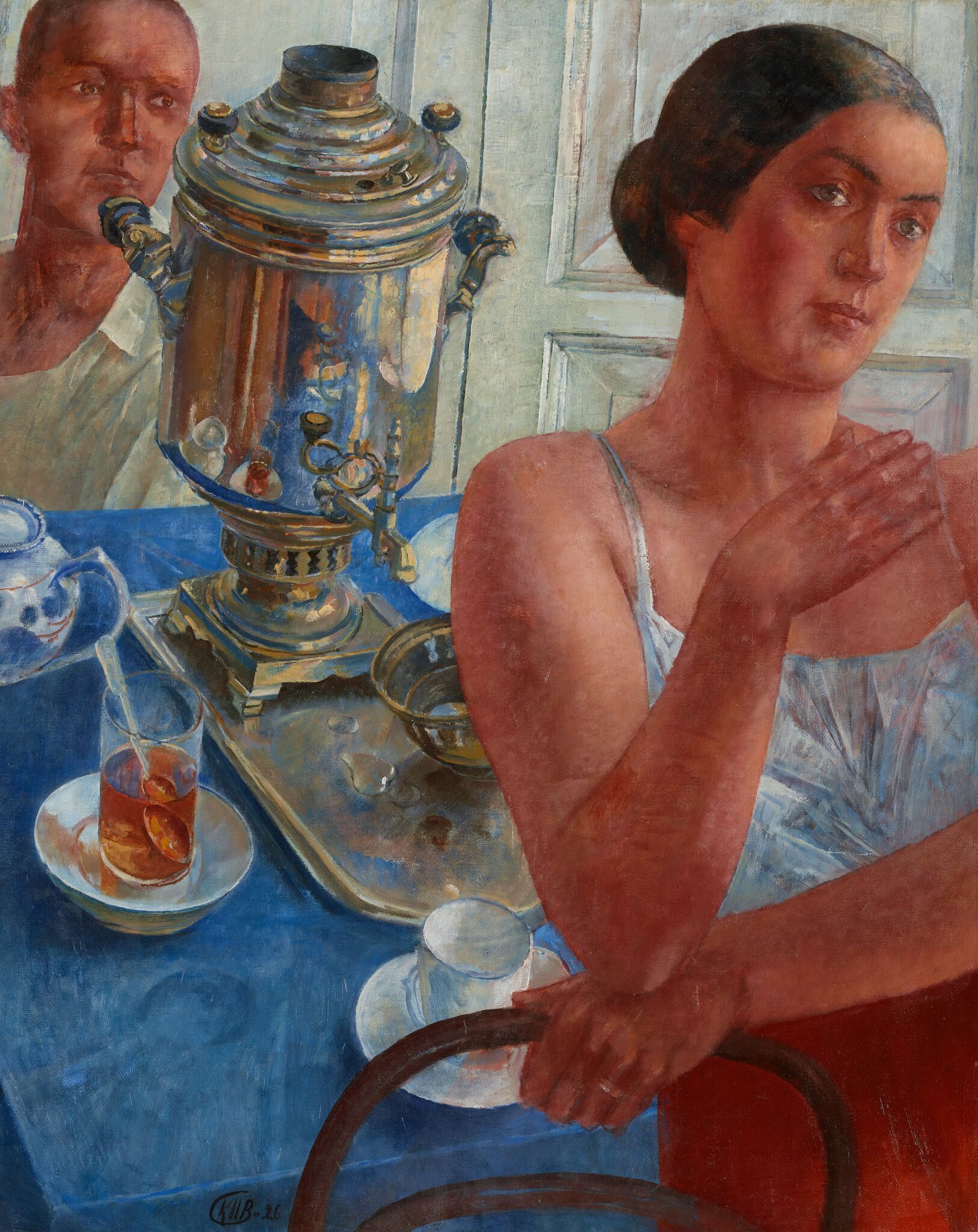
За самоваром
Si può vedere?
Non si sa
Dove si trova «За самоваром» oggi? Collezione: Galleria Tret'jakov, Mosca. Non si sa.

Mosca, Russia
Il proprietario è noto; non si sa se oggi sia esposta.
- Fonte
- Il museo
Sul dipinto
Con le parole del museo — in russo
Мастерское умение возвысить и облагородить быт присутствует в картине Петрова-Водкина «За самоваром». Не поступившись многочисленными конкретными деталями, художник превратил сценку семейного разногласия в гармоничную и светлую картину жизни вдвоем. Эту сложнейшую задачу он решил благодаря умению отнестись к форме и пластике человеческого тела как к совершенной и драгоценной природной форме.
Округлость голов, прозрачная ясность глаз, перламутровый или золотистый блеск кожи, погруженность лиц и фигур в хрустальную атмосферу холодного утреннего света, заливающего мир обыденных, но тоже преображенных предметов, – все это создает особый феномен жанровых картин Петрова-Водкина тех лет. Важную роль в картине играет излюбленный автором глубокий голубой цвет. С удовольствием он демонстрирует и свое феноменальное мастерство в построении сложных отражений.
Leggi
На протяжении второй половины 1920 – 1930-х годов Петров-Водкин активно осваивал тему изменившейся жизни новой страны и новых людей. В середине 1920-х рабочие с их бытом, спорами, конфликтами привлекали мастера разнообразием характеров. Но гораздо притягательнее для мастера в эту пору были сюжеты, связанные с женственной темой материнства, любви, семьи. Теперь он решает их иначе, чем в более ранних полотнах на те же темы, – менее величаво, но намного теплее, интимнее.
Galleria Tret'jakov
Scheda
- Numero di inventario
- 9367
In catalogo
Fonti
- Galleria Tret'jakov
- Immagine: Galleria Tret'jakov — © State Tretyakov Gallery
Nella vita di Kuzma Petrov-Vodkin
Tutta la vita1923–1928
Teaching crowds out painting; the fight over studios
As early as December 1923 he complains to his mother that professorship is crowding out painting; under the party rector E. E. Essen teaching at Vkhutein grows harder, and in 1928, when the individual studios are abolished, he argues that this flattens the students’ artistic thinking and presses for the old system to be restored.
spring 1924
Exhibition of Russian art in New York
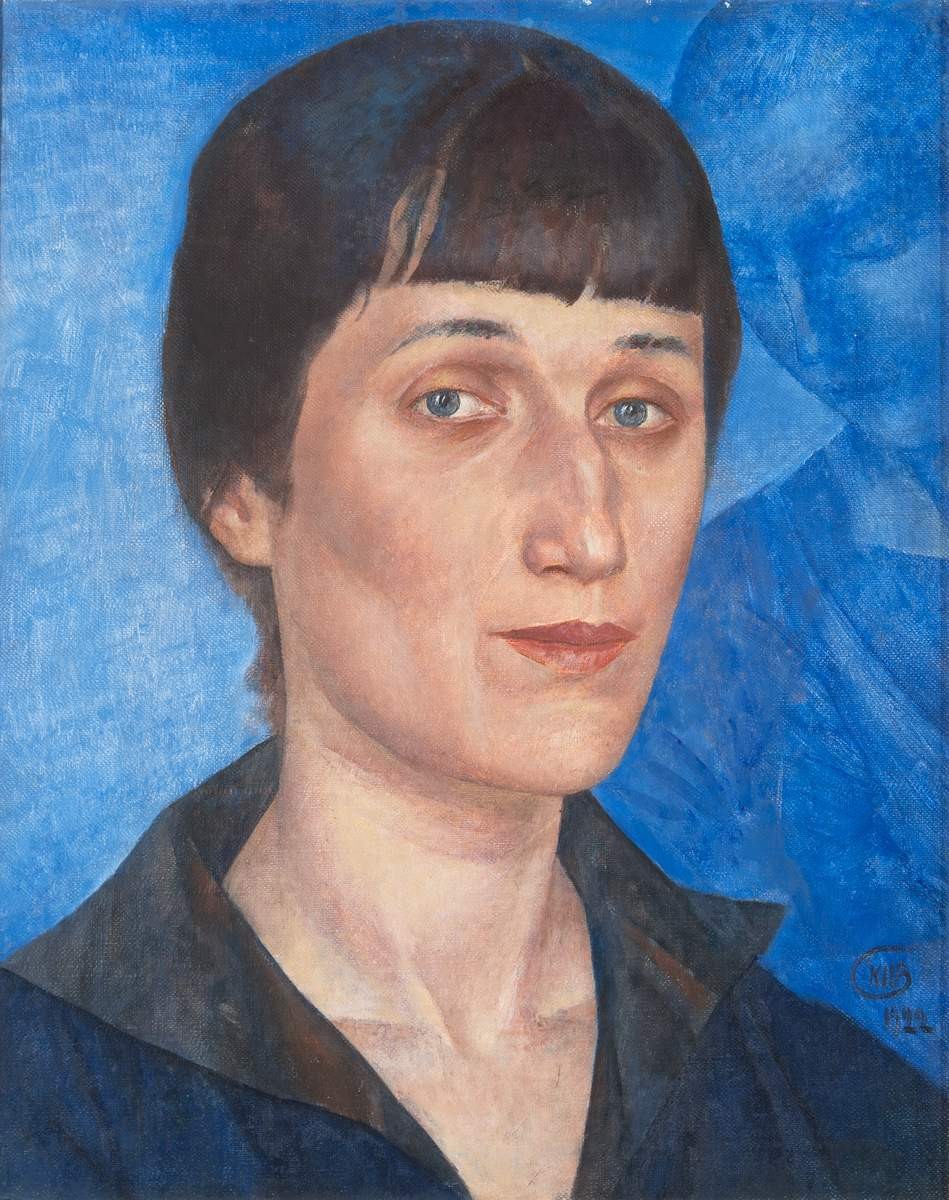
Seven of his works, including the “Portrait of Anna Akhmatova”, are shown at the Exhibition of Russian Art in New York.
summer 1924
To France with his family
He receives a year’s leave from the Academy of Arts, at his own expense, to study foreign art education, and travels via Riga to France with his wife and little daughter, where his wife is to undergo treatment. Hoping for commissions and sales, he earns nothing in the first six months: a hotel room in Paris serves as his studio, while the family rents a flat in Versailles.
1925
Founding member of the “Four Arts” society
He is among the founding members of the “Four Arts” society; at its 1926 exhibition in Moscow he shows “At the Samovar”, “Lenushka in Bed” and “In Shuvalovo”. Other accounts say the society existed from 1924 to 1931.
early 1925
French collectors start buying his pictures
In early 1925 French collectors begin to buy his pictures; he paints portraits of the Italian actress Penyo and the conductor Sergei Koussevitzky, and the Paris papers write about him.
1925
Return to Leningrad
In July he returns with his family from France to Leningrad; from autumn until the end of 1927 they live at Shuvalovo near the city. Other accounts say the family stayed in France until 1926.