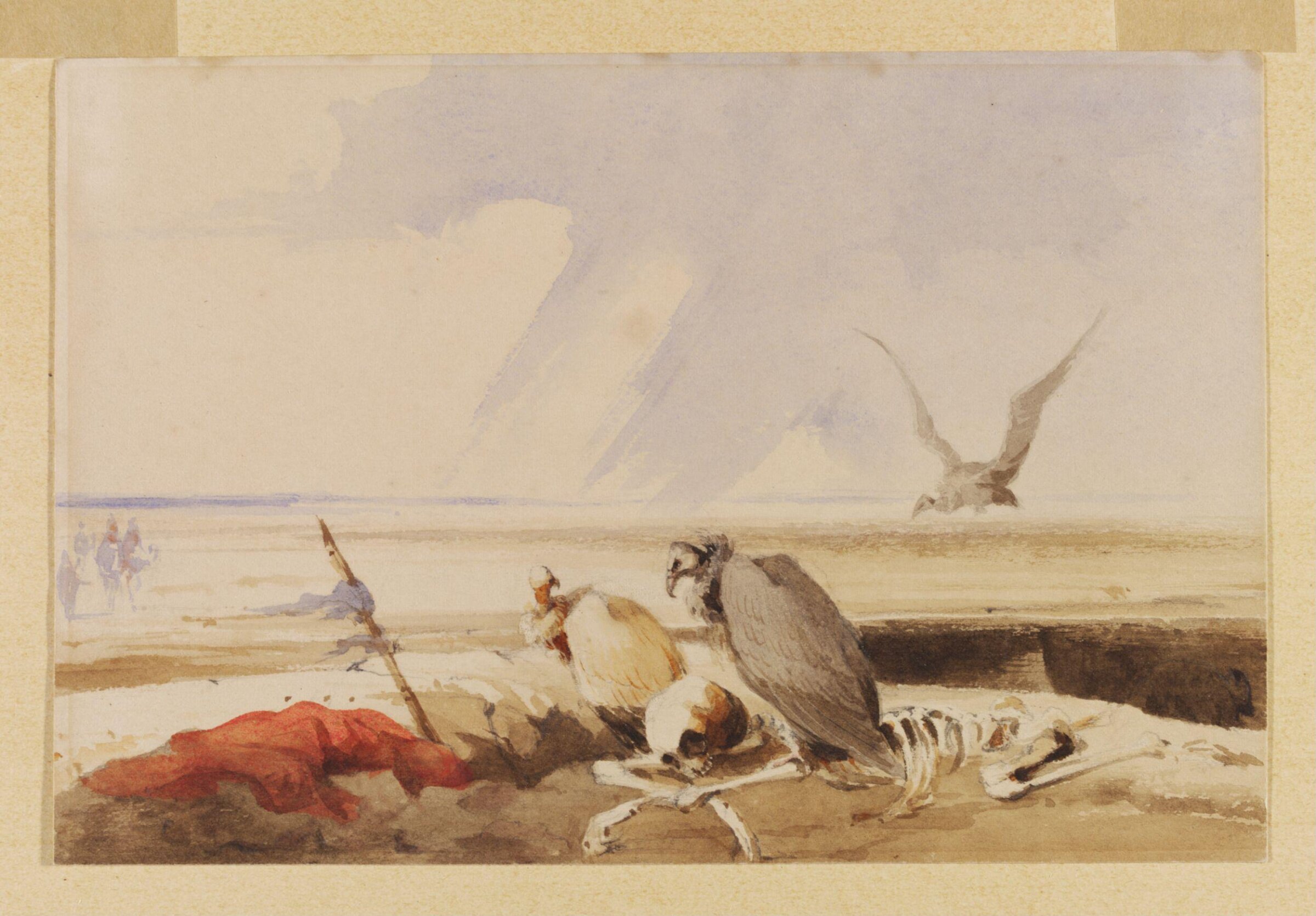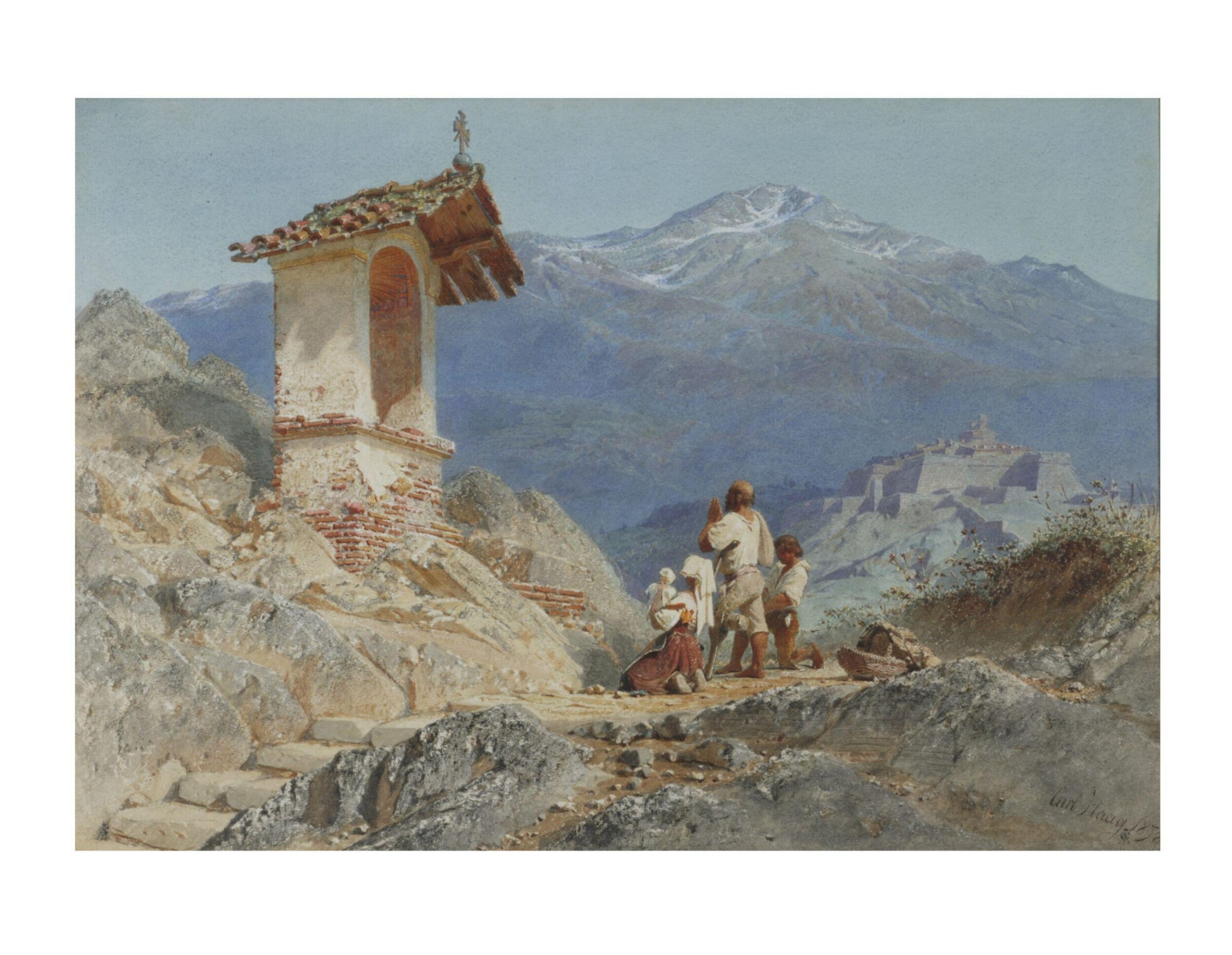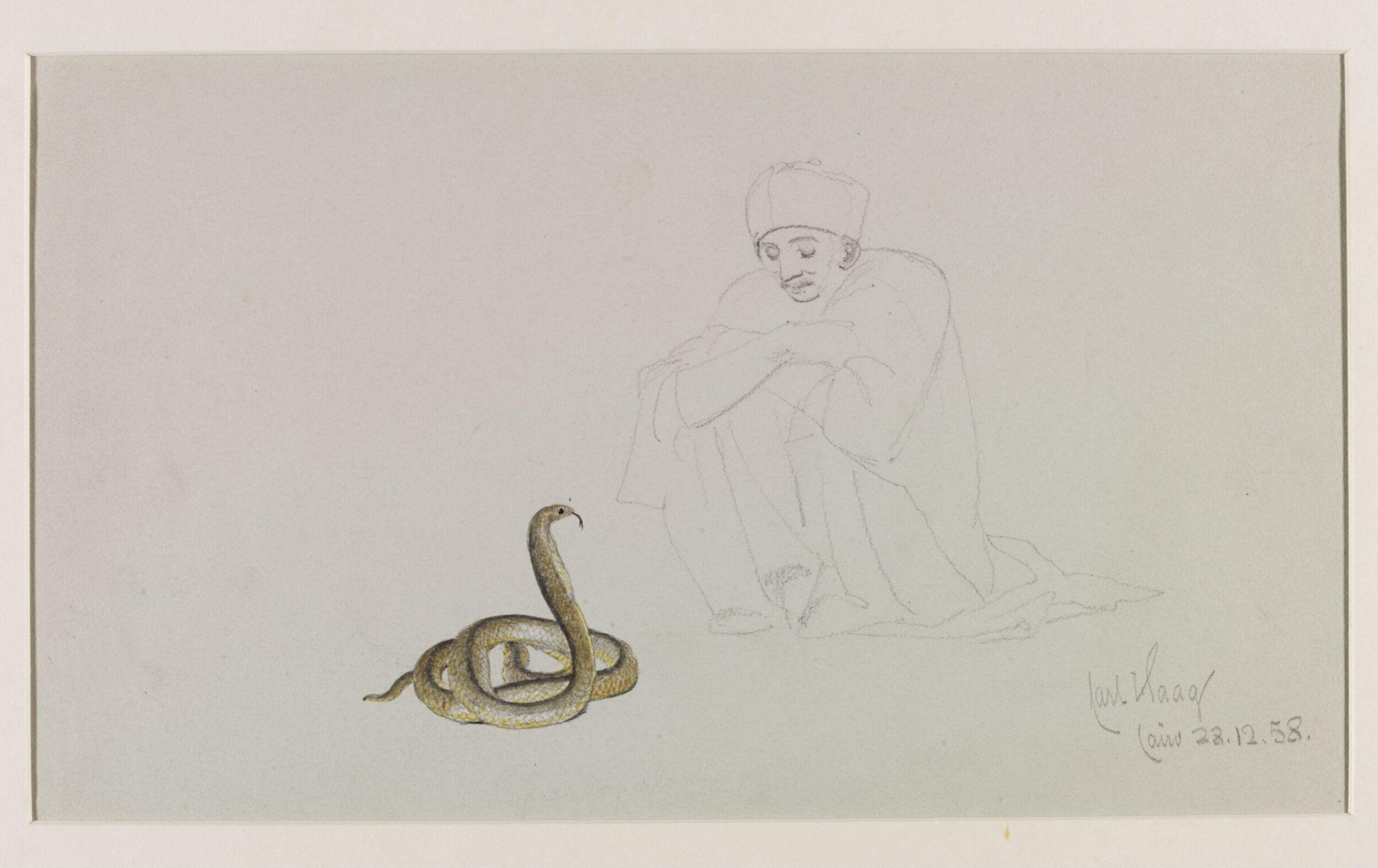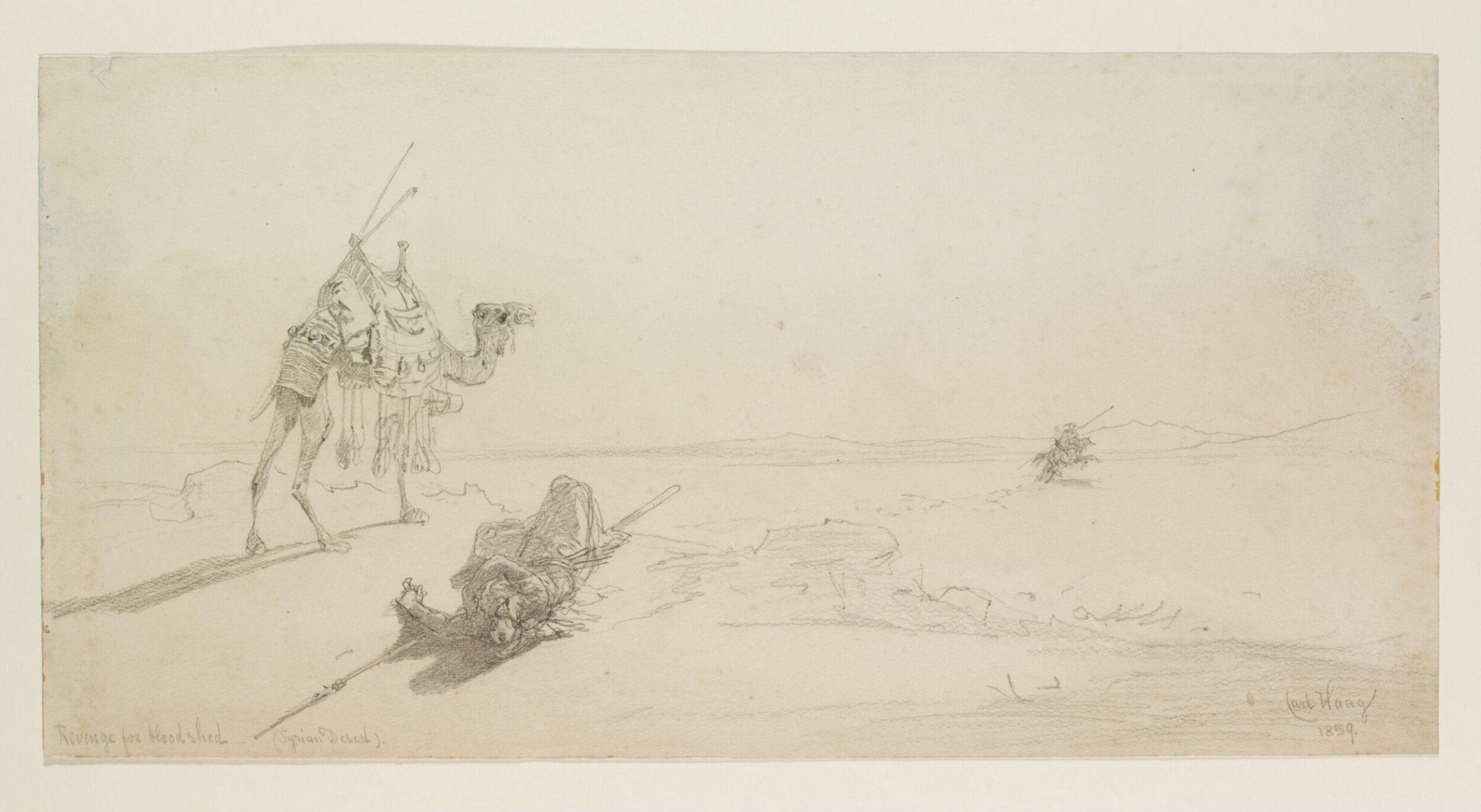
 Carl HaagGermania, 1820–1915
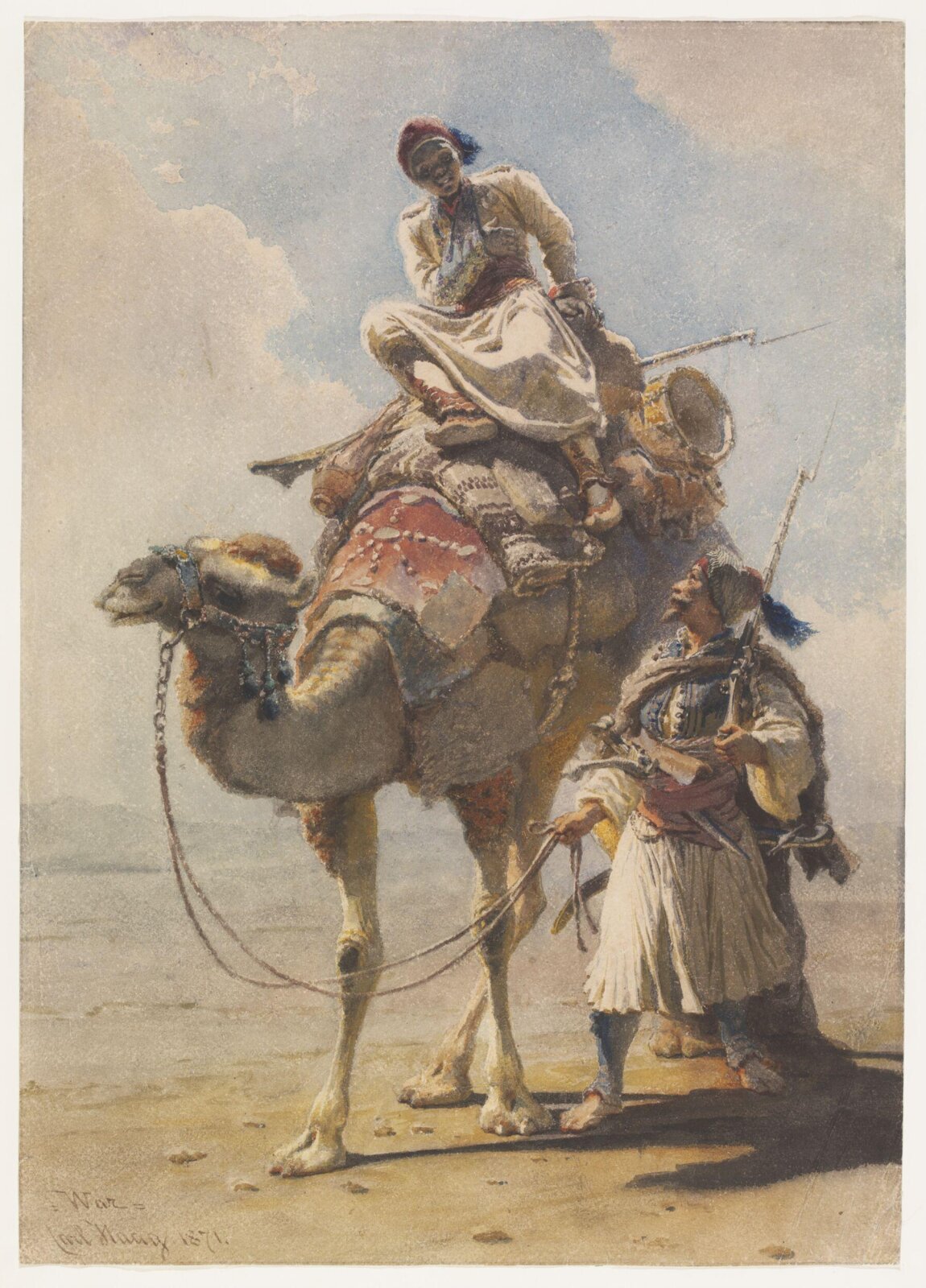
War
Si può ammirare?
Al momento non riceve

Victoria and Albert Museum
Londra, Regno Unito
Appartiene alla collezione, ma al momento non è esposta.
- Verificato
- 8 giorni fa
- Ultimo cambio di stato
- 25 set 2026
- Fonte
- I dati di collezione del museo stesso
Sull’opera
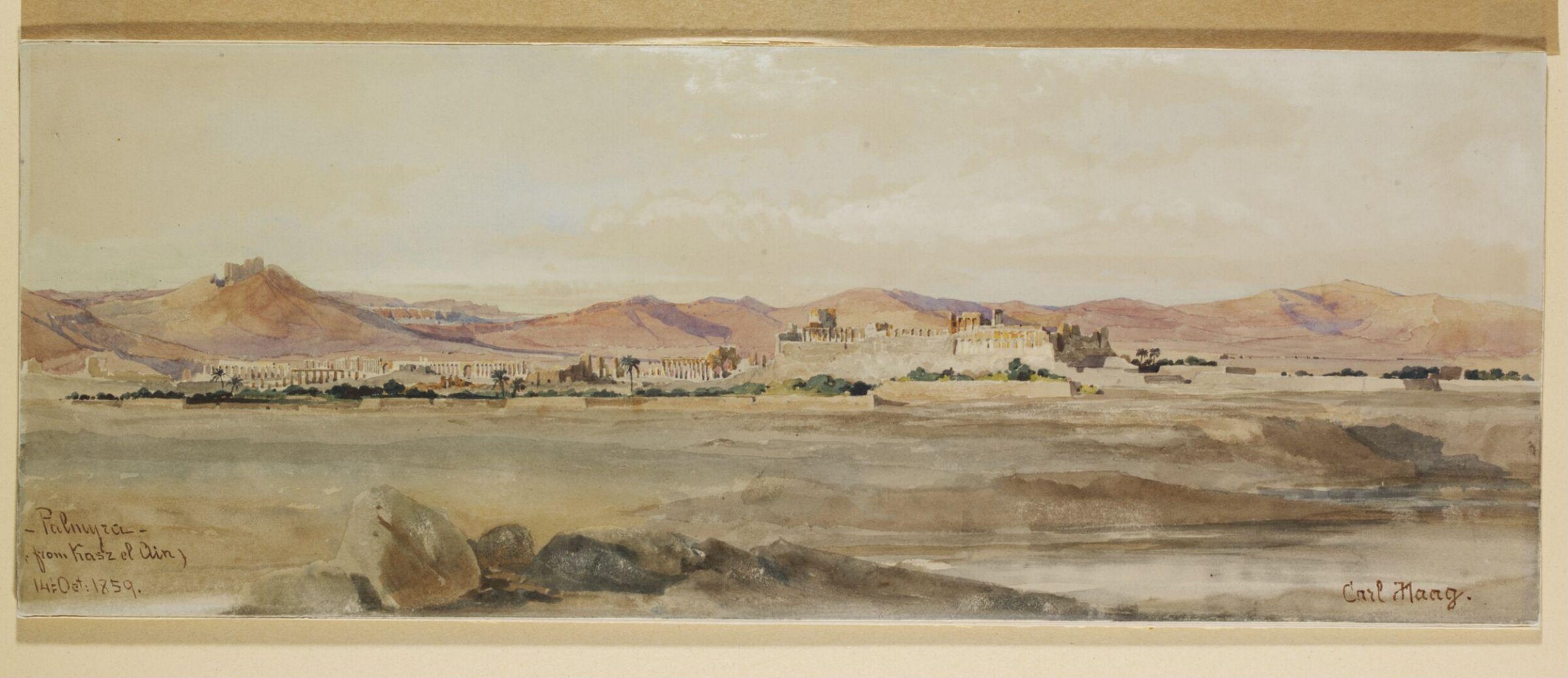
Haag was a prolific and successful painter in watercolours of narrative, genre and portrait subjects. He was born in Bavaria, and came to London in 1847 where he developed an elaborate watercolour technique and a set of appreciative patrons which included Prince Albert and Queen Victoria. Haag continued to paint predominately Eastern subjects for many years after his visit to Egypt, Palestine, Syria and Lebanon in 1858-1860. This watercolour and its companion Peace are two such examples, painted not long before he returned to Egypt in 1873.
Read on
The wounded drummer-boy is borne back to camp on his camel and the nearby battle is further indicated by the assorted weapons carried by the two soldiers. Haag may have intended to point a contrast between the young Nubian lad in his uniform of a nizam, or new-style regular soldier in the Egyptian army, and the older Arnavut (Albanian), many of whom had formerly been employed as irregular mercenaries. It is a very sanitized and sentimental view of war, (complete with colourful costumes and scarcely any injuries), only possible before the horrors of mass warfare with modern weapons generally impinged itself on the consciousness of insular Britain. In the year that this was painted, the 1870-1 Franco-Prussian war was taking place. Its reliance on railway time-tables for mass troop movements, and transport of modern artillery, foreshadowed the technological nature of all future wars.
Victoria and Albert Museum
Scheda
- Numero di inventario
- SD.461
What it shows
In catalogo
Fonti
- Victoria and Albert Museum: the museum's own open data · acquisita 8 giorni fa
- Immagine: Victoria and Albert Museum — © Victoria and Albert Museum, London

![The Hadjis Cheif[sic] Mourners, Carl Haag, ca. 19th century](https://framemark.vam.ac.uk/collections/2008BT7746/full/!2400,2400/0/default.jpg)