Claude LorrainFrancia, 1600–1682
Vlucht naar Egypte
Si può ammirare?
Non si sa

Amsterdam, Paesi Bassi
Il proprietario è noto; non si sa se oggi sia esposta.
- Fonte
- Il museo
Sull’opera
Con le parole del museo — in olandese
Landschap met Maria met het Christuskind op een ezel, begeleid door twee engelen, gevolgd door Jozef.
Rijksmuseum
Scheda
- Numero di inventario
- RP-P-1965-1053
Che cosa raffigura
In catalogo
Fonti
- Rijksmuseum
- Immagine: Rijksmuseum — public domain
Nel frattempo, nella vita di Claude Lorrain
Tutta la vita1620s
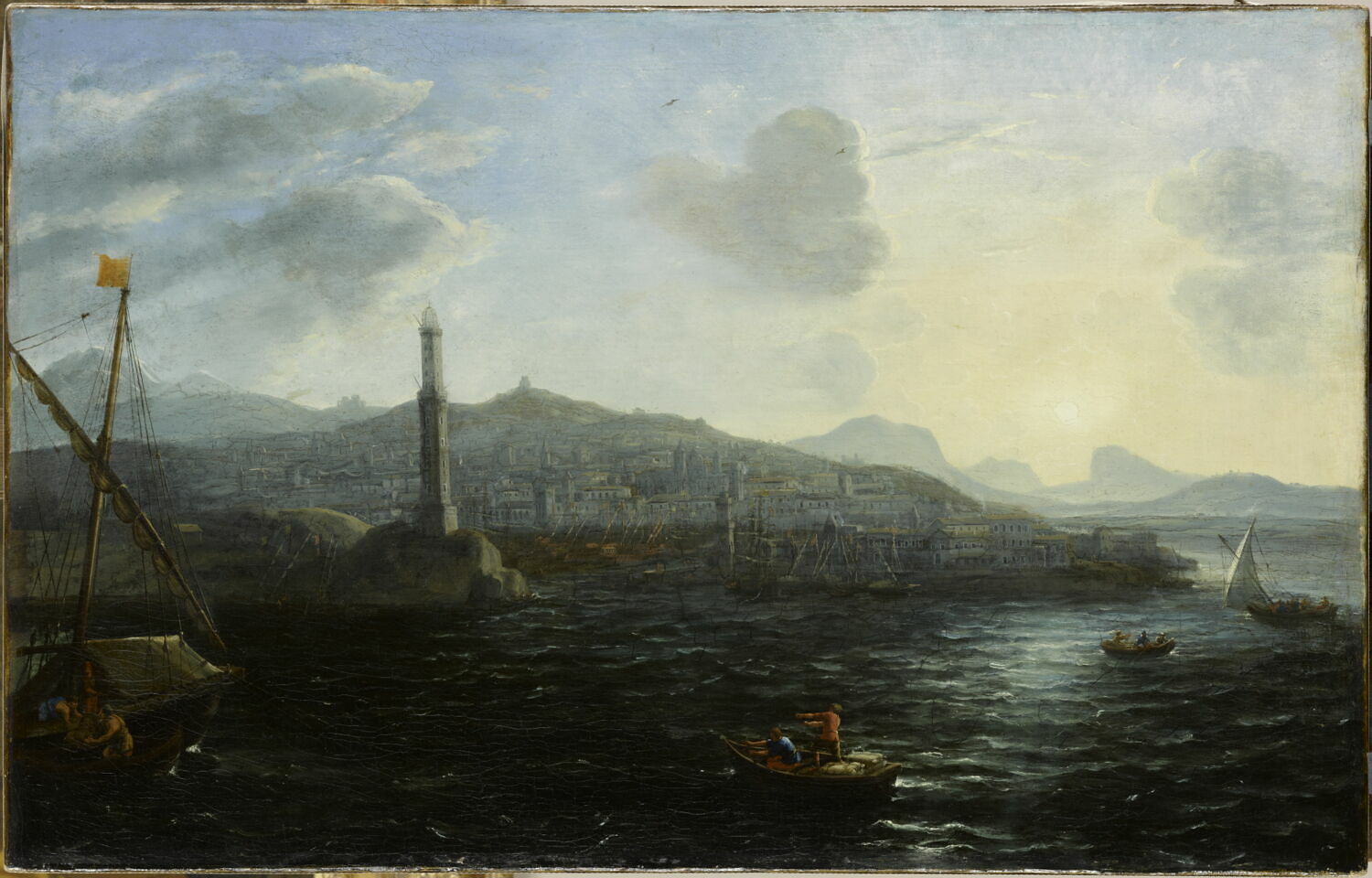
Stops in Marseille, Genoa and Venice
On his travels Claude stayed briefly in Marseille, Genoa and Venice and had the opportunity to study nature in France, Italy and Bavaria.
late 1620s
Meets Joachim von Sandrart
In the late 1620s Claude met Joachim von Sandrart, who would write one of his early biographies and lived with him for a while; Sandrart reported that Claude already had a habit of sketching outdoors, particularly at dawn and dusk, and of making oil studies on the spot.
1633–1635
Growing fame: commissions from the French ambassador and Philip IV
Claude’s growing reputation was shown by commissions from the French ambassador in Rome (1633) and from Philip IV of Spain (1634–35).
1634
Admitted to the Academy of Saint Luke
In 1634 Claude was admitted to the Academy of Saint Luke.
1635
Recognition: his pictures are in demand
From 1635 Claude’s work was recognised and his paintings were in great demand; his patrons included Pope Urban VIII (four works), Cardinal Bentivoglio and Prince Colonna.
1635–1638
Pope Urban VIII commissions four paintings
According to Baldinucci, Cardinal Guido Bentivoglio, impressed by the two landscapes Claude painted for him, recommended the artist to Pope Urban VIII; four paintings were made for the Pope in 1635–38, two large and two small on copper.