 William Henry BartlettRegno Unito, 1809–1854
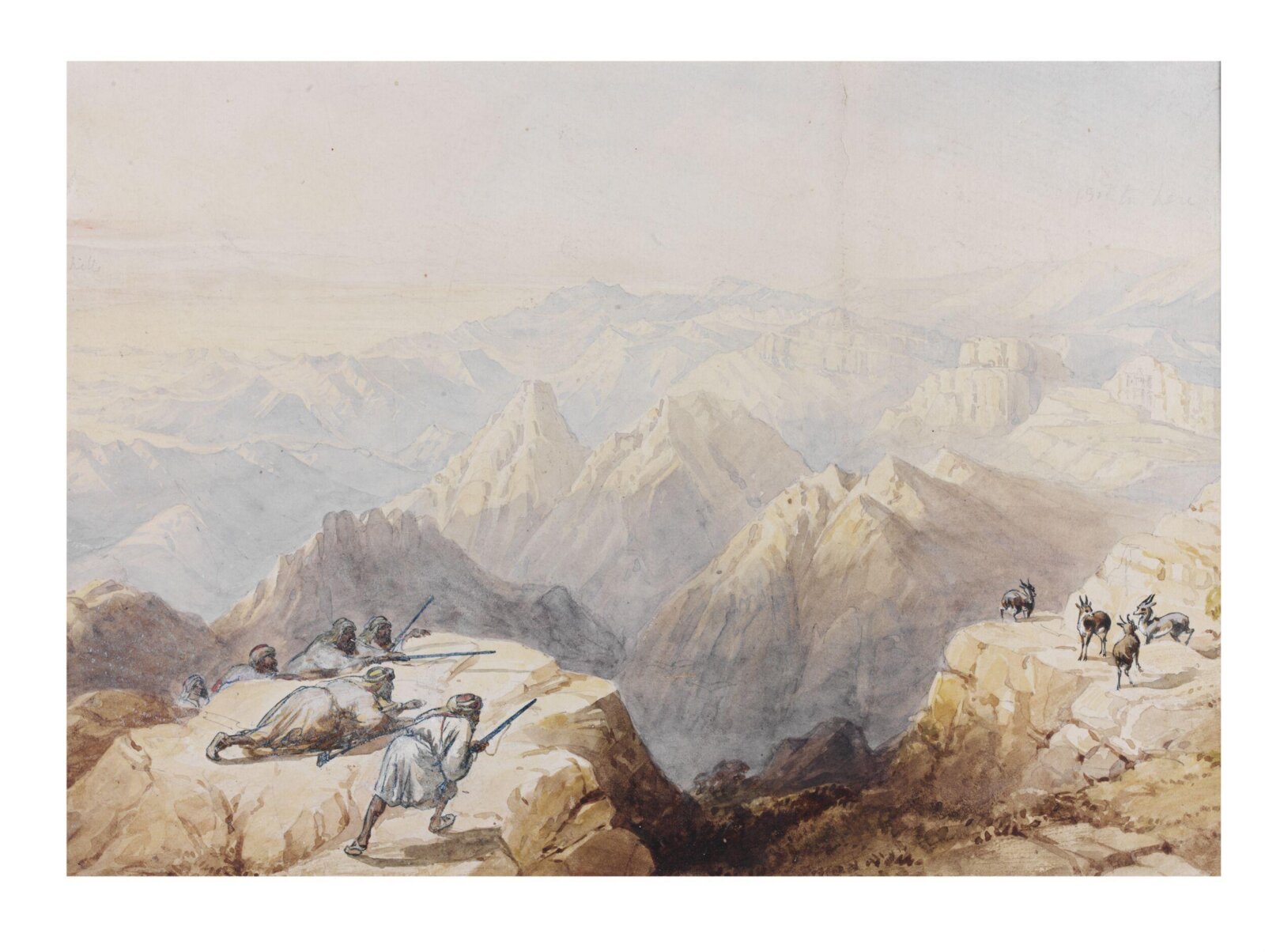
View from Mount Hor
Si può ammirare?
Al momento non riceve

Victoria and Albert Museum
Londra, Regno Unito
Appartiene alla collezione, ma al momento non è esposta.
- Verificato
- Ultimo cambio di stato
- Fonte
- I dati di collezione del museo stesso
Sull’opera
Bartlett was a prolific topographical artist who travelled extensively in search of new and interesting subjects for his drawings. He visited North Africa and the Near East seven times, and made several other trips in Britain and Europe, as well as North America. Popular demand for travel books was high in the 1830s and 1840s and Bartlett contributed illustrations to several of them. After 1842 he wrote and illustrated about a dozen of his own travel books. His self-confessed purpose as one of `a flying corps of light armed skirmishers, who, going lightly over the ground, busy themselves chiefly with its picturesque aspect', was to give `lively impressions of actual sights.’ This quotation comes from his book The Nile Boat, 1850, and sums up the philosophy of many artist illustrators of that period. They and their public were romantic in outlook, not yet interested in serious quasi-photographic accuracy. They preferred colourful and picturesque views, based on some kind of reality, but an impressionistic one.
Read on
This scene is set on the Biblical Mount Hor, now Jabal Harun (Mount Aaron) in Jordan, where the Prophet Aaron, brother of Moses, died and was buried before he could enter the Promised Land (Numbers 20:28). When Bartlett drew this, the story was familiar to the Victorian Bible-reading public and no explanation would have been needed. The hunters are stalking wild goats, probably ibex, still to be found in Jordan. Again, with the Victorian obsession with hunting, this scene was a familiar theme set in unfamiliar surroundings.
Victoria and Albert Museum
Scheda
- Numero di inventario
- SD.83
What it shows
In catalogo
Fonti
- Victoria and Albert Museum: the museum's own open data · acquisita 10 giorni fa
- Immagine: Victoria and Albert Museum — © Victoria and Albert Museum, London