 Peter Paul RubensFiandre, 1577–1640
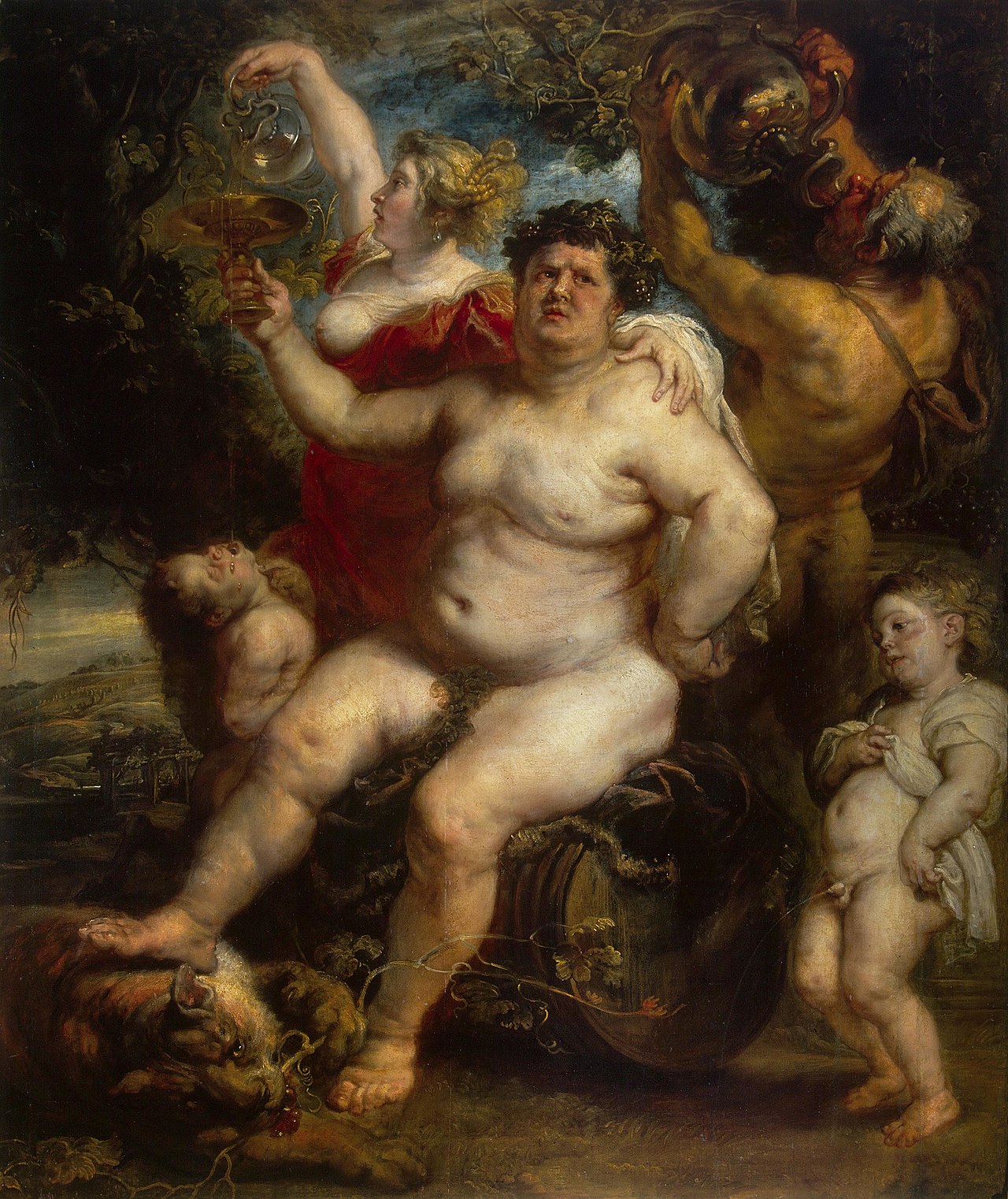
Bacchus
Si può ammirare?
Al momento non riceve

Ermitage
San Pietroburgo, Russia
Appartiene alla collezione, ma al momento non è esposta.
- Verificato
- Ultimo cambio di stato
- Fonte
- I dati di collezione del museo stesso
Sul dipinto
Bacchus is a 1638-1640 oil painting of Bacchus by Peter Paul Rubens, now in the Hermitage Museum, in Saint Petersburg, for which it was purchased in 1772. It was originally on a panel support but was transferred to canvas in 1891 by A. Sidorov. An autograph copy of the work is now in the Uffizi in Florence.
The composition of Bacchus seated on a barrel of wine surrounded by a satyr, a woman and two putti draws on a similar one on the fountain painted by Hans Vredeman de Vries, whilst the head of Bacchus in Rubens' work is thought to have been based on a marble bust of Vitellius. It also draws on Mantegna's Bacchanalia (a work of which Rubens made a copy, now in the Louvre), Hans Baldung Grun's drawing of Bacchus and Titian's The Bacchanal of the Andrians, now in the Prado.
Continua a leggere
One of the few paintings still in the artist's studio on his death, it was left to his nephew Philip Rubens, who sold it to Prince Richelieu. It then passed to the Crozat collection and from there to the Hermitage.
Con le parole del museo — in russo
Образ Вакха на картине Питера Пауля Рубенса представляет собой сложный синтез художественных традиций. Важнейшим аспектом изучения стала полемика вокруг возможных иконографических источников: если М. Варшавская (1975) усматривала в работе отражение дуалистической концепции двух Вакхов, то И. Линник (1981) убедительно доказала отсутствие в картине этого противопоставления, указав на североевропейские корни изображения Вакха как персонификации осеннего изобилия. Особый интерес представляет установленный А. Бейером и И. Линник (1977) факт использования античного бюста императора Вителлия в качестве прототипа для головы Вакха. Этот случай не единичен в творчестве Рубенса, что свидетельствует о системном подходе художника к заимствованию и переосмыслению античных образцов.
Continua a leggere
Анализ композиционных особенностей позволяет говорить о влиянии различных художественных источников: нидерландской гравюрной традиции XVI-XVII вв., работ А. Мантеньи и Х. Бальдунга Грина, а также произведений Тициана, которые Рубенс активно копировал. Перед нами не просто изображение античного божества, но гимн жизненной энергии и чувственному началу, что составляет суть творческого метода великого фламандского мастера. История бытования картины, прослеженная по архивным документам, демонстрирует ее путь от мастерской художника, через собрание герцога Ришелье и семьи Кроза до поступления в Императорский Эрмитаж в 1772 году.
Ermitage
Scheda
- Numero di inventario
- ГЭ-467
In catalogo
Fonti
- Ermitage: i dati aperti del museo · acquisita 29 ago 2026
- Immagine: Ermitage — Museum open access
Nel frattempo, nella vita di Peter Paul Rubens
Tutta la vita1627–1630
Diplomatic Missions between Spain and England
Rubens was active as a diplomat, shuttling between the courts of Spain and England in an effort to achieve peace between the Catholic Spanish Netherlands and the Protestant Dutch Republic; he also made several trips to Holland.
1628–1629
Eight Months in Madrid, Friendship with Velázquez
During an eight-month stay in Madrid, Rubens, in addition to diplomatic negotiations, executed important works for Philip IV, studied and copied Titian anew, and became friends with the court painter Diego Velázquez.
1629 – April 1630
Diplomatic Journey to London
After a brief stay in Antwerp, Rubens traveled to London, where he remained until April 1630, continuing the peace negotiations between Spain and England.
1630
Marriage to Helena Fourment
Four years after the death of Isabella Brant, the 53-year-old Rubens married the 16-year-old Helena Fourment; she became the artist's muse and the inspiration for the sensuous figures in many of his paintings of the 1630s, including The Three Graces and The Judgment of Paris.
1630
Knighted by Charles I
King Charles I of England knighted Rubens, adding a heraldic lion to his personal coat of arms; a few months later Philip IV confirmed his knightly status.
6 dicembre 1630
Married: Helena Fourment