ART WIKI32.963 in sala
MappaCollezioneArtistiMuseiMostreRivista
Accedi

ART WIKI

Dove è appeso il capolavoro, e quando si può entrare.

Collezioni: Art Institute of Chicago, Cleveland Museum of Art, Ermitage, Galleria Tret'jakov, Getty Museum, Harvard Art Museums, Hirshhorn Museum and Sculpture Garden, Metropolitan Museum of Art, Minneapolis Institute of Art, Museo del Louvre, Museo Puškin delle belle arti, Museo russo, Museum of Modern Art, National Gallery of Art, National Museum of Asian Art, National Portrait Gallery, Rijksmuseum, Smithsonian American Art Museum, Statens Museum for Kunst, Victoria and Albert Museum, Villa Getty, Whitney Museum of American Art, Catalogo statale del fondo museale russo (274 musei), Europeana (19 musei), Wikidata (6 musei), Paris Musées (12 musei) e Joconde, la banca dati dei musei del Ministero della Cultura francese (495 musei). Le immagini appartengono ai titolari dei diritti.

Sezioni

  • Mappa
  • Ricerca
  • Collezione
  • Capolavori
  • Esposte ora
  • Artisti

Altro

  • Musei e gallerie
  • Mostre
  • Rivista
  • Da dove vengono i dati
  • Privacy e cookie
HomeMappaCatalogo
  1. Collezione/
  2. Museo d'Orsay/
  3. Vairumati
Vairumati, Paul Gauguin, 1897
Paul Gauguin, ritrattoPaul GauguinFrancia, 1848–1903

Vairumati

1897 · Painting · 73 × 94 cm

Si può ammirare?

Non si sa

Museo d'Orsay

Parigi, Francia

Il proprietario è noto; non si sa se oggi sia esposta.

Ultimo cambio di stato
29 set 2026
Fonte
Il museo
Sulla mappaPagina del museo

Sul dipinto

Vairumati is an 1897 oil on canvas painting by Paul Gauguin, now in the Musée d'Orsay in Paris.

Wikipedia · CC BY-SA

Scheda

1897 · a 49 anni
18481903
Numero di inventario
RF 1959 5

In catalogo

DipintiPittura franceseImpressionismoXIX secolo

Fonti

  • Wikidata
  • Immagine: Museo d'Orsay — Paul Gauguin · Public domain · Wikimedia Commons

Nel frattempo, nella vita di Paul Gauguin

Tutta la vita
  1. 1891–1901 · Luogo di lavoro

    Tahiti

  2. February – April 1895

    Failed Auction and the Oviri Scandal

    In February 1895 Gauguin tried to repeat the Hôtel Drouot auction, but without success; in April he submitted the large ceramic sculpture Oviri to the salon of the Société Nationale des Beaux-Arts, whose reception caused a scandal, and wrote an indignant letter on the state of modern ceramics in Le Soir.

  3. 28 June 1895

    Final Departure for Oceania

    On 28 June 1895 Gauguin sailed once more for Tahiti — Eugène Carrière arranged cheap passage for him — arriving in September; he never saw Europe again. He spent the next six years mostly near Papeete, building a spacious house at Punaauia.

  4. April 1897

    News of the Death of His Daughter Aline

    In April 1897 Gauguin received news that his beloved daughter Aline had died of pneumonia; the same month he learned that he had to vacate his house, and, taking out a bank loan for a new one, by the end of the year he was on the brink of ruin and despair.

  5. c. 1898

    Suicide Attempt

    After finishing Where Do We Come From? What Are We? Where Are We Going?, Gauguin attempted suicide by taking arsenic, but the dose proved too large, and a violent fit of vomiting saved his life.

  6. 1899

    Birth of a Son by Pahura

    In 1899 the artist's Tahitian lover Pahura bore him a son; the painting Women by the Sea (Maternity) is associated with this event.
Altre opere di Paul Gauguin

Tutte le opere
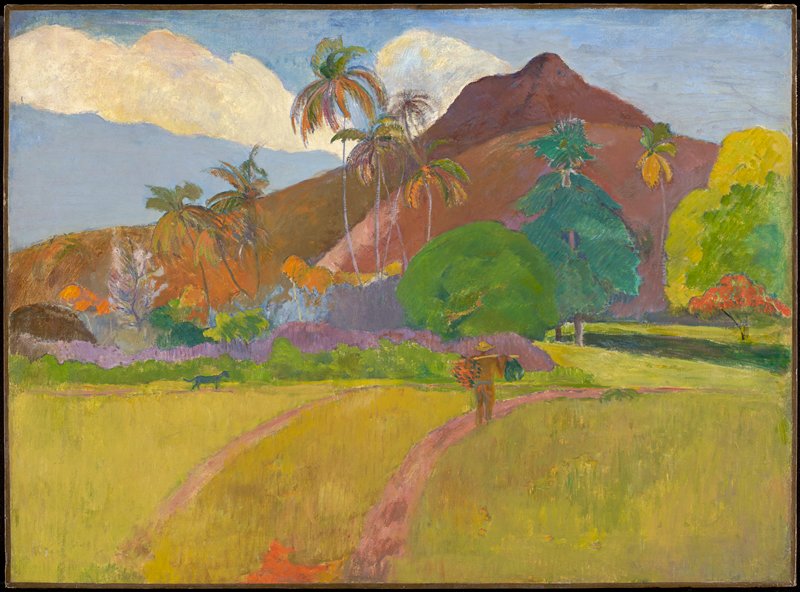
Tahitian Landscape, Paul Gauguin, 1891

Tahitian Landscape

1891 · Minneapolis Institute of Art

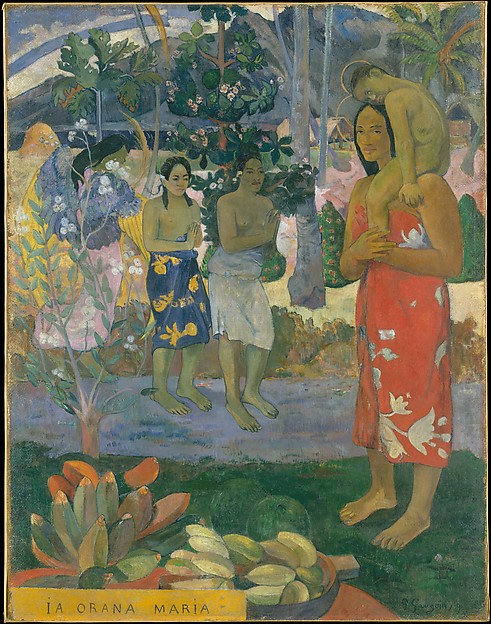
Ia Orana Maria (Hail Mary), Paul Gauguin, 1891

Ia Orana Maria (Hail Mary)

1891 · Metropolitan Museum of Art

Emile Gauguin (1874–1955), the artist's son, Paul Gauguin, ca. 1877–78

Emile Gauguin (1874–1955), the artist's son

ca. 1877–78 · Metropolitan Museum of Art

Madame Alexandre Kohler, Paul Gauguin, 1887/1888

Madame Alexandre Kohler

1887/1888 · National Gallery of Art

Breton Girls Dancing, Pont-Aven, Paul Gauguin, 1888

Breton Girls Dancing, Pont-Aven

1888 · National Gallery of Art

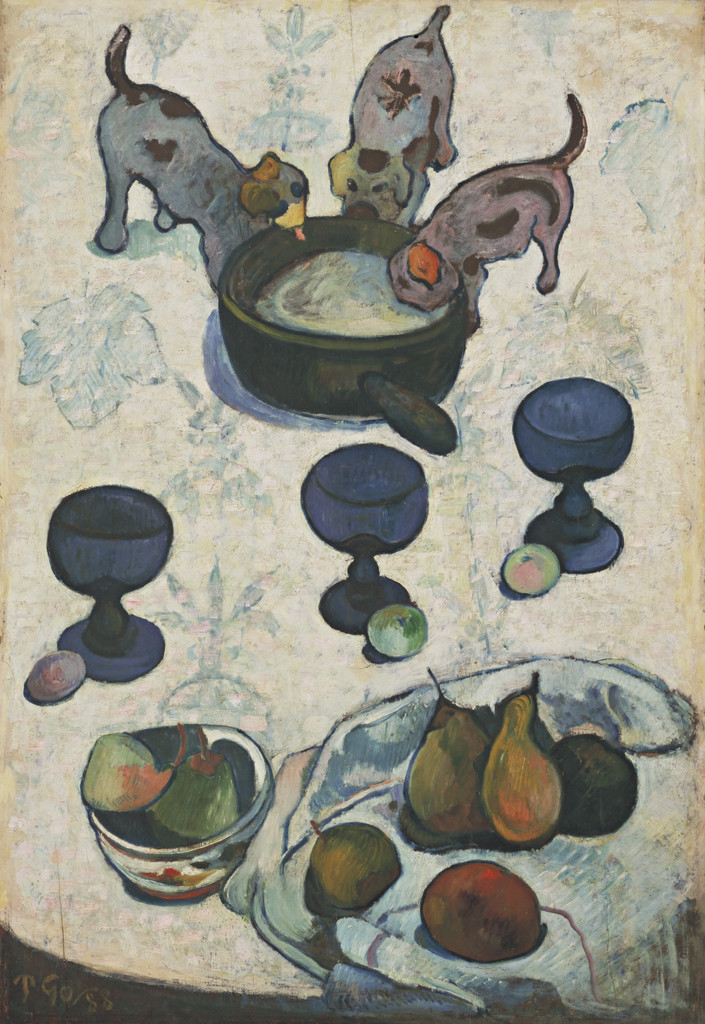
Still Life with Three Puppies, Paul Gauguin, 1888

Still Life with Three Puppies

1888 · Museum of Modern Art

Walking stick with a female nude and a Breton sabot on the handle, Paul Gauguin, ca. 1888–90

Walking stick with a female nude and a Breton sabot on the handle

ca. 1888–90 · Metropolitan Museum of Art

Pair of Wooden Shoes (Sabots) [left], Paul Gauguin, 1889/1890

Pair of Wooden Shoes (Sabots) [left]

1889/1890 · National Gallery of Art