 Pablo PicassoSpagna, 1881–1973
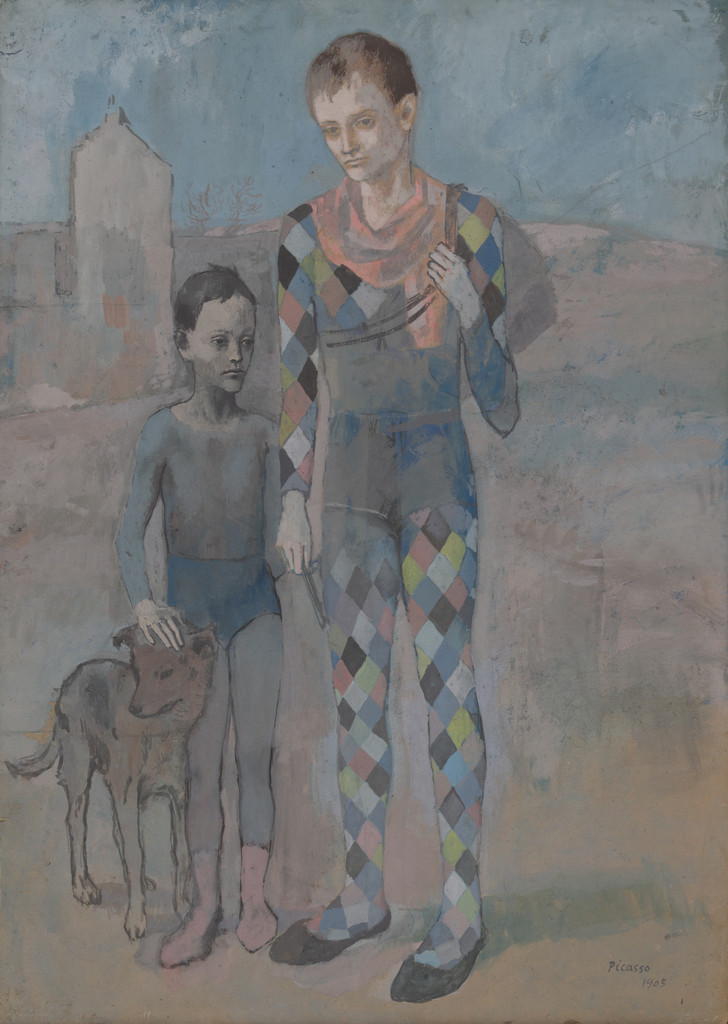
Two Acrobats with a Dog
Si può ammirare?
Al momento non riceve

Museum of Modern Art
New York, Stati Uniti
Appartiene alla collezione, ma al momento non è esposta.
- Verificato
- Fonte
- I dati di collezione del museo stesso
Sull’opera
Due acrobati con cane è un gouache su cartone realizzato nel 1905 dal pittore spagnolo Pablo Picasso. Misura 105,5 × 75 cm.
È conservato nel Museum of Modern Art
di New York.
Come molte altre opere di Picasso, il soggetto è di ambito circense; sono infatti rappresentati due saltimbanchi accompagnati dal cane. Uno dei due è vestito da Arlecchino, personaggio molto amato dall'artista per via del costume a losanghe. Come nella Ragazza di Maiorca i due ragazzi mostrano un'aria melanconica e rattristata, dovuta probabilmente alla loro condizione di emarginazione dalla società.
Scheda
- Numero di inventario
- 223.1985
In catalogo
Fonti
- Museum of Modern Art: the museum's own open data · acquisita 14 giorni fa
- Immagine: Museum of Modern Art — © the artist or rights holder
Nel frattempo, nella vita di Pablo Picasso
Tutta la vita1895–1904 · Luogo di lavoro
Barcelona
1901–1904
The Blue Period
The Blue Period began — somber paintings in blue-green tones with themes of poverty and sorrow; Picasso divided his time between Barcelona and Paris.
1904
Move to Paris, Beginning of the Rose Period
Picasso settled in the Bateau-Lavoir residence in Montmartre; the sorrow of the Blue Period gave way to images of the theater and the circus — the Rose Period began.
1905
Meeting the Steins and Matisse
Picasso became a favorite of the collectors Leo and Gertrude Stein; at one of Gertrude Stein's gatherings in 1905 he met Henri Matisse — a lifelong friend and rival.
1907
Meeting Georges Braque
Picasso met Georges Braque; together they became the founders of Cubism, a movement that rejected the traditions of naturalism.
May 1907
Visit to the Ethnographic Museum
At the Ethnographic Museum in Paris Picasso was struck by the masks of the peoples of Africa, Oceania, and Polynesia — an experience that influenced the formation of Cubism.