George RickeyStati Uniti, 1906–2002
Three Squares Gyratory
Si può ammirare?
Sì, riceve visite
Esposta al pubblico. Chi lo garantisce è indicato qui sotto.
- Verificato
- Ultimo cambio di stato
- Fonte
- Il museo
Sulla scultura
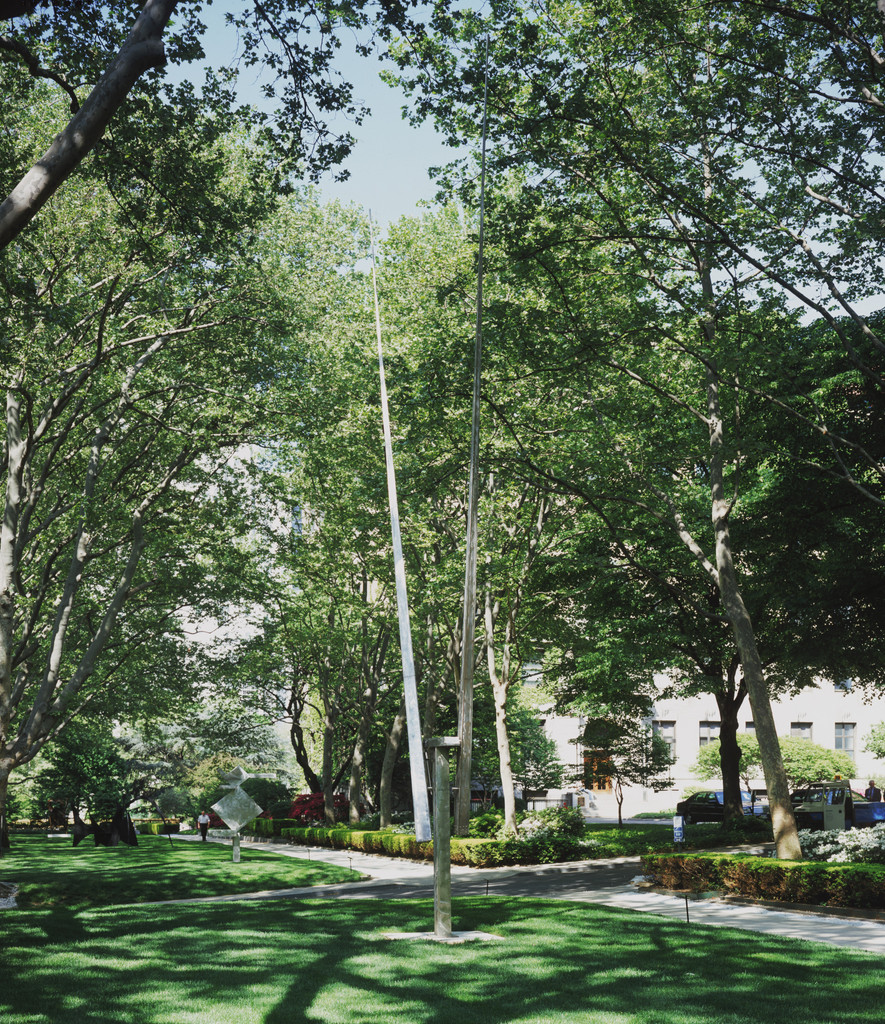
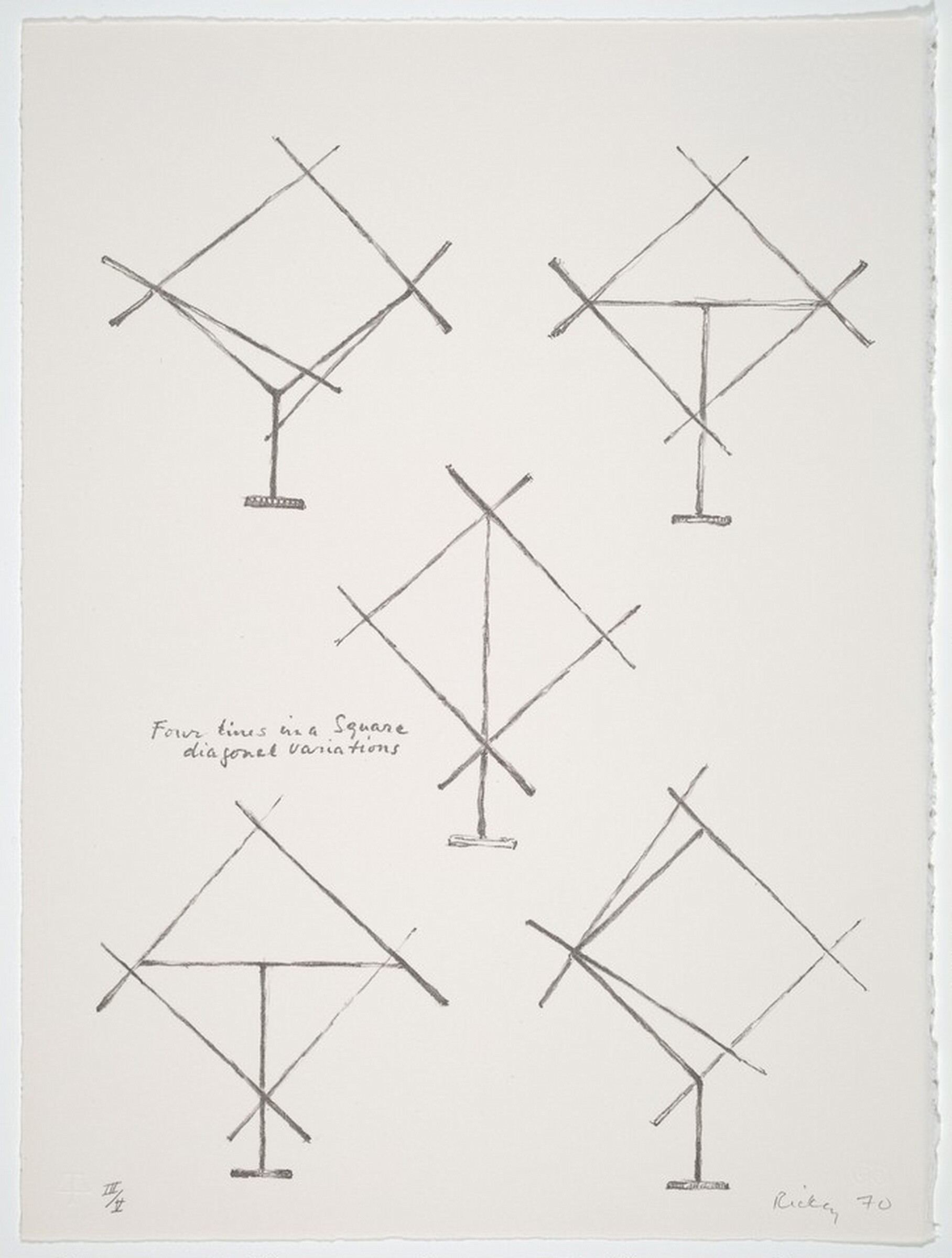
Three large squares act as sails, catching the slightest breeze and setting this sculpture in motion. Spaced evenly apart from one another, the squares rotate around horizontal supports. These moving parts are attached to a central support about fourteen feet tall. Around this strong vertical axis, the squares move slowly--and randomly--in either direction. George Rickey's kinetic sculpture is a study in aerodynamics: light enough to be sensitive to the gentlest air current, the work can withstand powerful winds; composed of simple forms, the sculpture displays complex, spontaneous movements. The title alludes to this motion--"gyratory" refers to a whirling or revolving form. In 1965, Rickey began buffing the stainless steel planes of his sculptures to make them more responsive to motion and changes in ambient light. This technique made the movement of his work less predictable--encouraging the viewer to spend time observing his sculptures. Rickey's polishing process can be appreciated in the shimmering surface effects of this work.
Getty Museum
Scheda
- Numero di inventario
- 2005.119
In catalogo
Fonti
- Getty Museum
- Immagine: Getty Museum — ; In Copyright