ART WIKI33.040 in sala
MappaCollezioneArtistiMuseiMostreRivista
Accedi

ART WIKI

Dove è appeso il capolavoro, e quando si può entrare.

Collezioni: Art Institute of Chicago, Cleveland Museum of Art, Ermitage, Galleria Tret'jakov, Getty Museum, Harvard Art Museums, Hirshhorn Museum and Sculpture Garden, Metropolitan Museum of Art, Minneapolis Institute of Art, Museo del Louvre, Museo Puškin delle belle arti, Museo russo, Museum of Modern Art, National Gallery of Art, National Museum of Asian Art, National Portrait Gallery, Rijksmuseum, Smithsonian American Art Museum, Statens Museum for Kunst, Victoria and Albert Museum, Villa Getty, Whitney Museum of American Art, Catalogo statale del fondo museale russo (274 musei), Europeana (19 musei), Wikidata (6 musei), Paris Musées (12 musei) e Joconde, la banca dati dei musei del Ministero della Cultura francese (495 musei). Le immagini appartengono ai titolari dei diritti.

Sezioni

  • Mappa
  • Ricerca
  • Collezione
  • Capolavori
  • Esposte ora
  • Artisti

Altro

  • Musei e gallerie
  • Mostre
  • Rivista
  • Da dove vengono i dati
  • Privacy e cookie
HomeMappaCatalogo
  1. Collezione/
  2. Museo d'Orsay/
  3. The Wounded Man
The Wounded Man, Gustave Courbet, 1844
Gustave Courbet, ritrattoGustave CourbetFrancia, 1819–1877

The Wounded Man

1844 · Painting · 81.5 × 97.5 cm

Si può ammirare?

Non si sa

Museo d'Orsay

Parigi, Francia

Il proprietario è noto; non si sa se oggi sia esposta.

Ultimo cambio di stato
29 set 2026
Fonte
Il museo
Sulla mappaPagina del museo

Sul dipinto

The Wounded Man (French: L'Homme blessé) is an oil-on-canvas self-portrait created between 1844 and 1854 by the French Realist painter Gustave Courbet. In it, Courbet depicts himself in a romantic theme as a suffering, heroic man. Originally, the composition featured a woman leaning on the artist's shoulder. Sometime before May 1854, Courbet replaced her with a sword, and added a red bloodstain on his shirt. Courbet's decision to depict himself as a wounded man may have arisen from his distress at the dissolution, circa 1851, of his 14-year relationship with Virginie Binet, with whom he had a son.

Wikipedia · CC BY-SA

Scheda

1844 · a 25 anni
18191877
Numero di inventario
RF 338

In catalogo

DipintiPittura franceseRomanticismoRealismoXIX secolo

Fonti

  • Wikidata
  • Immagine: Museo d'Orsay — Gustave Courbet · Public domain · Wikimedia Commons

Nel frattempo, nella vita di Gustave Courbet

Tutta la vita
  1. 1844

    “Self-Portrait with Black Dog” accepted by the 1844 Salon

    “Self-Portrait with Black Dog” (c. 1842–44) was accepted for exhibition at the Salon of 1844.

  2. c. 1844 – 1847

    Brasserie Andler: the realists' circle

    Around these years Courbet built ties in Paris artistic circles: he frequented the Brasserie Andler next to his studio, where proponents of realism in art and literature gathered, among them Charles Baudelaire and Honoré Daumier.

  3. 1844–1847

    Ornans, Belgium and the Netherlands

    Between 1844 and 1847 Courbet visited Ornans several times and also travelled to Belgium and the Netherlands, where he made contact with picture dealers. His trip to Holland in 1847 further strengthened his admiration for Rembrandt and Hals.

Altre opere di Gustave Courbet

Tutte le opere
Young Ladies of the Village, Gustave Courbet, 1851–52

Young Ladies of the Village

1851–52 · Metropolitan Museum of Art

Woman with a Parrot, Gustave Courbet, 1866

Donna con pappagallo

1866 · Metropolitan Museum of Art

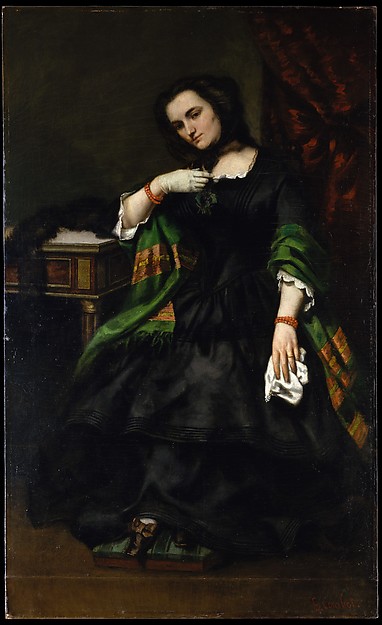
Madame Auguste Cuoq (Mathilde Desportes, 1827–1910), Gustave Courbet, ca. 1852–57

Madame Auguste Cuoq (Mathilde Desportes, 1827–1910)

ca. 1852–57 · Metropolitan Museum of Art

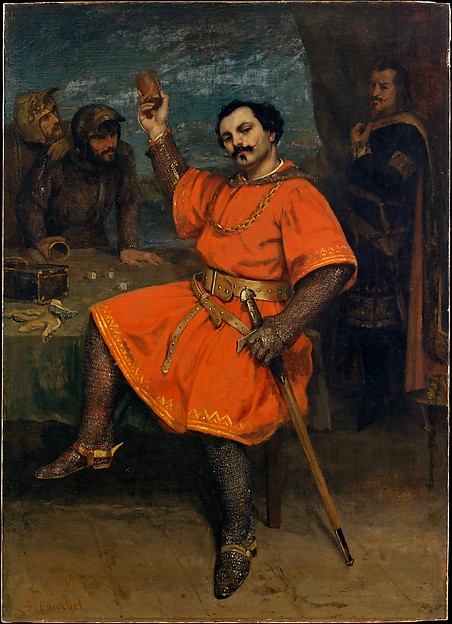
Louis Gueymard (1822–1880) as Robert le Diable, Gustave Courbet, 1857

Louis Gueymard (1822–1880) as Robert le Diable

1857 · Metropolitan Museum of Art

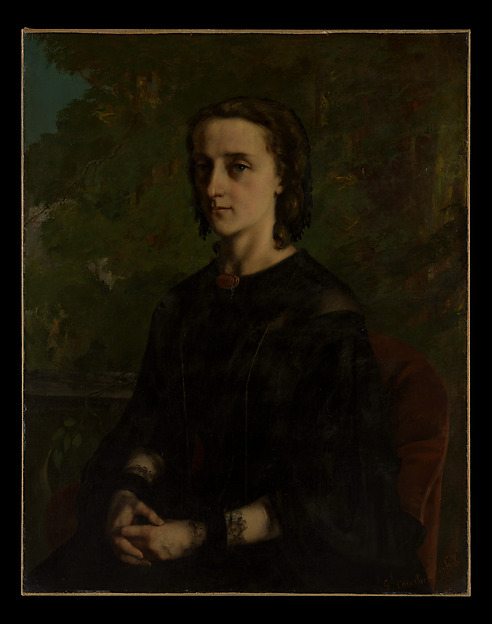
Madame Frederic Breyer (Fanny Hélène Van Bruyssel, 1830–1894), Gustave Courbet, 1858

Madame Frederic Breyer (Fanny Hélène Van Bruyssel, 1830–1894)

1858 · Metropolitan Museum of Art

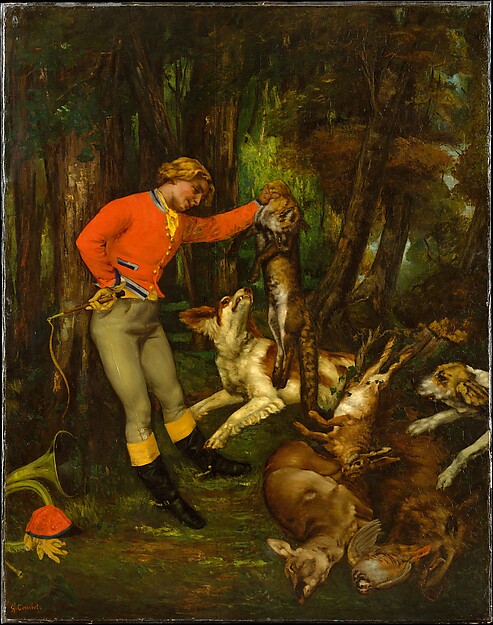
After the Hunt, Gustave Courbet, ca. 1859

After the Hunt

ca. 1859 · Metropolitan Museum of Art

The Source, Gustave Courbet, 1862

Donna alla sorgente

1862 · Metropolitan Museum of Art

Portrait of a Man, Gustave Courbet, probably ca. 1862

Portrait of a Man

probably ca. 1862 · Metropolitan Museum of Art

Dalla collezione: Museo d'Orsay

Pagina del museo
Still Life: Japanese Vase with Roses and Anemones, Vincent van Gogh, 1890

Vincent van Gogh

Still Life: Japanese Vase with Roses and Anemones, 1890

Chaumes de Cordeville, Vincent van Gogh, 1890

Vincent van Gogh

Chaumes de Cordeville, 1890

Doctor Gachet's Garden in Auvers, Vincent van Gogh, 1890

Vincent van Gogh

Doctor Gachet's Garden in Auvers, 1890

Two Children, Vincent van Gogh, 1890

Vincent van Gogh

Two Children, 1890

The siesta (after Millet), Vincent van Gogh, 1890

Vincent van Gogh

The siesta (after Millet), 1890

Marguerite Gachet in the Garden, Vincent van Gogh, 1890

Vincent van Gogh

Marguerite Gachet in the Garden, 1890

The Church at Auvers, Vincent van Gogh, 1890

Vincent van Gogh

La chiesa di Auvers, 1890

Portrait of Dr. Gachet, Vincent van Gogh, 1890

Vincent van Gogh

Portrait of Dr. Gachet, 1890