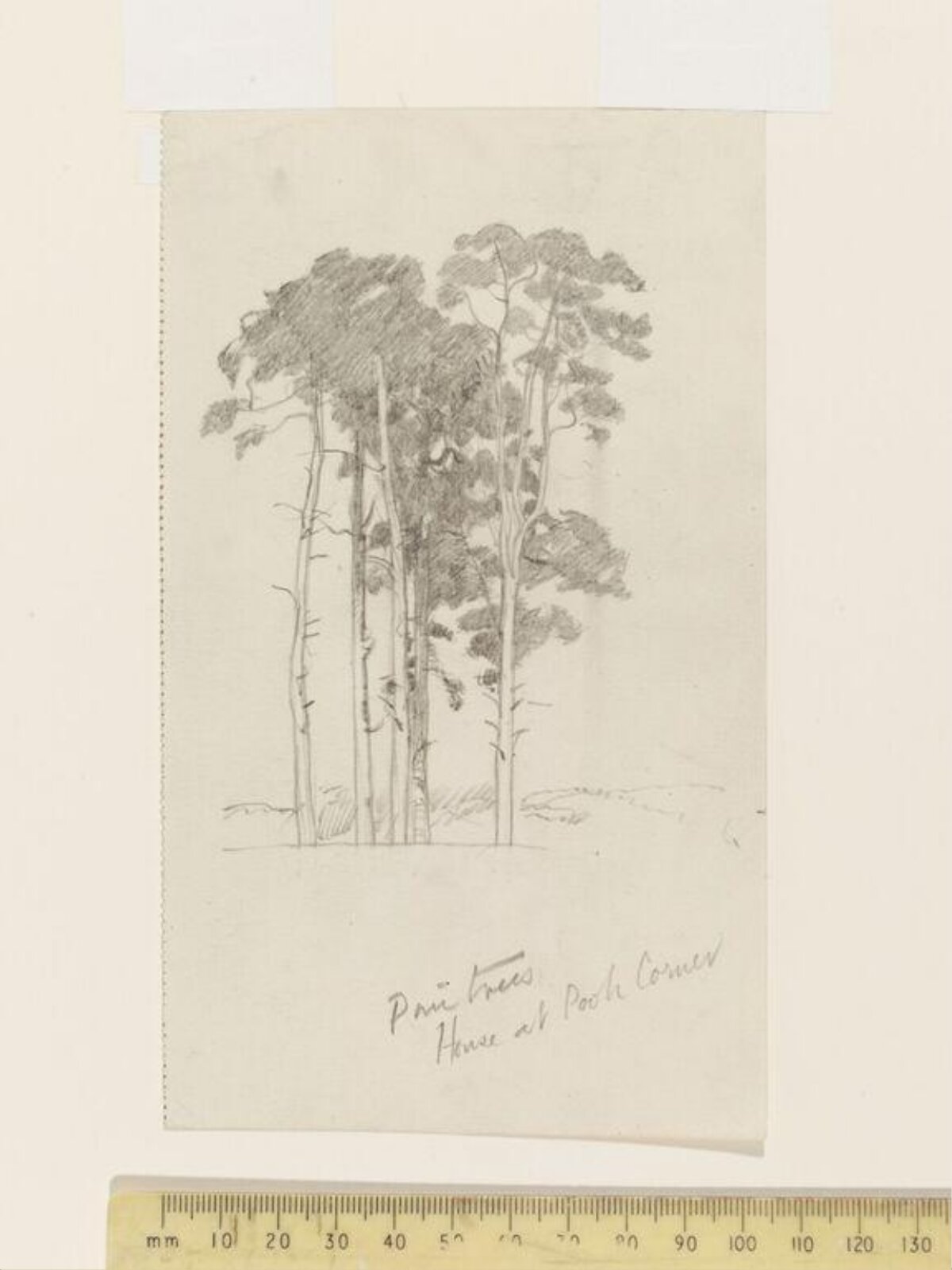
The House at Pooh Corner
Si può ammirare?
Al momento non riceve

Londra, Regno Unito
Appartiene alla collezione, ma al momento non è esposta.
- Verificato
- Ultimo cambio di stato
- Fonte
- Il museo
Sull’opera
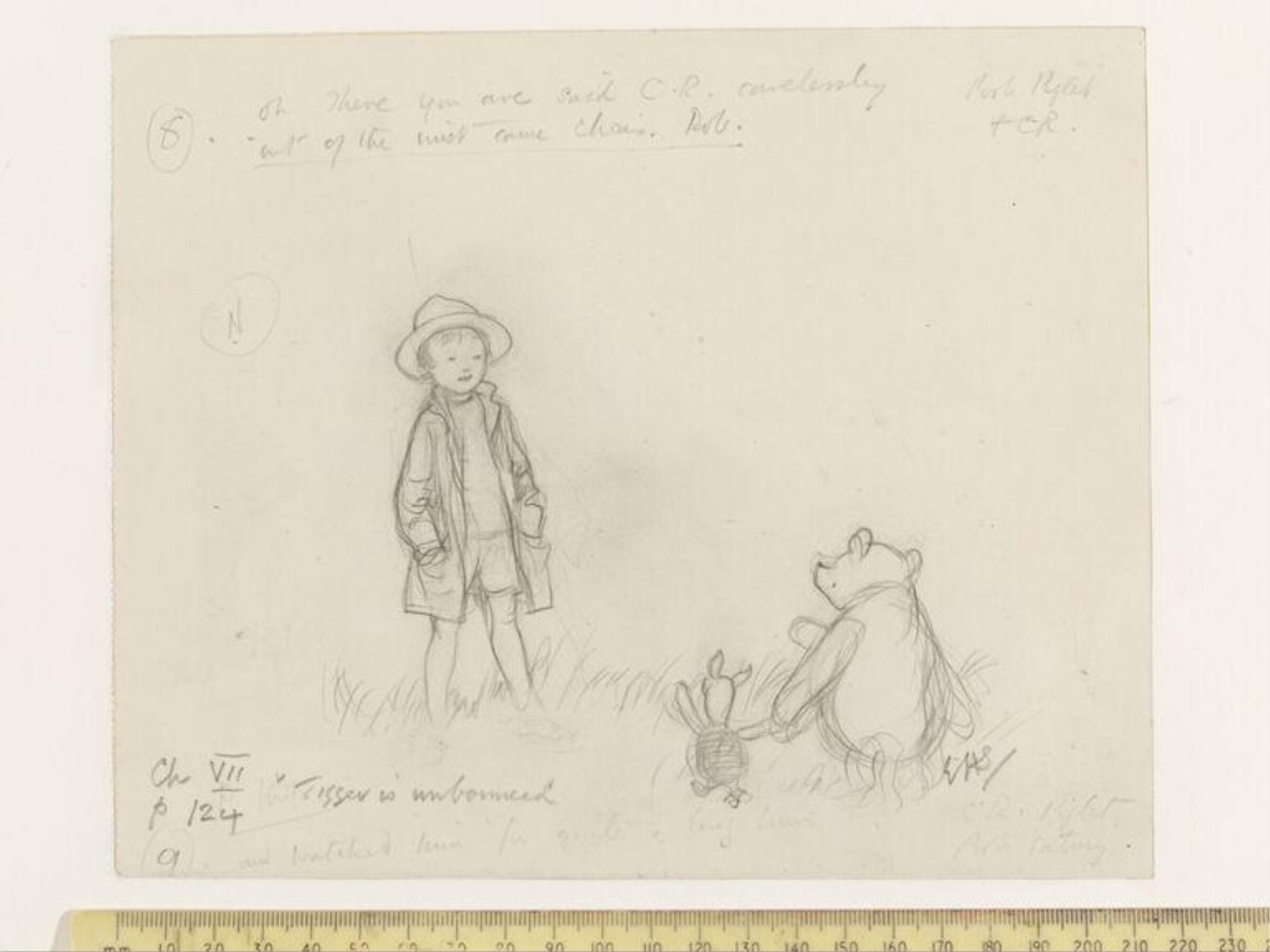
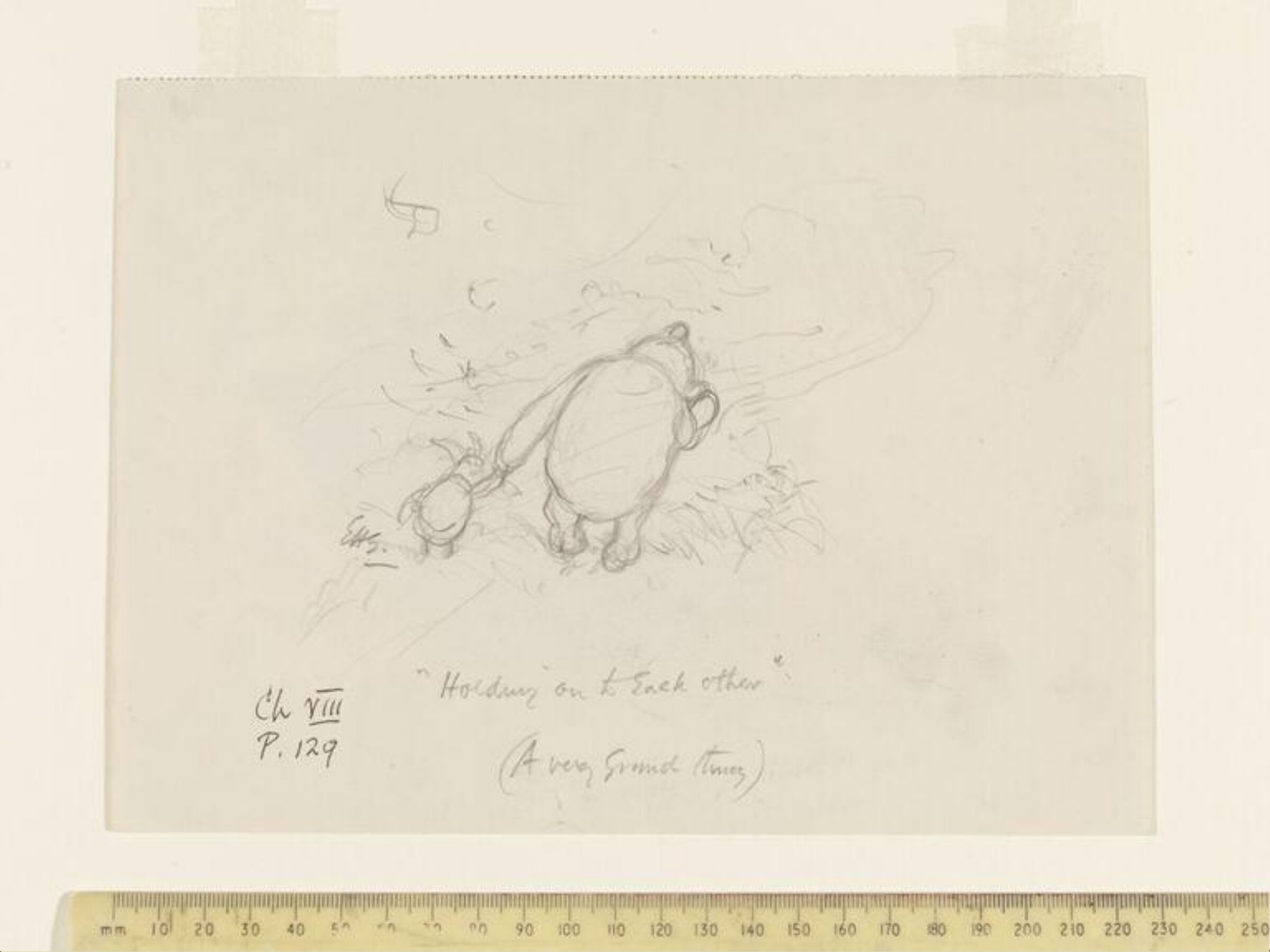
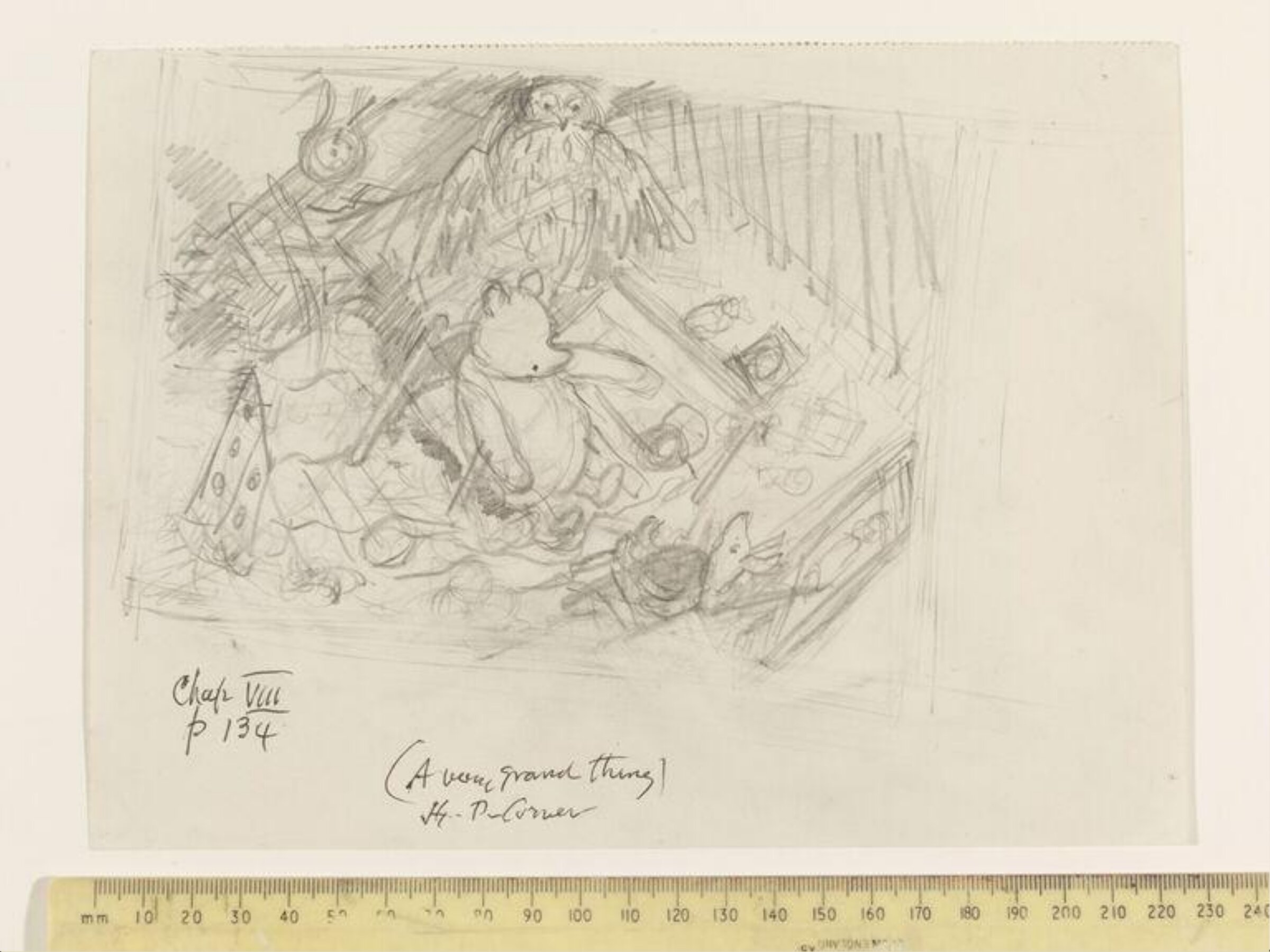
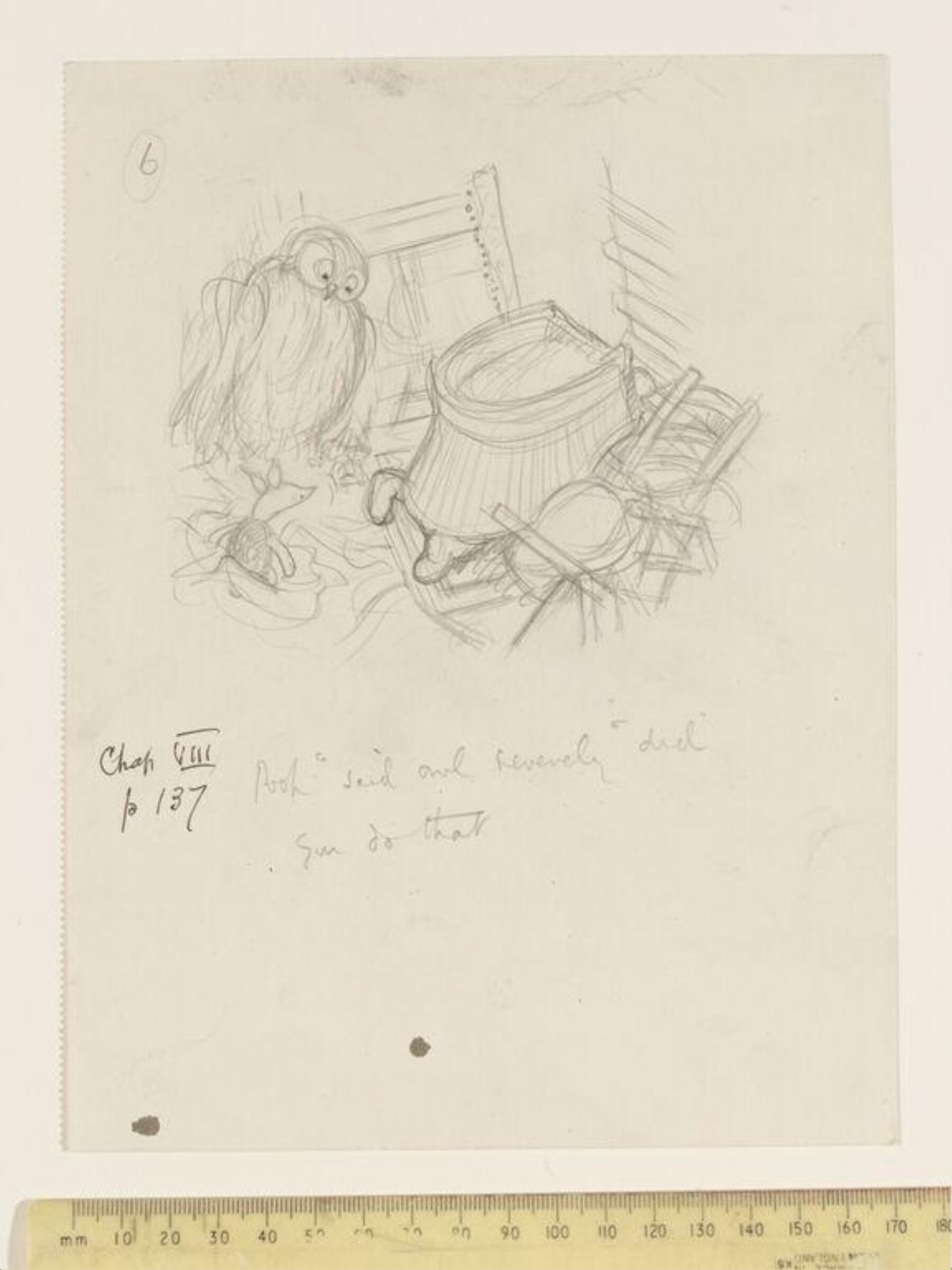
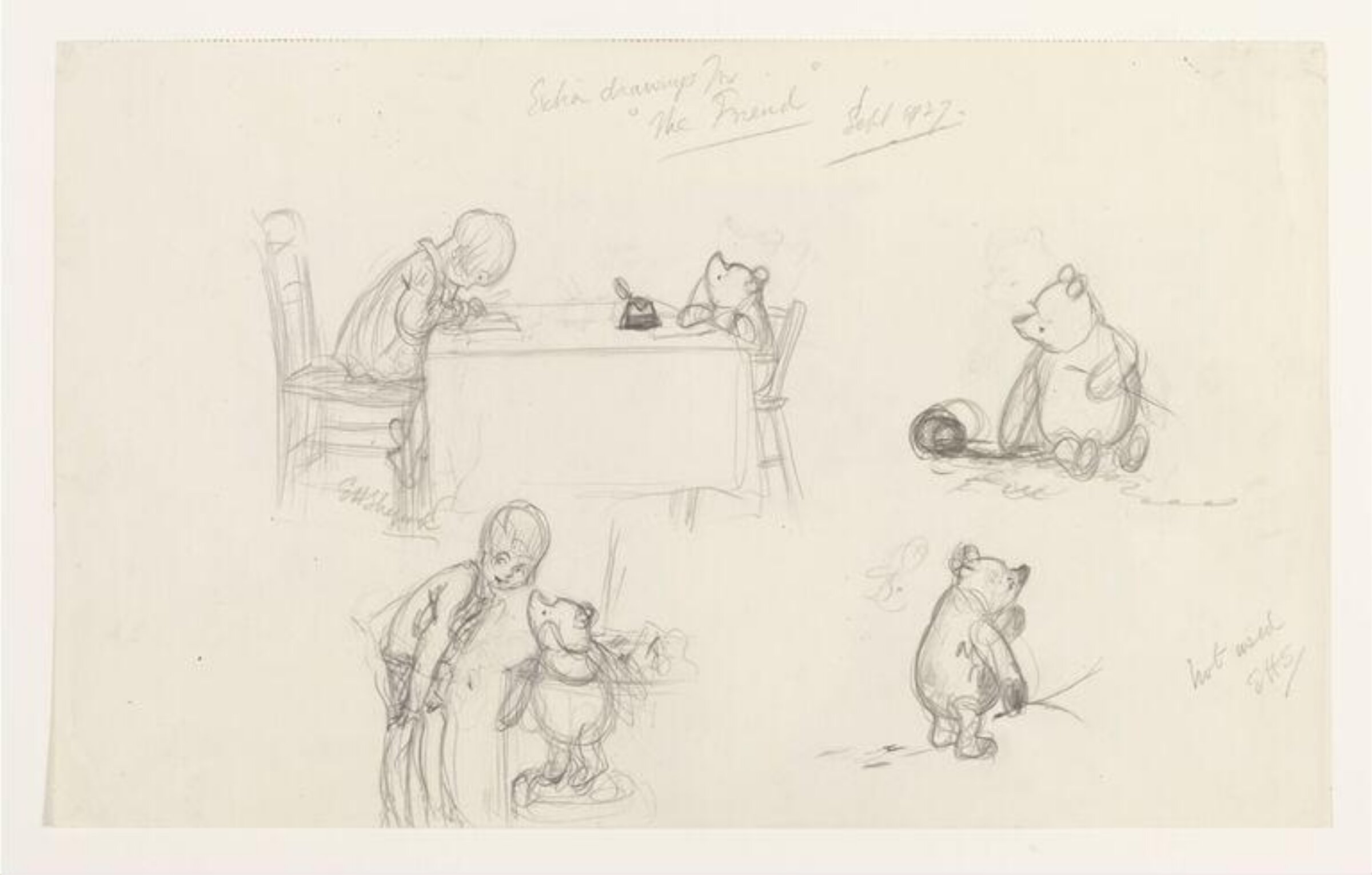
Between 1924 and 1928 the writer A.A. Milne and illustrator E.H. Shepard collaborated on two books of verse (When We Were Very Young and Now We Are Six) and two children’s books (Winnie-the-Pooh and The House at Pooh Corner). The verses were inspired by Milne’s young son Christopher, and the books introduced his toys as characters, including his favourite bear Winnie-the-Pooh, a timid-looking piglet and a grumpy grey donkey. In the stories Christopher Robin and the animals live in the Hundred Acre Wood, which is based on Ashdown Forest in East Sussex where the Milnes had a weekend home.
Leggi
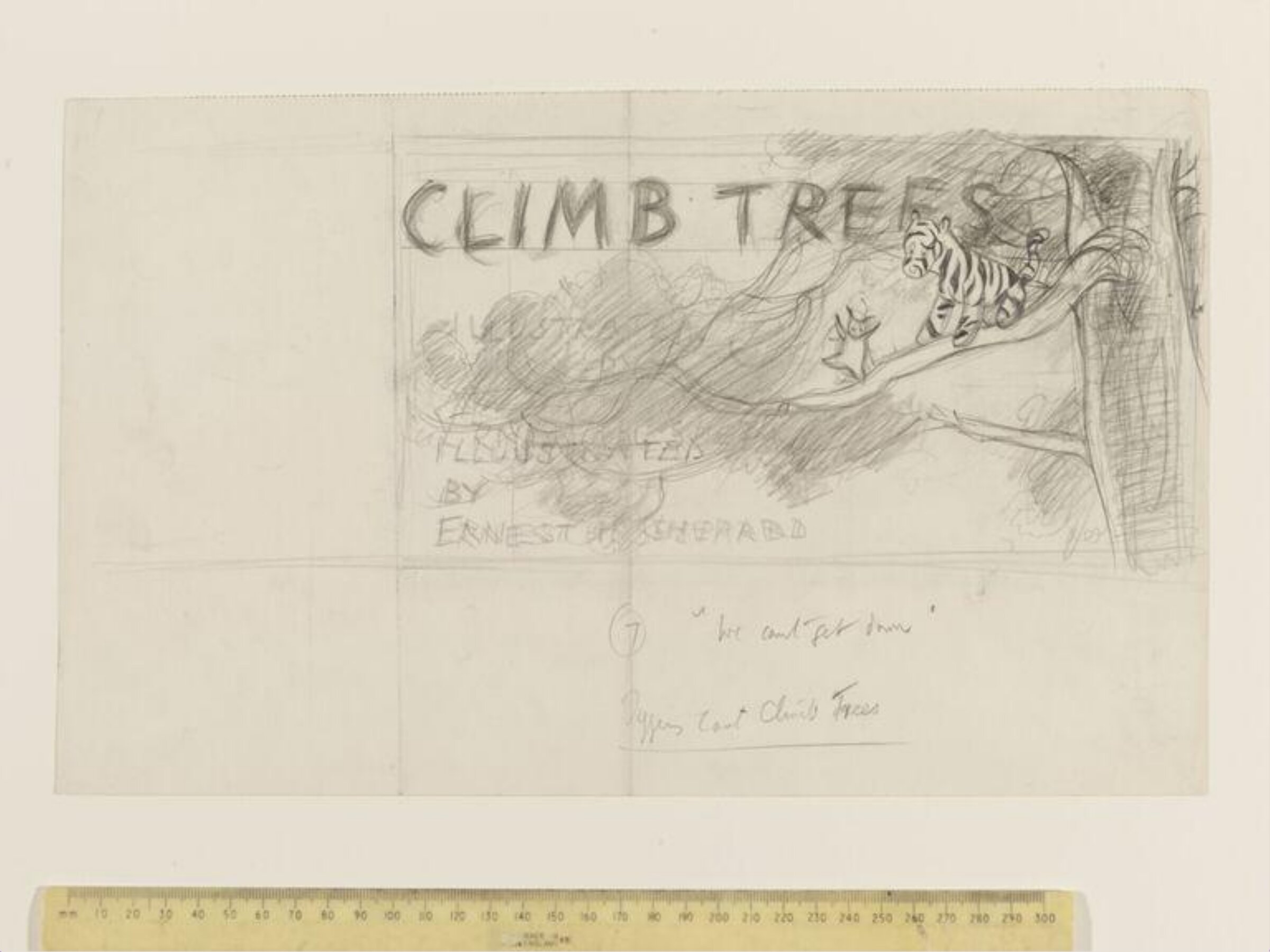
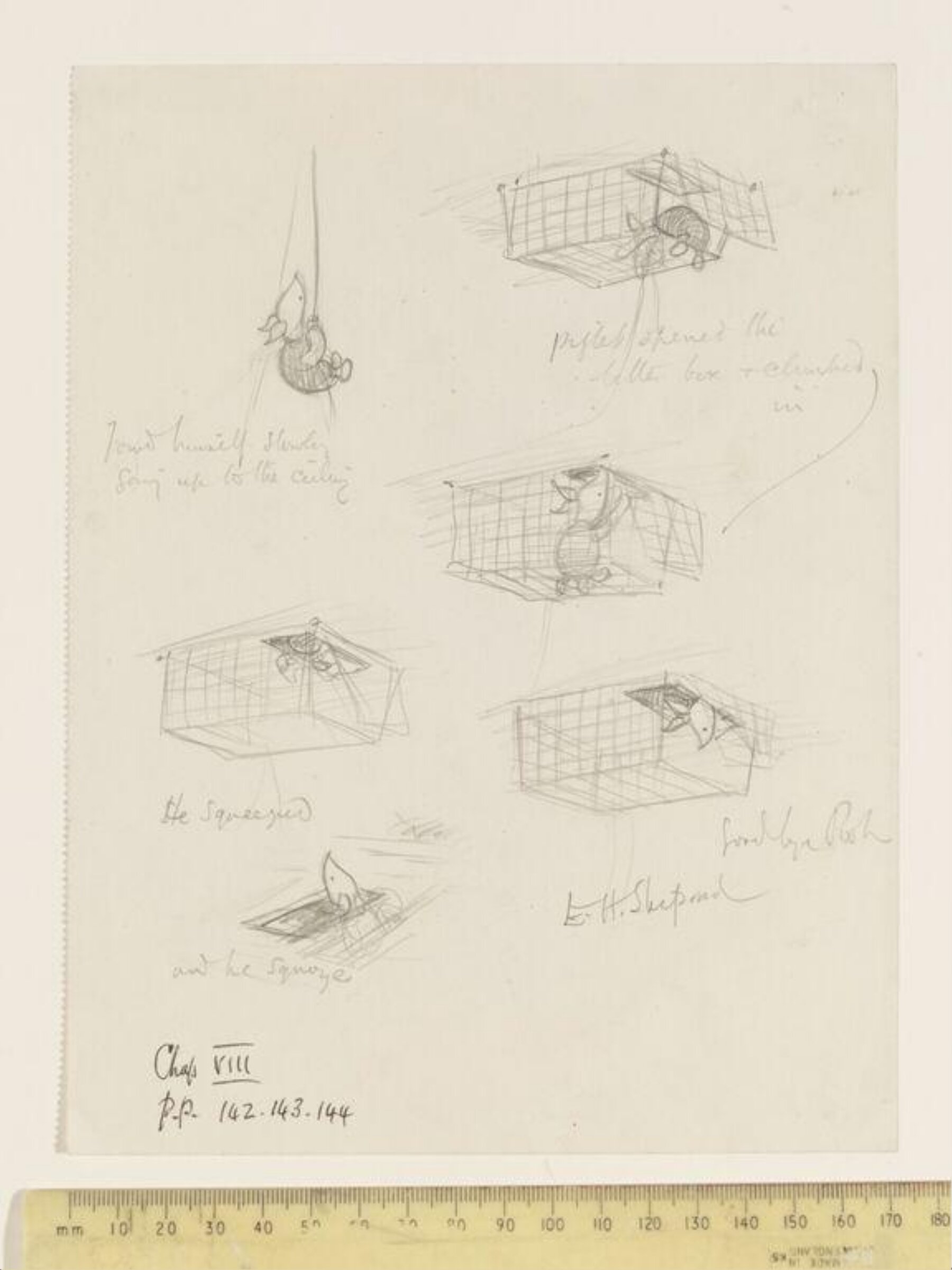
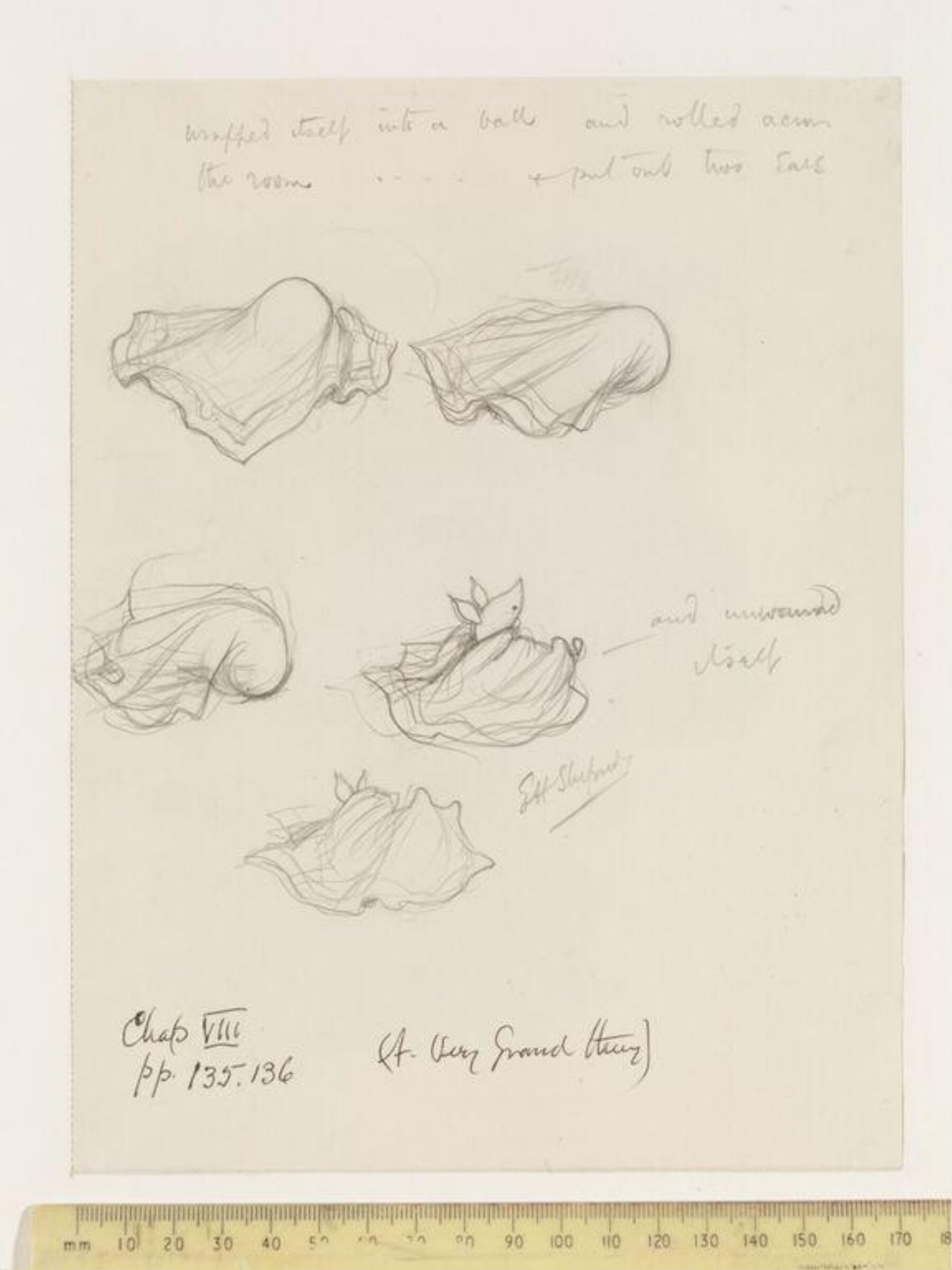
The success and enduring popularity of the books is due in no small part to the creative collaboration between Milne and Shepard. Shepard’s simple but vivid and humorous illustrations perfectly complement Milne’s text and bring the characters and their forest home to life. Shepard bequeathed over 250 of his pencil sketches for Winnie-the-Pooh, The House at Pooh Corner and Now We Are Six to the V&A, allowing us to see the early stages of his creative process and the first glimpses of some iconic characters and scenes.
While the illustrations of Eeyore, Piglet, Kanga and Roo are very similar to the real toys, Shepard based his final drawings of Winnie-the-Pooh on a bear belonging to his own son, Graham. He described Growler as ‘a wonderful bear’ with ‘a comfortable air and the right waist measurement for Milne’s leading character.’ The toys are often set within realistic landscapes: Shepard visited Ashdown Forest with Milne and his illustrations of the forest are based on real views and individual trees that he saw there. Shepard preferred to draw from life, and revisited the Milnes’ house to sketch Christopher’s new toy Tigger for The House at Pooh Corner. He also made another trip to Ashdown Forest, particularly to capture the circle of Scots pines at the top of a hill which in the book became Galleon’s Lap or the ‘enchanted place’, ‘the only place in the Forest where you could sit down carelessly, without getting up again almost at once and looking for somewhere else’.
These loose pencil sketches were the first stage in Shepard’s illustration process; on some of the drawings you can see that he has drawn a character several times to work out the best position. He then scribbled on the back of the drawing in pencil and went over the lines he wanted to keep, transferring a pencil outline on to a fresh piece of paper. When he was happy with the pencil drawing, he made a finished pen and ink drawing, which was then reproduced on a line block for printing. This box contains one of the first proofs printed from these line blocks.
The page numbers at the bottom of each sheet refer to the first editions, and were probably added by Shepard at a later date when he was sorting the drawings.
Victoria and Albert Museum
Scheda
- Numero di inventario
- E.719-1973
In catalogo
Fonti
- Victoria and Albert Museum
- Immagine: Victoria and Albert Museum — © Victoria and Albert Museum, London