Eadweard MuybridgeInghilterra, 1830–1904
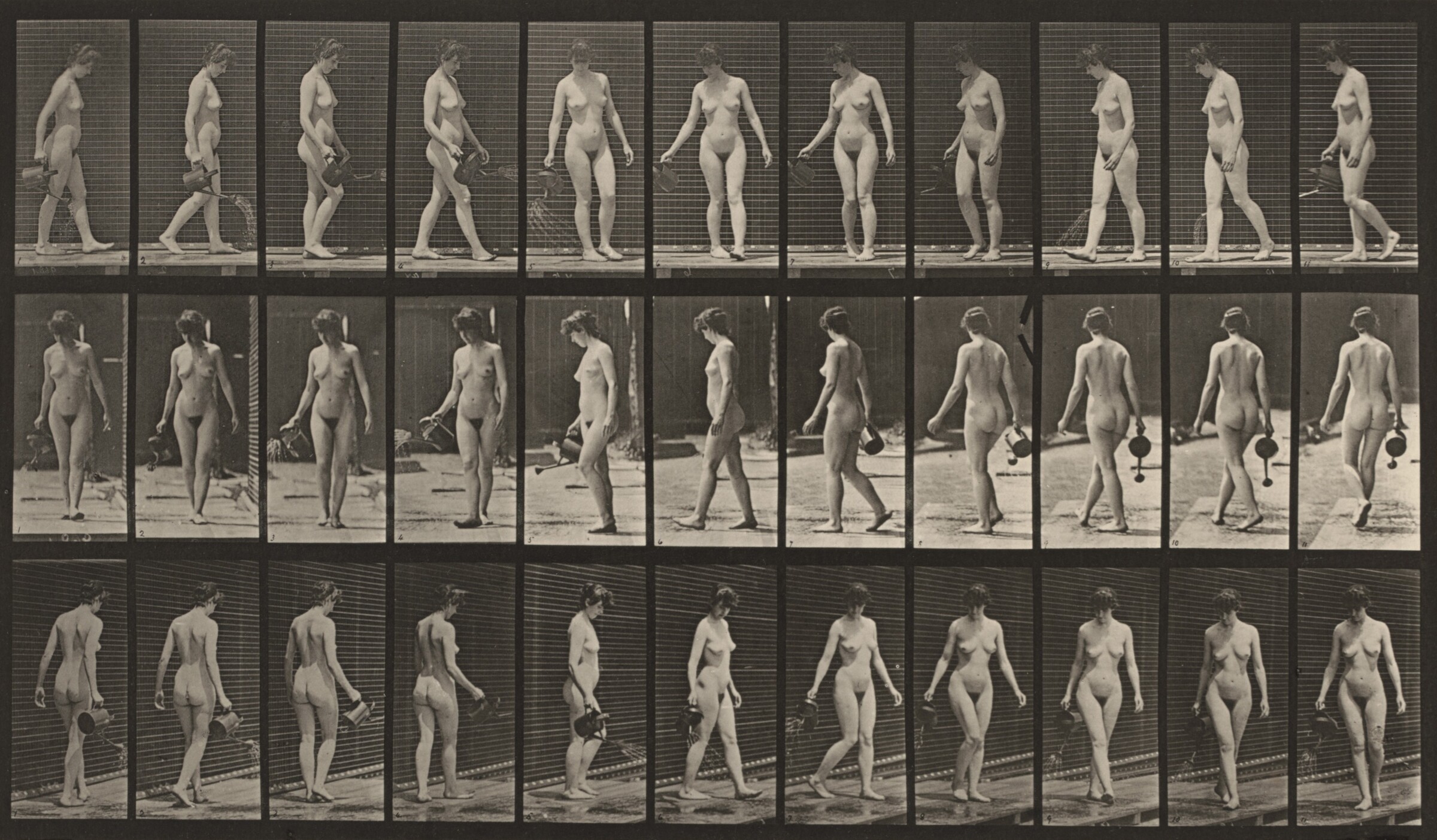
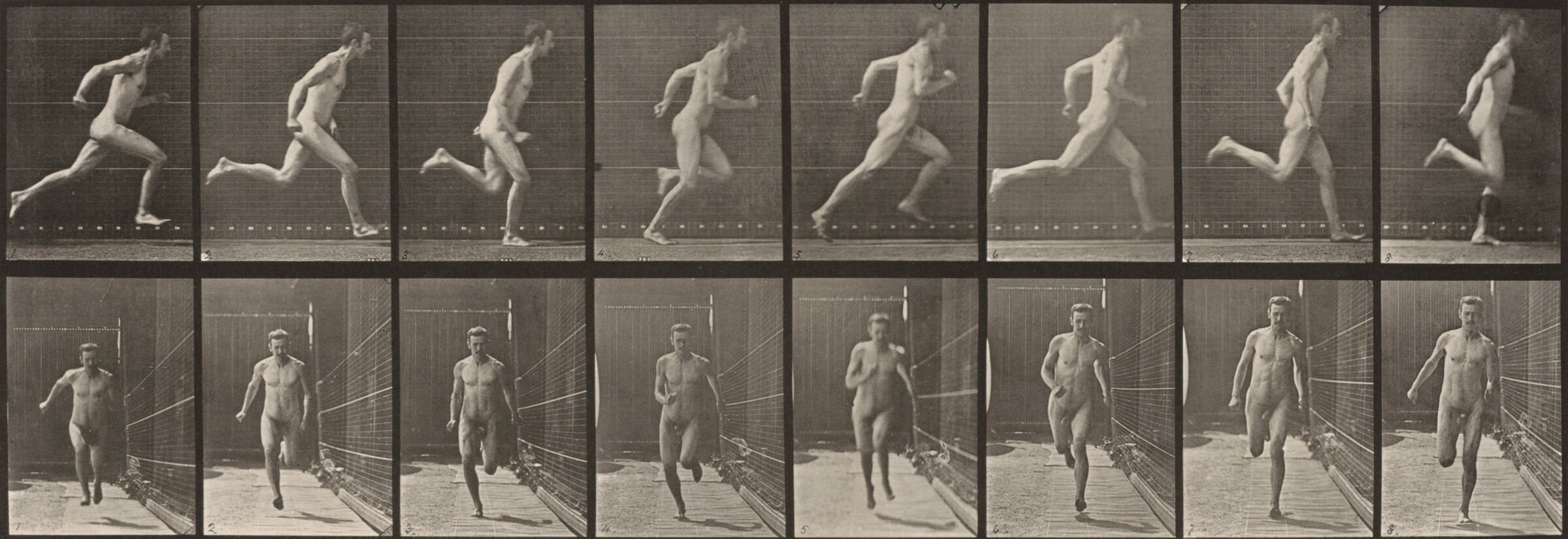
The Horse in Motion
Si può vedere?
Non esposta al momento
Dove si trova «The Horse in Motion» oggi? Collezione: National Gallery of Art, Washington. Non esposta al momento. Verificato 29 settembre 2026.

Washington, Stati Uniti
Appartiene alla collezione, ma al momento non è esposta.
- Verificato
- Ultimo cambio di stato
- Fonte
- Il museo
Scheda
- Numero di inventario
- 2022.154.13
Che cosa raffigura
In catalogo
Fonti
- National Gallery of Art
- Immagine: National Gallery of Art — Museum open access
Nella vita di Eadweard Muybridge
Tutta la vita1878
Patent applications for a sequence shutter
In 1878 Muybridge applied for a patent on a camera sequence shutter with a mechanical trigger to photograph moving objects, and later that year for a further patent using an electrical trigger; he also filed British and French applications.
June 1878
It is revealed when a galloping horse leaves the ground
The pictures showed that a running horse has all four hooves in the air at regular intervals, not with its legs extended to front and back, as illustrators imagined, but when its legs are collected beneath its body as it switches from “pulling” with the front legs to “pushing” with the back legs.
15 June 1878
A demonstration for the press: a snapping strap caught in frame
For the session of 15 June 1878 the press and a selection of turf men were invited; an accident with a snapping strap was captured on the negatives and shown to the attendees, convincing even the most skeptical witnesses. The news of this success was reported worldwide.
8 July 1878
First projection of his photographs at the San Francisco Art Association
The Daily Alta California reported that Muybridge first exhibited magic-lantern projections of his photographs at the San Francisco Art Association on 8 July 1878. Newspapers could not yet reproduce detailed photographs, so the images were widely printed as woodcut engravings, and six series were soon published as cabinet cards titled “The Horse in Motion”.
1879
24 cameras and a very limited-edition portfolio
In 1879 Muybridge continued his studies with 24 cameras and published a very limited-edition portfolio of the results.
c. 1879
The zoopraxiscope: projecting motion from a disc
Muybridge had images from his motion studies hand-copied as silhouettes or line drawings onto a disc, to be viewed in the machine he invented and called the “zoopraxiscope”; later his more detailed images were hand-coloured and marketed commercially. The device was later regarded as an early movie projector.



![Ginevra de' Benci [obverse], Leonardo da Vinci, c. 1474/1478](https://api.nga.gov/iiif/8f29e3c9-a289-4d53-abf0-31a66e9e98fa/full/!2400,2400/0/default.jpg)
![Wreath of Laurel, Palm, and Juniper with a Scroll inscribed Virtutem Forma Decorat [reverse], Leonardo da Vinci, c. 1474/1478](https://api.nga.gov/iiif/ff62e8d0-45c4-498f-ad36-6358de827e04/full/!2400,2400/0/default.jpg)