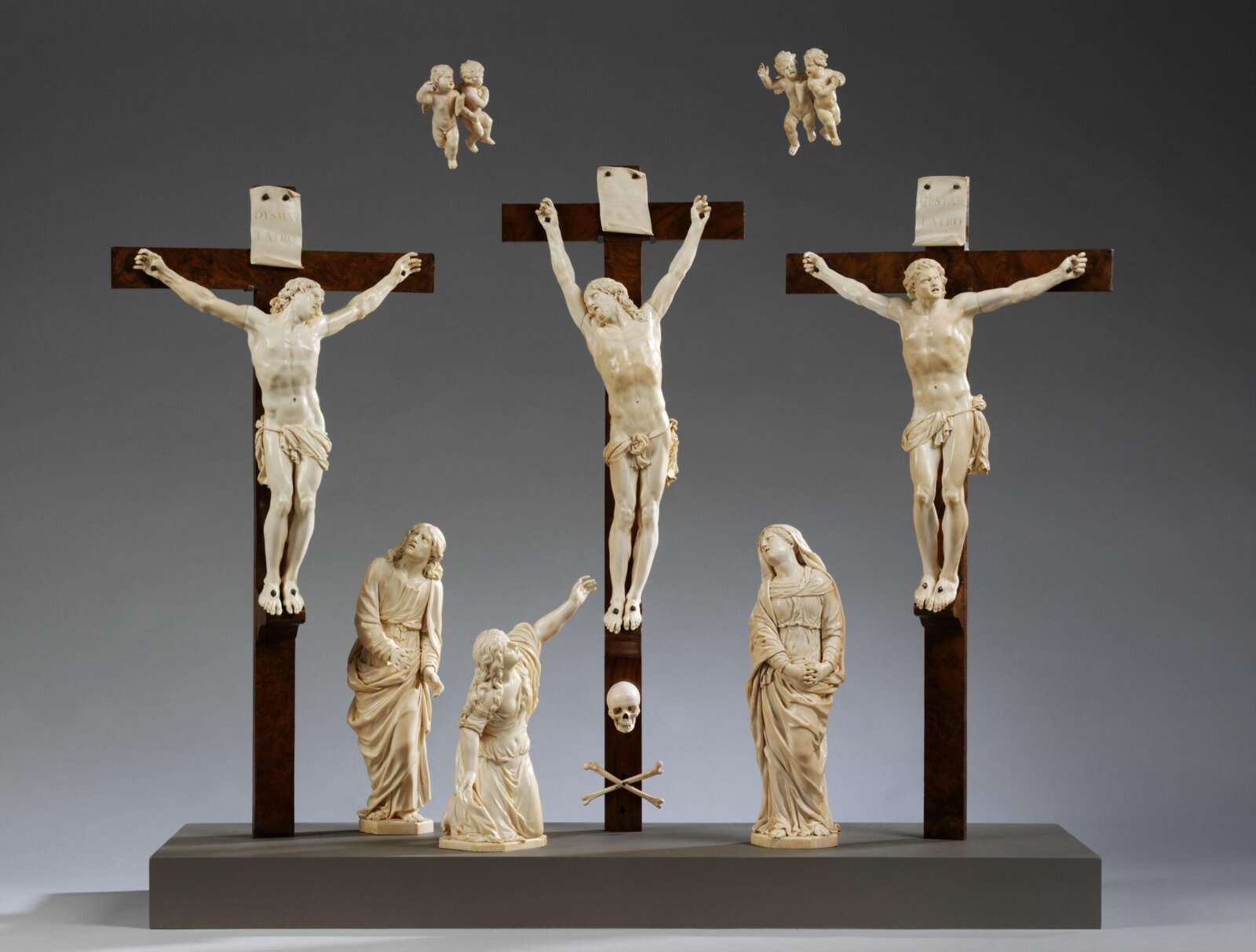
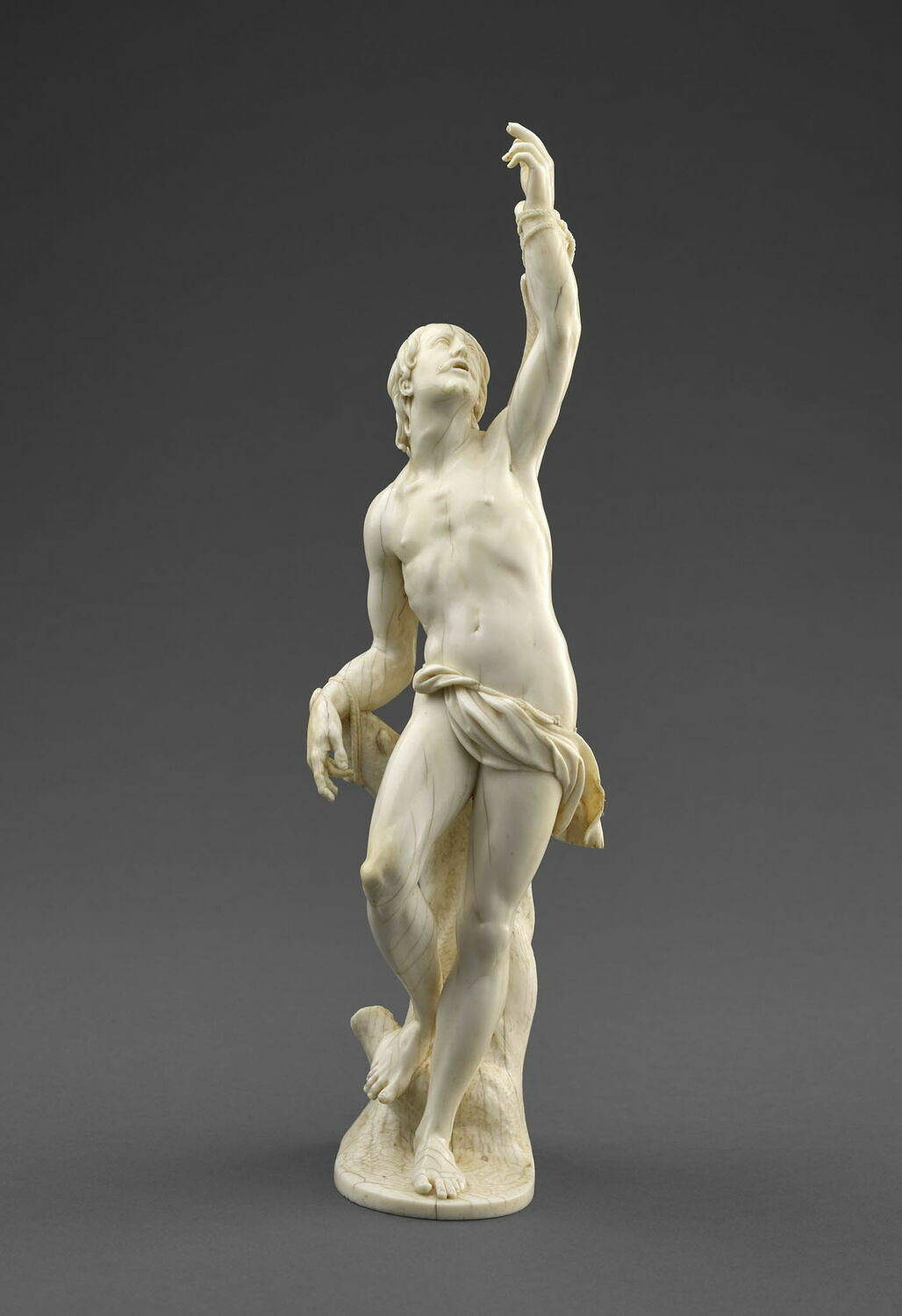
This ivory Crucifixion group is made by Pierre Simon Jaillot in France in 1664. Jaillot (1633-1681) is well known from various documentary sources, largely because of his dispute with Le Brun, Louis XIV's artistic adviser. He was admired above all for his crucifix figures.
This group was probably intended as an altarpiece for a private chapel. It is one of the few documented examples of French ivory carving in the 17th century, and is exceptional among baroque ivories in forming a complete ensemble.
Continua a leggere
Another crucifix by Jaillot was recorded at Ailles in the late 19th century (Cherrier 1899), but is now lost. The present piece is the only signed and dated piece known by him, and is regarded as his most ambitious work. Commentators in the 18th century referred eulogistically to Jaillot’s sculpture, and the anonymous author of Mémoires secrets, published in 1787, noted the sublime character of this Crucifixion group, as well as the Jansenist manner in which Christ’s body was suspended from the cross, his arms almost vertically above his head. It was reproduced in an engraving by Etienne Picart after a painting by Louis Licherie, first published in 1821 (Baker 2011). An unattributed ivory figure of the Good Thief, the only survival from a lost crucifixion group, which is now in the Louvre, is thought to be French and to date from c. 1650. It shows stylistic analogies with the present group.