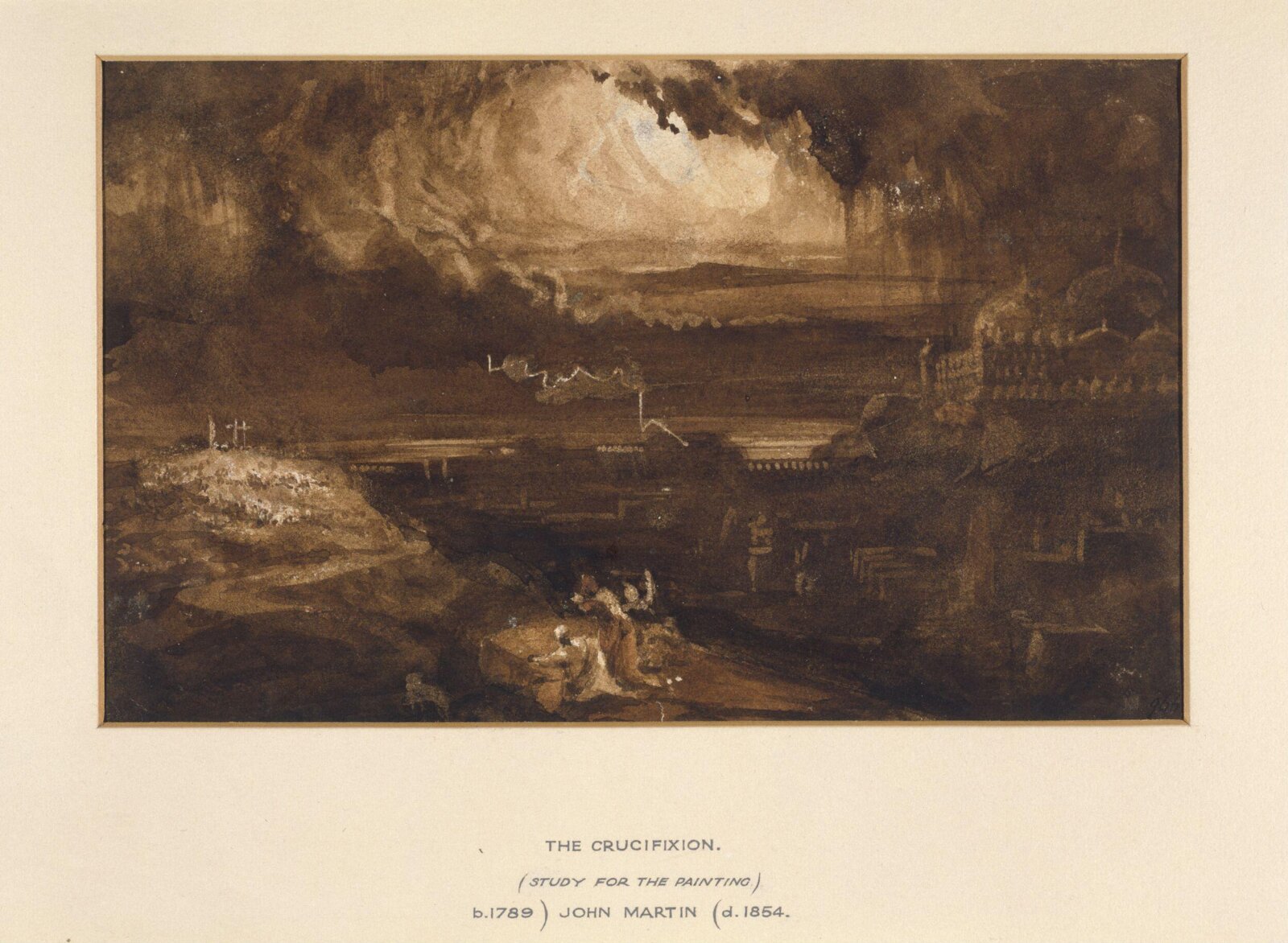
 John MartinInghilterra, 1789–1854
The Crucifixion
Si può ammirare?
Al momento non riceve

Londra, Regno Unito
Appartiene alla collezione, ma al momento non è esposta.
- Verificato
- Ultimo cambio di stato
- Fonte
- Il museo
Scheda
- Numero di inventario
- DYCE.966
Che cosa raffigura
In catalogo
Fonti
- Victoria and Albert Museum
- Immagine: Victoria and Albert Museum — © Victoria and Albert Museum, London
Nel frattempo, nella vita di John Martin
Tutta la vita1811
First picture at the Royal Academy exhibition
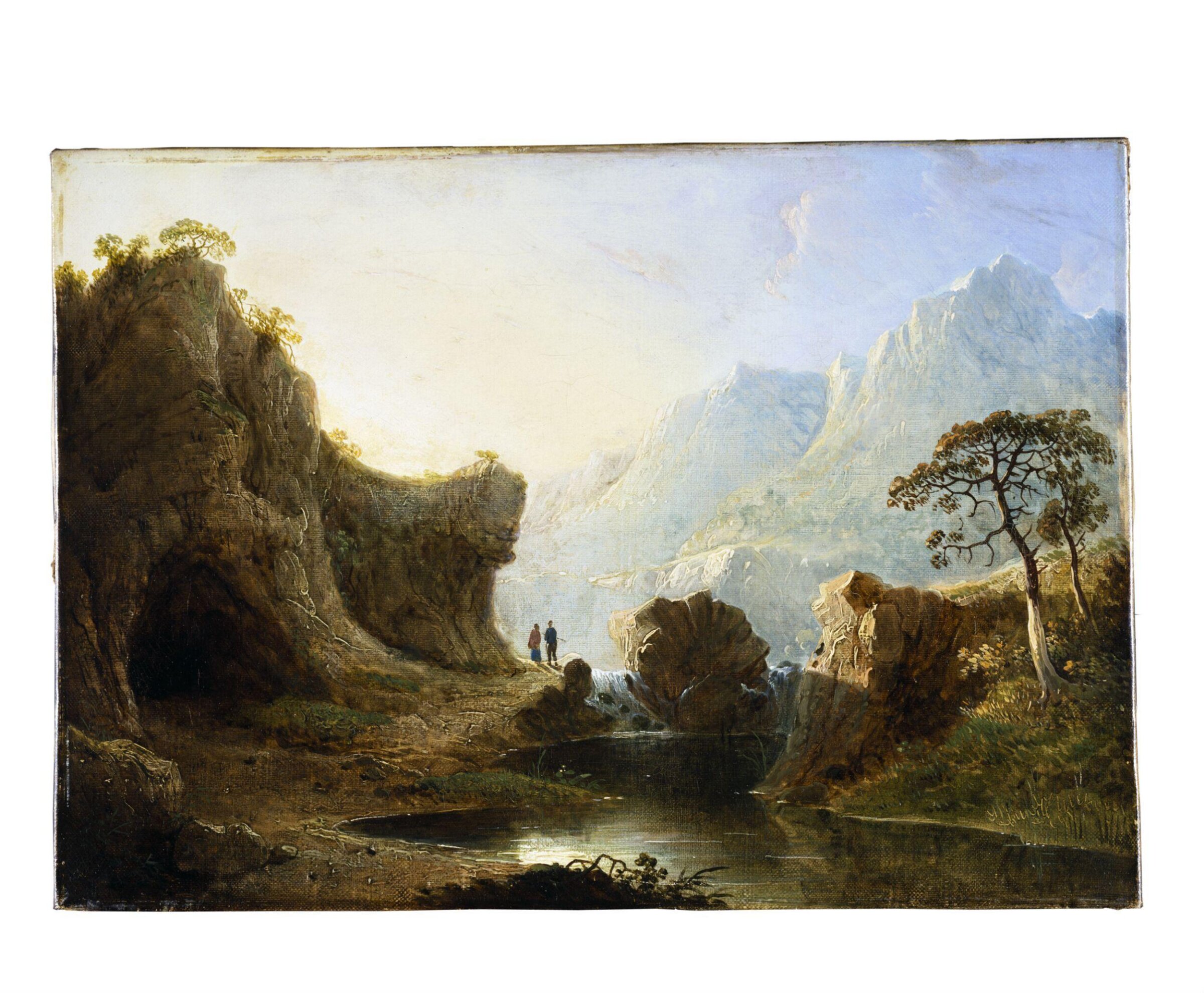
Sent in once again, the same painting is hung in the Great Room under the title “A Landscape Composition” as item no. 46; thereafter Martin produces a succession of large exhibited oil paintings — landscapes and, more usually, grand biblical themes inspired by the Old Testament.
1812
Sells “Sadak” for fifty guineas
Back home with the painting, Martin finds the visiting card of William Manning MP, who wants to buy it; “Sadak” is sold for fifty guineas, and patronage propels the artist’s career.
1820
Five thousand paying viewers for “Belshazzar’s Feast”
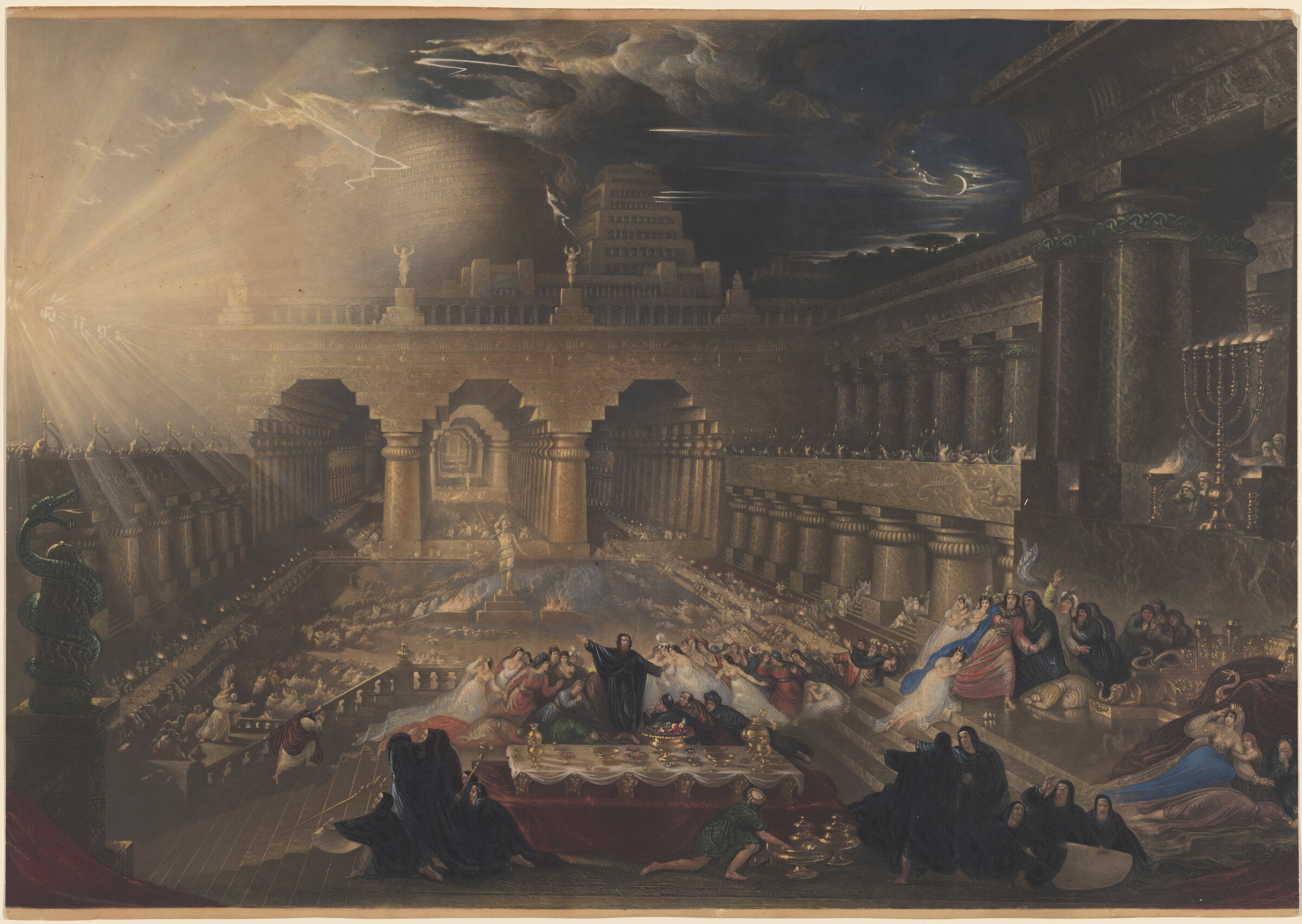
Martin’s triumph: the picture excites much favourable and hostile comment, five thousand people pay to see it, and the British Institution awards it a prize of £200 — the “Joshua” had earlier carried off a premium of £100 there.
1823
Commissioned to engrave “Paradise Lost”
Having begun to experiment with mezzotint, Martin is commissioned by Samuel Prowett to illustrate Milton’s “Paradise Lost” for 2,000 guineas; before the first 24 engravings are finished he is paid a further 1,500 guineas for a second set of 24 on smaller plates. For significant periods of his life he earned more from his engravings than from his paintings.
1825–1827
The “Paradise Lost” engravings are published
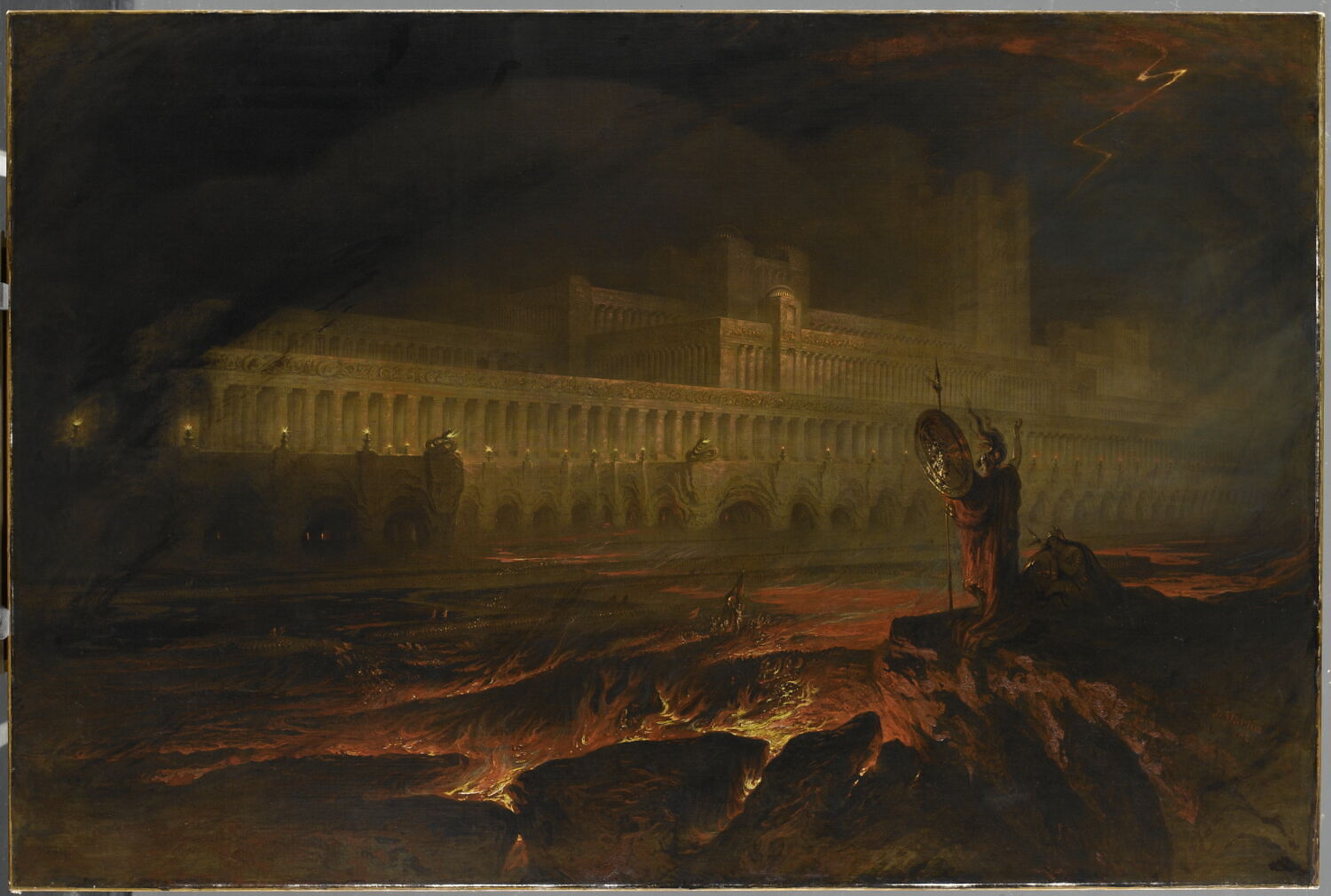
Prowett issues four separate editions of the engravings in monthly instalments — the first appears on 20 March 1825 and the last in 1827; notable prints include “Pandæmonium” and “Satan Presiding at the Infernal Council”, remarkable for the science-fiction element in their architecture, and “Bridge over Chaos”, arguably Martin’s most dramatic composition.
1829
His brother Jonathan sets fire to York Minster
His elder brother, the nonconformist Jonathan Martin, deliberately sets fire to York Minster, causing extensive damage; an onlooker likens the scene to John’s paintings, and his profile rises further. John pays for his brother’s defence at the trial out of his own money: “Mad Martin” is found guilty but is spared the hangman’s noose on the grounds of insanity.