ART WIKI33.040 in sala
MappaCollezioneArtistiMuseiMostreRivista
Accedi

ART WIKI

Dove è appeso il capolavoro, e quando si può entrare.

Collezioni: Art Institute of Chicago, Cleveland Museum of Art, Ermitage, Galleria Tret'jakov, Getty Museum, Harvard Art Museums, Hirshhorn Museum and Sculpture Garden, Metropolitan Museum of Art, Minneapolis Institute of Art, Museo del Louvre, Museo Puškin delle belle arti, Museo russo, Museum of Modern Art, National Gallery of Art, National Museum of Asian Art, National Portrait Gallery, Rijksmuseum, Smithsonian American Art Museum, Statens Museum for Kunst, Victoria and Albert Museum, Villa Getty, Whitney Museum of American Art, Catalogo statale del fondo museale russo (274 musei), Europeana (19 musei), Wikidata (6 musei), Paris Musées (12 musei) e Joconde, la banca dati dei musei del Ministero della Cultura francese (495 musei). Le immagini appartengono ai titolari dei diritti.

Sezioni

  • Mappa
  • Ricerca
  • Collezione
  • Capolavori
  • Esposte ora
  • Artisti

Altro

  • Musei e gallerie
  • Mostre
  • Rivista
  • Da dove vengono i dati
  • Privacy e cookie
HomeMappaCatalogo
  1. Collezione/
  2. Metropolitan Museum of Art/
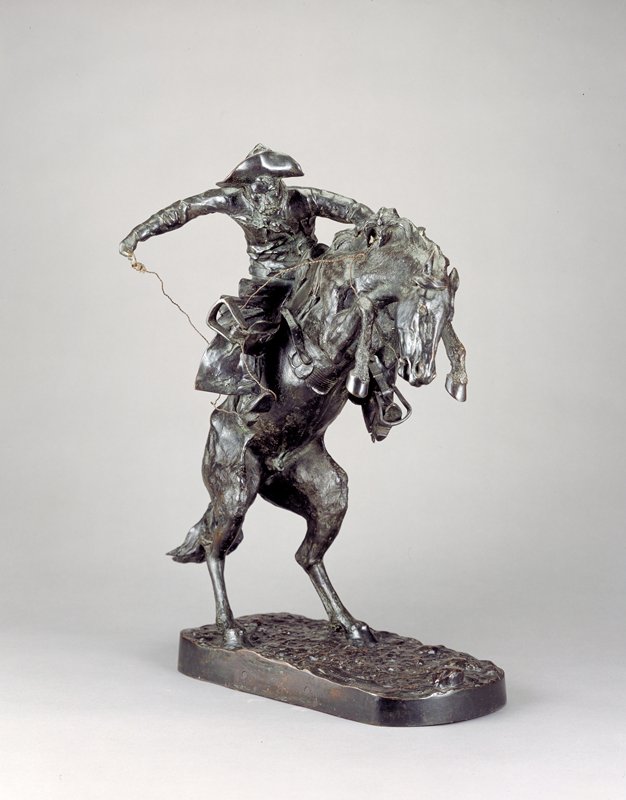
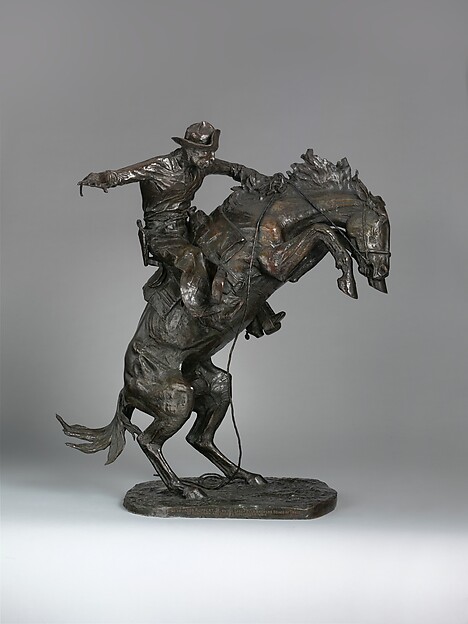
  3. The Broncho Buster
The Broncho Buster, Frederic Remington, 1895, revised 1909, cast by November 1910

The Broncho Buster

1895, revised 1909, cast by November 1910 · Sculpture

Scheda

1895, revised 1909, cast by November 1910
18611909
Numero di inventario
39.65.45

Nel frattempo, nella vita di Frederic Remington

Tutta la vita
  1. September 1893

    “The Evolution of the Cowpuncher” with Owen Wister

    In September 1893 Harper’s Monthly publishes “The Evolution of the Cowpuncher”, Remington’s collaboration with Owen Wister — the first statement of the mythical cowboy in American literature, which spawned the whole genre of Western fiction, films and theatre that followed. Remington supplied the concept, the factual content and the illustrations; Wister supplied the stories, sometimes altering Remington’s ideas.

  2. January 1897

    To Cuba as a correspondent for Hearst's paper

    His association with Roosevelt, then New York City Police Commissioner, pays off: the artist is hired as a war correspondent and illustrator for William Randolph Hearst's New York Journal and sent to Cuba with the celebrity journalist Richard Harding Davis. Cuba's apparent peacefulness leaves them nothing to report; in a famous but probably apocryphal exchange of telegrams, Remington says there will be no war and he wishes to return, and Hearst replies that the artist should furnish the pictures and he will furnish the war. Remington returns to New Rochelle while Davis remains.

  3. 1898

    At war in Cuba: a heroic image shattered

    As the Spanish–American War takes shape, he returns to Cuba to see military action for the first time and goes through the most wrenching, disillusioning experience of his life. Witnessing the assault on San Juan Hill by American forces, including those led by Roosevelt, he sees his heroic conception of war shattered by the actual horror of jungle fighting and the deprivations of camp. His reports and illustrations on his return focus not on heroic generals but on the troops.

  4. 1900

    Harper's drops him; he writes a novel

Altre opere di Frederic Remington

Tutte le opere

Nella stessa sala · Gallery 765, Metropolitan Museum of Art

Pagina del museo

Sullo stesso tema · Uomo

Tutte le opere sul tema

As an economy move, Harper's drops Remington as its star artist. To compensate for the lost work he writes and illustrates a full-length novel, The Way of an Indian, intended for serialization by a Hearst publication; his protagonist, a Cheyenne named Fire Eater, is a prototype Native American as viewed by Remington and many of his time.

  • after 1902

    Decides to give up writing and illustration

    After “John Ermine” Remington decides he will soon quit writing and illustrating — he has drawn over 2,700 illustrations — to focus on sculpture and painting.

  • 26 dicembre 1909

    Died

  • Frederic Remington, ritrattoFrederic RemingtonStati Uniti, 1861–1909

    Si può ammirare?

    Sì, riceve visite

    Metropolitan Museum of Art

    New York, Stati Uniti

    Sala765

    Esposta al pubblico. Chi lo garantisce è indicato qui sotto.

    Verificato
    9 giorni fa
    Ultimo cambio di stato
    26 set 2026
    Fonte
    Il museo
    Sulla mappaPagina del museo

    Che cosa raffigura

    UomoEquus ferus caballus

    In catalogo

    SculturaBronzoImpressionismoXIX secoloStati Uniti

    Fonti

    • Metropolitan Museum of Art
    • Immagine: Metropolitan Museum of Art — Open Access (CC0)
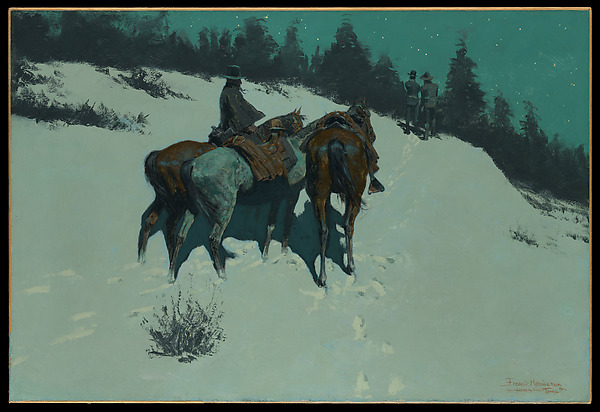
    A Reconnaissance, Frederic Remington, 1902

    A Reconnaissance

    1902 · Metropolitan Museum of Art

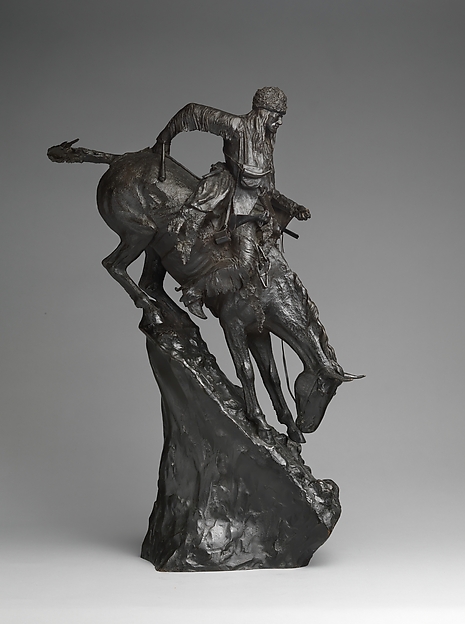
    The Mountain Man, Frederic Remington, 1903, cast by March 1907

    The Mountain Man

    1903, cast by March 1907 · Metropolitan Museum of Art

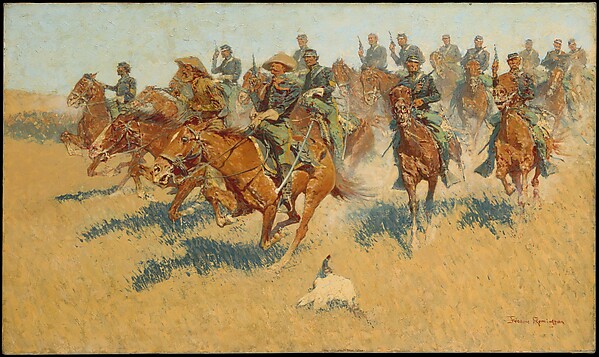
    On the Southern Plains, Frederic Remington, 1907

    On the Southern Plains

    1907 · Metropolitan Museum of Art

    The Bronco Buster, Frederic Remington, Modeled 1895, cast 1899

    The Bronco Buster

    Modeled 1895, cast 1899 · Art Institute of Chicago

    Bronco Buster, Frederic Remington, 1895 (cast 1918 or later)

    Bronco Buster

    1895 (cast 1918 or later) · Minneapolis Institute of Art

    On the Bridle Path, Central Park, New York, Frederic Remington, 1889

    On the Bridle Path, Central Park, New York

    1889 · Non esposta · National Gallery of Art

    Off the Range (Coming Through the Rye), Frederic Remington, model 1902, cast 1903

    Off the Range (Coming Through the Rye)

    model 1902, cast 1903 · Non esposta · National Gallery of Art

    The Mountain Man, Frederic Remington, model 1903, cast 1904

    The Mountain Man

    model 1903, cast 1904 · Non esposta · National Gallery of Art

    The Mountain Man, Frederic Remington, 1903, cast by March 1907

    Frederic Remington

    The Mountain Man, 1903, cast by March 1907

    A Reconnaissance, Frederic Remington, 1902

    Frederic Remington

    A Reconnaissance, 1902

    The Teton Range, Thomas Moran, 1897

    Thomas Moran

    The Teton Range, 1897

    Appeal to the Great Spirit, Cyrus Edwin Dallin, 1913; cast ca. 1916

    Cyrus Edwin Dallin

    Appeal to the Great Spirit, 1913; cast ca. 1916

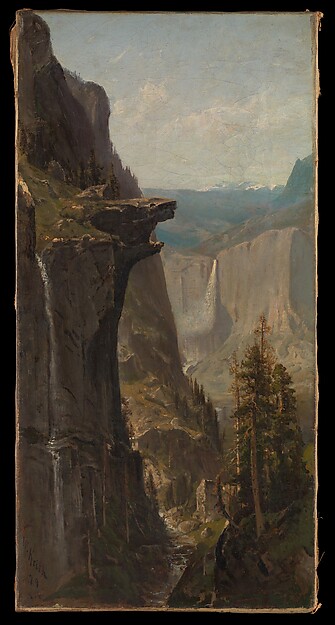
    Yosemite Falls, from Glacier Point, William Keith, 1879

    William Keith

    Yosemite Falls, from Glacier Point, 1879

    The Peace Pipe, Eanger Irving Couse, 1901

    Eanger Irving Couse

    The Peace Pipe, 1901

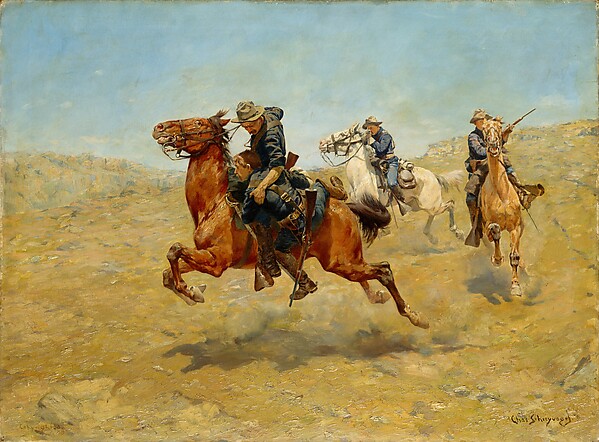
    My Bunkie, Charles Schreyvogel, finished 1899

    Charles Schreyvogel

    My Bunkie, finished 1899

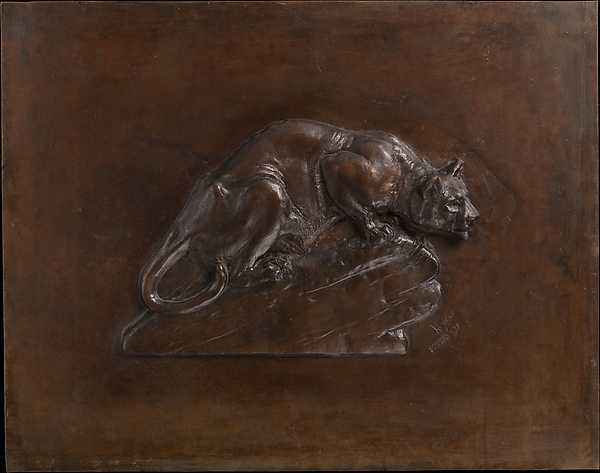
    Still Hunt, Edward Kemeys, 1894

    Edward Kemeys

    Still Hunt, 1894

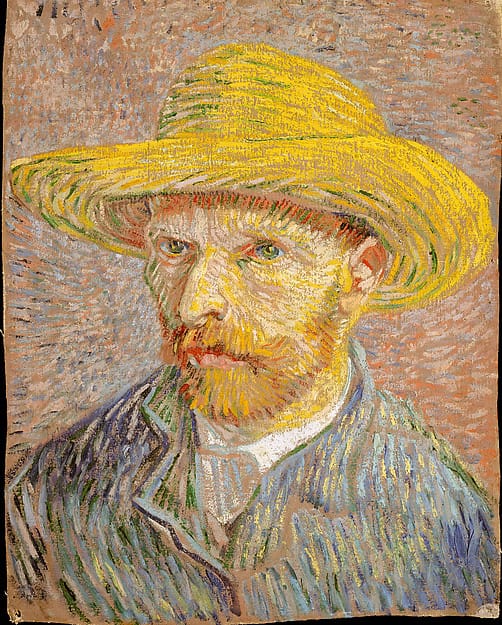
    Self-Portrait with a Straw Hat (obverse: The Potato Peeler), Vincent van Gogh, 1887

    Vincent van Gogh

    Self-Portrait with a Straw Hat (obverse: The Potato Peeler), 1887

    Metropolitan Museum of Art

    Garden at Sainte-Adresse, Claude Monet, 1867

    Claude Monet

    La terrazza a Sainte-Adresse, 1867

    Metropolitan Museum of Art

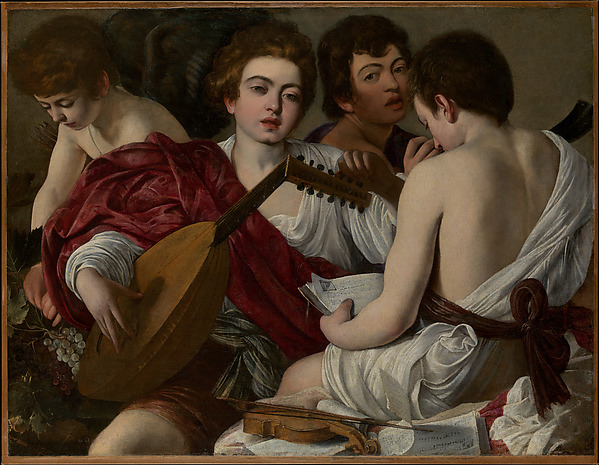
    The Musicians, Caravaggio, 1597

    Caravaggio

    I Musici, 1597

    Metropolitan Museum of Art

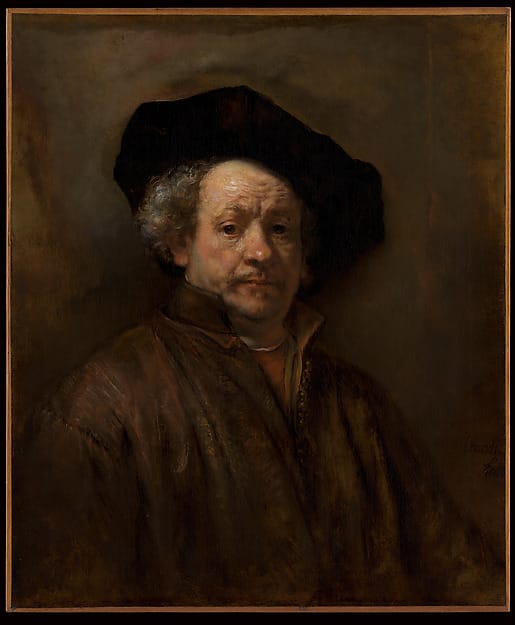
    Self-Portrait, Rembrandt van Rijn, 1660

    Rembrandt van Rijn

    Self-Portrait, 1660

    Metropolitan Museum of Art

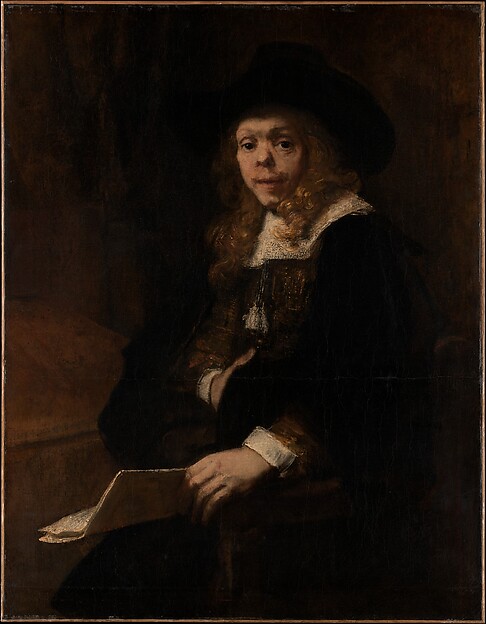
    Portrait of Gerard de Lairesse, Rembrandt van Rijn, 1665–67

    Rembrandt van Rijn

    Portrait of Gerard de Lairesse, 1665–67

    Metropolitan Museum of Art

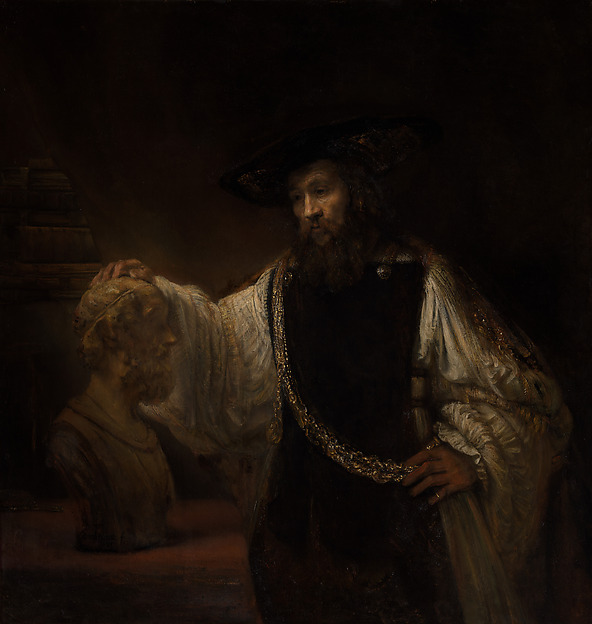
    Aristotle with a Bust of Homer, Rembrandt, 1653

    Rembrandt van Rijn

    Aristotele contempla il busto di Omero, 1653

    Metropolitan Museum of Art

    Young Sailor II, Henri Matisse, 1906

    Henri Matisse

    Young Sailor II, 1906

    Metropolitan Museum of Art

    Rubens, Helena Fourment (1614–1673), and Their Son Frans (1633–1678), Peter Paul Rubens, ca. 1635

    Peter Paul Rubens

    Rubens, Helena Fourment (1614–1673), and Their Son Frans (1633–1678), ca. 1635

    Metropolitan Museum of Art