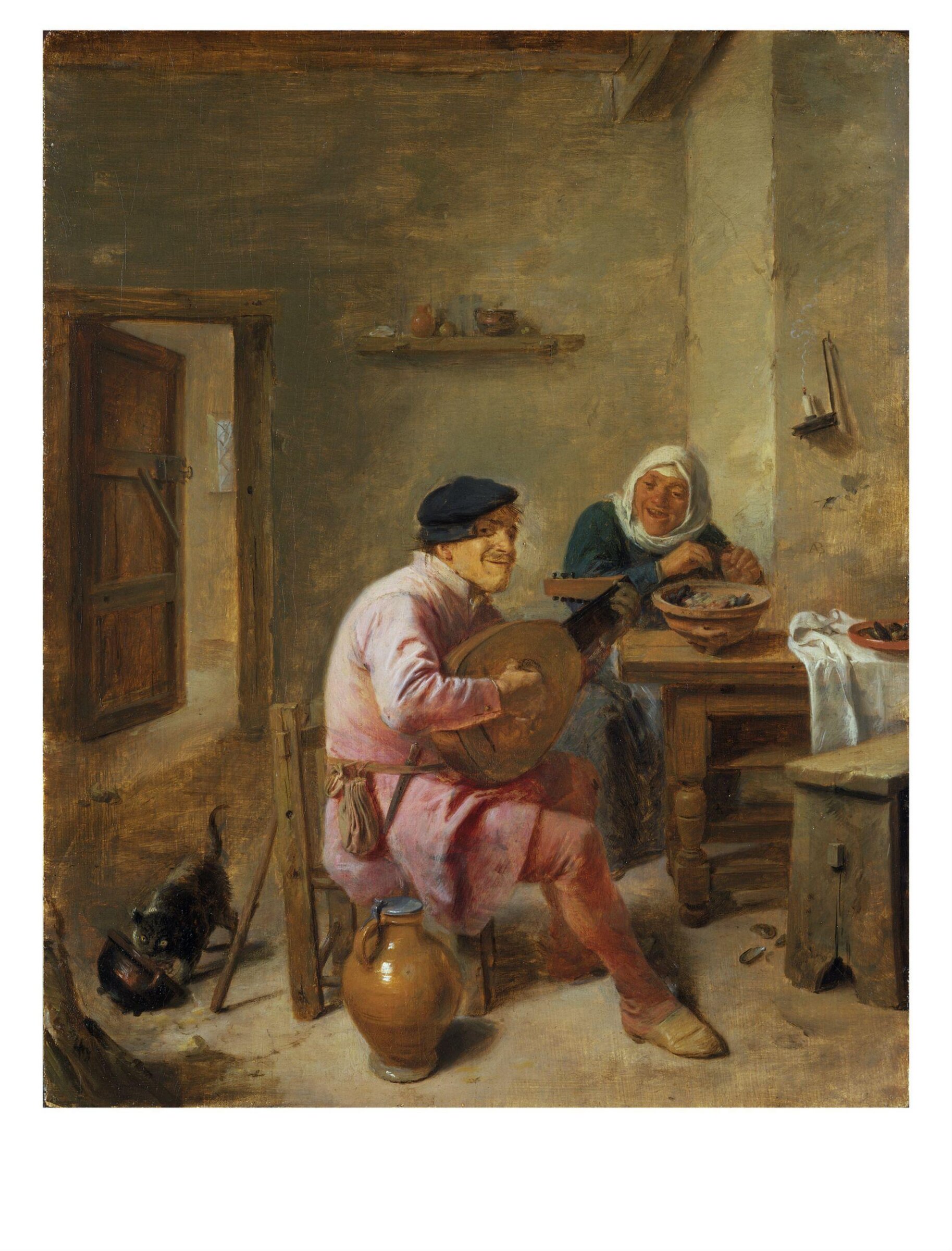
Adriaen BrouwerFiandre, 1605–1638
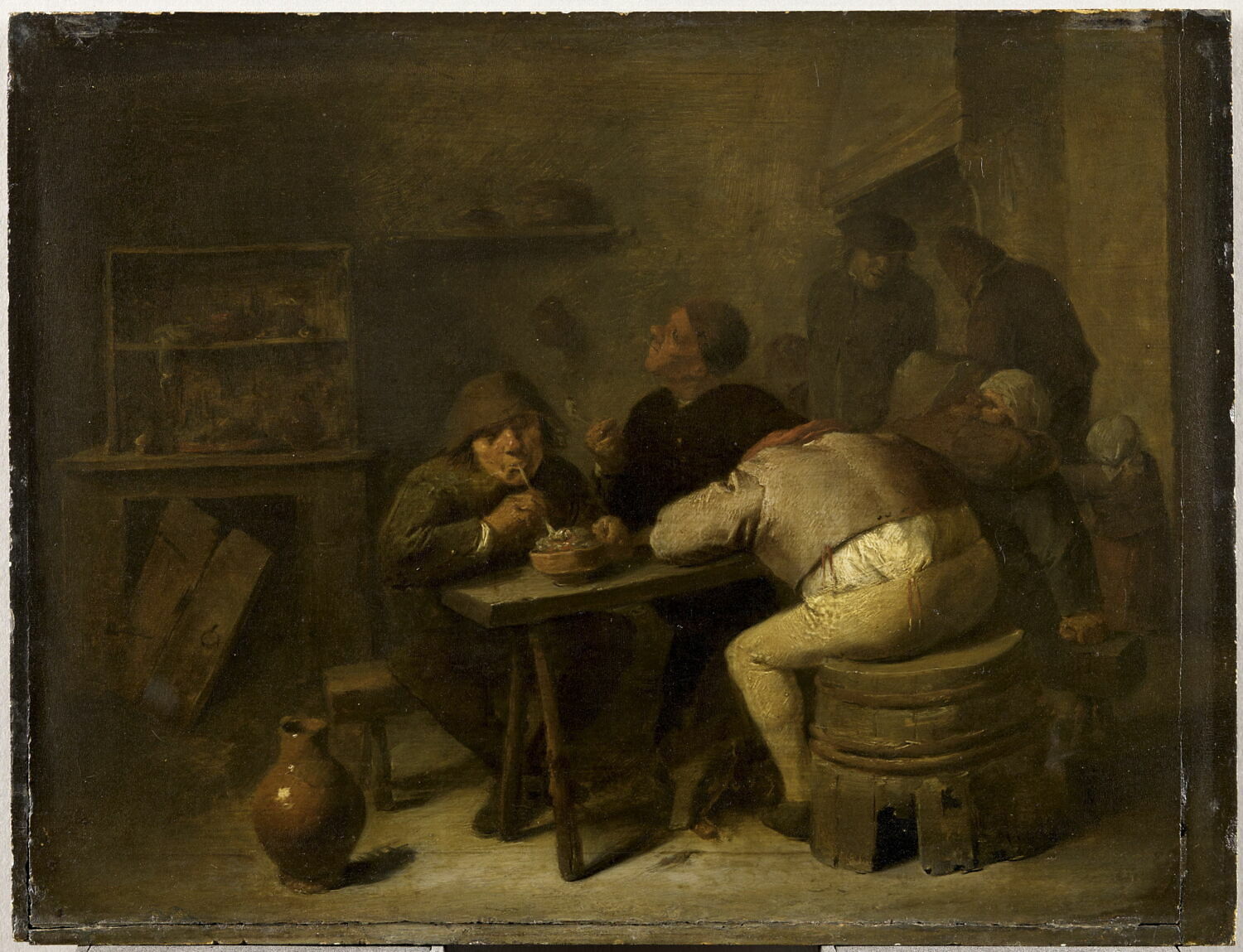
Tavern Scene
Si può ammirare?
Sì, riceve visite

National Gallery
Sala23Londra, Regno Unito
Esposta al pubblico. Chi lo garantisce è indicato qui sotto.
- Verificato
- Ultimo cambio di stato
- Fonte
- Il sito del museo
Scheda
- Numero di inventario
- NG6591
In catalogo
Andirivieni
Esposta · Sala 23
National Gallery · 5 ott 2026 — oggi · Verificato
Non si sa se oggi sia esposta
National Gallery · 29 set 2026 — 5 ott 2026 · Non confermato
Fonti
- Wikidata · acquisita 6 giorni fa
- Immagine: National Gallery — Adriaen Brouwer · Public domain · Wikimedia Commons
Nel frattempo, nella vita di Adriaen Brouwer
Tutta la vita1631–1638
Debts and want in Antwerp
Brouwer's name regularly appears in Antwerp records in connection with the settlement of his debts; in his lifetime his paintings did not fetch high prices, and his household goods were seized for his creditors. His fellow artists valued him more highly than the market did: Rubens bought several of his pictures for his collection and tried to extend his patronage to the “incorrigible carouser”.
1631–1638 · Luogo di lavoro
Antwerp
1633
Jailed in the Antwerp Citadel
The reason for the imprisonment is unclear: possibly tax evasion, or perhaps politics, as the local authorities may have considered Brouwer a spy for the Dutch Republic.
1633
Meets Joos van Craesbeeck in the Citadel
The bakery in the Citadel was run by the baker Joos van Craesbeeck, and the two are assumed to have met there. According to the biographer Cornelis de Bie, Craesbeeck became Brouwer's pupil and best friend, which the similarity of his early work to Brouwer's seems to confirm.
26 April 1634
Moves into the house of the engraver Paulus Pontius
Brouwer takes lodgings in the house of the prominent engraver Paulus Pontius; the two had become close friends, and the painter lived there until his death. The same year the friends joined the local chamber of rhetoric “Violieren”.
1635
Takes on Jan-Baptist Dandoy as a pupil
Jan-Baptist Dandoy becomes Brouwer's only officially registered pupil.