CaravaggioItalia, 1571–1610
Cena in Emmaus
Supper at Emmaus
Si può ammirare?
Non si sa: il museo mantiene il riserbo

National Gallery
Londra, Regno Unito
Il proprietario è noto. Se oggi sia esposta, il museo non lo dice, e a indovinare non ci hanno insegnato.
- Ultimo cambio di stato
- 29 set 2026
- Fonte
- I dati di collezione del museo stesso
About the painting
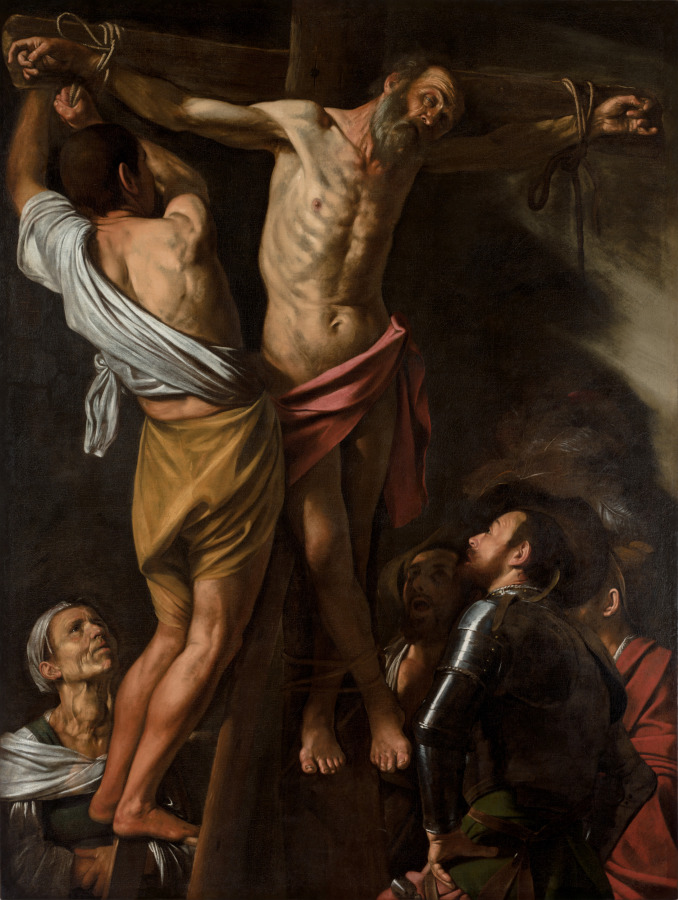
La Cena in Emmaus è uno dipinto a olio su tela (139×195 cm) di Caravaggio, databile al 1601-1602 e conservato nella National Gallery
Scheda
- Numero di inventario
- NG172
Fonti
- Wikidata · acquisita 5 giorni fa
- Immagine: National Gallery — Caravaggio · Public domain · Wikimedia Commons
Nel frattempo, nella vita di Caravaggio
Tutta la vita25 June 1599
Contract for the Contarelli Chapel
A contract was signed to decorate the Contarelli family chapel in San Luigi dei Francesi with canvases of scenes from the life of Saint Matthew, for 400 scudi. The commission was presumably arranged through Cardinal del Monte.
28 November 1600
Beats a cardinal's guest with a club
While living at the Palazzo Madama with Cardinal del Monte, Caravaggio beat the cardinal's guest, the nobleman Girolamo Stampa da Montepulciano, with a club, prompting an official complaint to the police. Brawls and arrests, with spells in the Tor di Nona jail, grew ever more frequent.
1601
A studio of his own, and pupils
Caravaggio rented a studio of his own, where his celebrated pupils Bartolomeo Manfredi, Mario de' Fiori and Leonello Spada painted their pictures.
1602
Cecco, model and companion
The model for “Amor Vincit Omnia”, painted in 1602 for Vincenzo Giustiniani, was 'Cecco' — possibly Francesco Boneri, later known as the painter Cecco del Caravaggio. He lived with Caravaggio in Rome and stayed with him even after the flight of 1606; the two may have been lovers.
14 June 1602
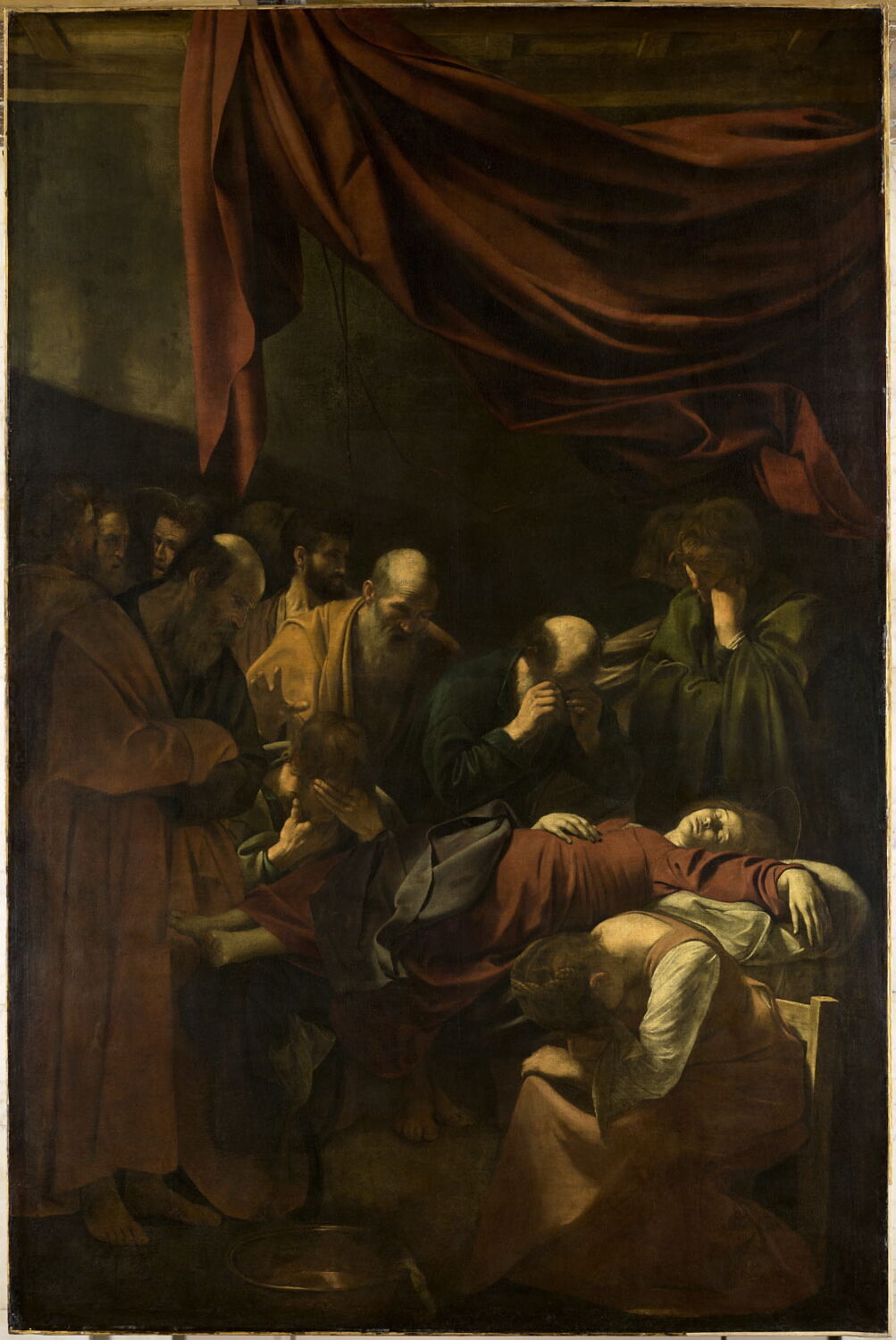
Commission for “The Death of the Virgin”
He received the commission for a painting for Santa Maria della Scala in Trastevere; the model for the Virgin is said to have been a prostitute drowned in the Tiber, or else the artist's mistress. Other accounts date the commission to 1601.
1603
Sued for libel by Giovanni Baglione
The painter Giovanni Baglione sued Caravaggio and his followers Orazio Gentileschi and Onorio Longhi over offensive verses about him. Caravaggio spent a month in the Tor di Nona jail before the French ambassador intervened and he was moved to house arrest.