ART WIKI33.040 in sala
MappaCollezioneArtistiMuseiMostreRivista
Accedi

ART WIKI

Dove è appeso il capolavoro, e quando si può entrare.

Collezioni: Art Institute of Chicago, Cleveland Museum of Art, Ermitage, Galleria Tret'jakov, Getty Museum, Harvard Art Museums, Hirshhorn Museum and Sculpture Garden, Metropolitan Museum of Art, Minneapolis Institute of Art, Museo del Louvre, Museo Puškin delle belle arti, Museo russo, Museum of Modern Art, National Gallery of Art, National Museum of Asian Art, National Portrait Gallery, Rijksmuseum, Smithsonian American Art Museum, Statens Museum for Kunst, Victoria and Albert Museum, Villa Getty, Whitney Museum of American Art, Catalogo statale del fondo museale russo (274 musei), Europeana (19 musei), Wikidata (6 musei), Paris Musées (12 musei) e Joconde, la banca dati dei musei del Ministero della Cultura francese (495 musei). Le immagini appartengono ai titolari dei diritti.

Sezioni

  • Mappa
  • Ricerca
  • Collezione
  • Capolavori
  • Esposte ora
  • Artisti

Altro

  • Musei e gallerie
  • Mostre
  • Rivista
  • Da dove vengono i dati
  • Privacy e cookie
HomeMappaCatalogo
  1. Collezione/
  2. Minneapolis Institute of Art/
  3. Study of Putti
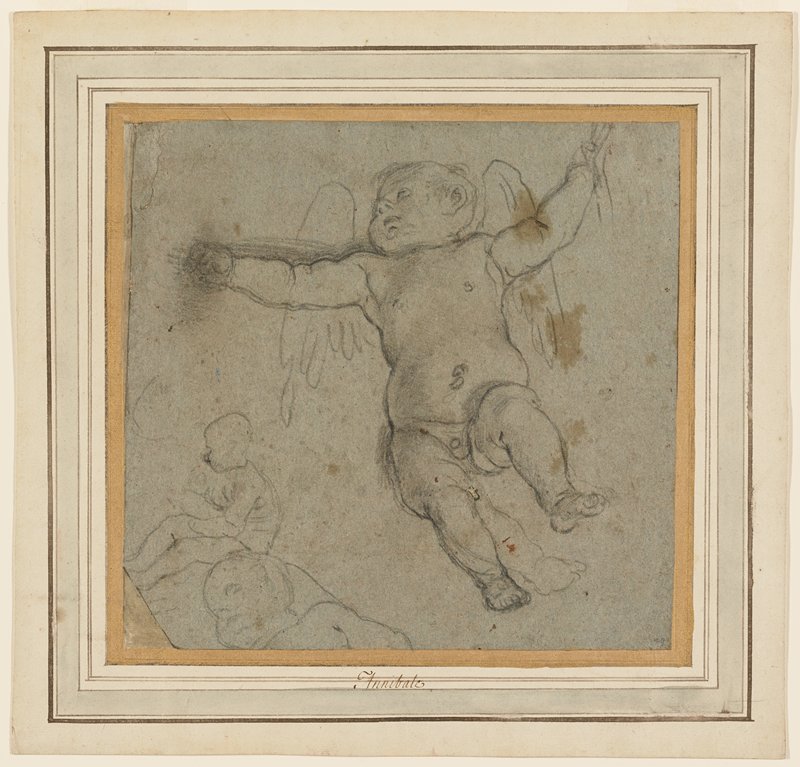
Study of Putti, Attributed to Annibale Carracci, c. 1598–1602
AAttributed to Annibale CarracciItalia

Study of Putti

c. 1598–1602 · Drawing

Si può ammirare?

Al momento non riceve

Minneapolis Institute of Art

Minneapolis, Stati Uniti

Appartiene alla collezione, ma al momento non è esposta.

Verificato
9 giorni fa
Ultimo cambio di stato
25 set 2026
Fonte
Il museo
Sulla mappaPagina del museo

Sull’opera

An extraordinarily gifted draftsman, Annibale Carracci was the youngest and most successful Member of the famous Carracci workshop. An early biographer remarked that every movement, gesture, and act compelled the Carracci to draw. Whether walking about, talking, drinking, or eating, “they would sketch, with bread in one hand and a pencil or charcoal in the other.”

The large putto in this study, his left arm pulling on drapery, may represent a discarded idea for the baby frolicking in the bed curtains in Annibale’s painting Sleeping Venus. The artist probably drew him in a matter of minutes, firmly modeling his chubby form, subtly foreshortening his pose (as seen from below), and giving the figure a quiet, childlike movement. The two lightly scribbled infants, likely sketched in just seconds, capture Annibale’s first, searching thoughts for two other infants.

Minneapolis Institute of Art

Scheda

Numero di inventario
2013.44.1

In catalogo

Disegni e acquerelliGessettoRinascimentoXVI secoloItalia

Fonti

  • Minneapolis Institute of Art
  • Immagine: Minneapolis Institute of Art — public domain

Altre opere di Attributed to Annibale Carracci

Tutte le opere
Profile Portrait of a Portly Man, Attributed to Annibale Carracci, 16th-17th century

Profile Portrait of a Portly Man

16th-17th century · Non esposta · Harvard Art Museums

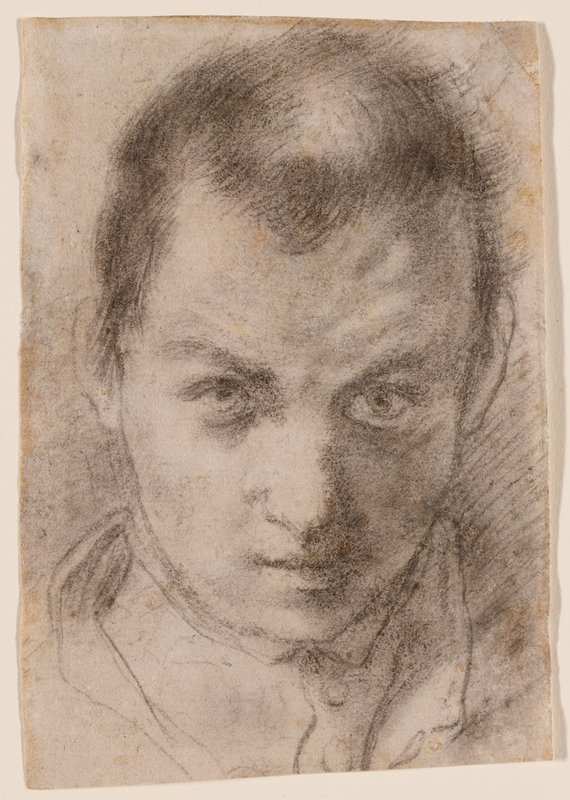
Portrait of a Young Man, Attributed to Annibale Carracci, c. 1585–95

Portrait of a Young Man

c. 1585–95 · Non esposta · Minneapolis Institute of Art

Sotto lo stesso tetto: Minneapolis Institute of Art

Pagina del museo
Olive Trees, Vincent van Gogh, 1889

Vincent van Gogh

Olive Trees, 1889

Grainstack, Sun in the Mist, Claude Monet, 1891

Claude Monet

Grainstack, Sun in the Mist, 1891

Lucretia, Rembrandt van Rijn, 1666

Rembrandt van Rijn

Lucretia, 1666

Self-Portrait with Dr. Arrieta, Francisco José de Goya y Lucientes, 1820

Francisco de Goya

Goya curato dal dottor Arrieta, 1820

Study for Improvisation V, Vassily Kandinsky, 1910

Vasily Kandinsky

Study for Improvisation V, 1910

Tahitian Landscape, Paul Gauguin, 1891

Paul Gauguin

Tahitian Landscape, 1891

Chestnut Trees at Jas de Bouffan, Paul Cézanne, c. 1885–86

Paul Cézanne

Chestnut Trees at Jas de Bouffan, c. 1885–86

The Union of England and Scotland (Charles I as the Prince of Wales), Peter Paul Rubens, 1633–34

Peter Paul Rubens

The Union of England and Scotland (Charles I as the Prince of Wales), 1633–34