 George RomneyInghilterra, 1734–1802
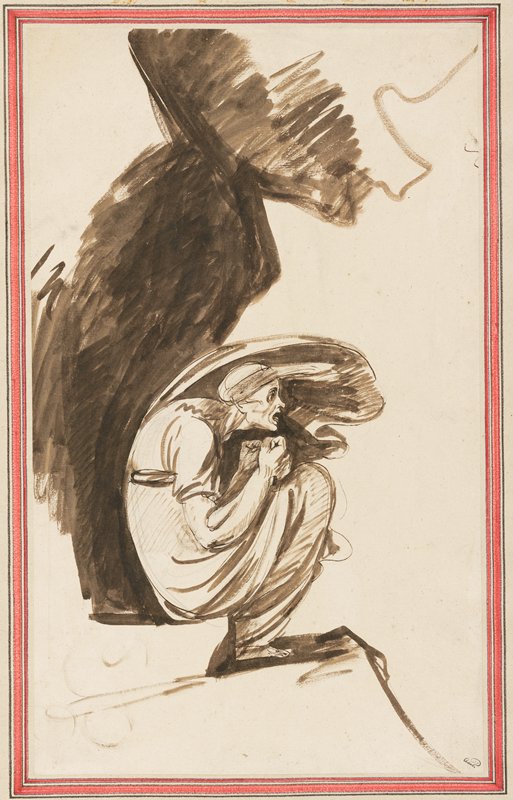
Study for The Lapland Witch
Si può ammirare?
Al momento non riceve

Minneapolis Institute of Art
Minneapolis, Stati Uniti
Appartiene alla collezione, ma al momento non è esposta.
- Verificato
- Ultimo cambio di stato
- Fonte
- I dati di collezione del museo stesso
Sull’opera
George Romney embraced the “sublime, ” the flip side of the Age of Enlightenment. He was obsessed with the passions, the power of nature, the supernatural—those forces beyond human comprehension and control. In the popular imagination of the 18th century, Lapland was home to witches capable of raising storms and causing shipwrecks, and Romney wanted to capture their magic. His efforts began with fiery sketches like this one.
In 1778, Romney’s friend and biographer William Hayley wrote a verse on the artist’s conjuring of a Lapland witch. Note his comment that the freedom of the artist’s drawing would need to be tempered when it came time to execute the painting.
Round fancy’s circle when thy Pencil flies, With what terrific pomp thy Spectres rise!
What lust of mischief marks thy Witch’s form, While on the Lapland Rock she swells the storm!
Read on
Tho’ led by Fancy, thro’ her boundless reign, Well dost thou know to quit her wild domain, When History bids thee paint, severely chaste
Her simpler scene, with uncorrupted taste.
Minneapolis Institute of Art
Scheda
- Numero di inventario
- 68.51
In catalogo
Fonti
- Minneapolis Institute of Art: the museum's own open data · acquisita 7 giorni fa
- Immagine: Minneapolis Institute of Art — public domain
Nel frattempo, nella vita di George Romney
Tutta la vitac. 1775
Commissions from the Duke of Richmond and his circle
Charles Lennox, 3rd Duke of Richmond, and his circle of friends offer Romney commissions, which turn the tide of the artist’s fortunes permanently in his favour.
1775
Settles in Cavendish Square
On his return he takes a house in Cavendish Square, formerly owned by the noted portraitist Francis Cotes, but remains considerably in debt, both his own and that of his brother Peter, an artistic but dissolute man.
July 1775
Returns from Italy to London
After an absence of over two years he returns to London by way of Florence, Bologna, Venice, Parma and Turin.
1776–1777
Friendship with the writer William Hayley
In 1776–1777 Romney makes the acquaintance of William Hayley and strikes up a lasting friendship with the writer, painting portraits for him.


![An Elegant Lady in Classical Dress [recto], George Romney, 1780s](https://api.nga.gov/iiif/9c888968-745e-4c53-802f-30c5fcb7b92f/full/!2400,2400/0/default.jpg)
![Figure Studies [verso], George Romney, 1780s](https://api.nga.gov/iiif/53e77138-a7cd-4470-8b98-d1c2ccf46862/full/!2400,2400/0/default.jpg)