Street in Venice
Sul dipinto
Street in Venice (or A Street Scene in Venice) is a c. 1882 oil on wood painting by the American artist John Singer Sargent (1856–1925). Painted in an Impressionist manner, it is set in a quiet backstreet off the Calle Larga dei Proverbi, near the Grand Canal in Venice. The painting shows a young woman, probably Venetian model Gigia Viani, walking along the flagstones, kicking her skirt with her right foot, and observed by two men in the shadows to her left. From the manner in which Sargent depicts her down-turned eyes and seemingly fast pace with which she passes the two men, he is concerned largely with the invasive male glare and its effect on the passing woman.
Continua a leggere
The painting is one of a number of Venetian scenes painted or drawn by Sargent, who spent most of his life in Europe, during his time in the city. As in his other works, it largely ignores the architectural aspects the city is best known for and focuses instead on edgy back-street imagery. The influence of Impressionism is evident in a number of this work's features, especially in the broad brush strokes of her dress and the unusual cropping of the composition. It is currently on display at the National Gallery of Art in Washington, D.C.
Scheda
Nel frattempo, nella vita di John Singer Sargent
Tutta la vitaearly 1880s
Full-length portraits of women at the Salon, year after year
Upon his return to Paris Sargent quickly receives several portrait commissions and his career is launched: in the early 1880s he regularly exhibits portraits at the Salon, mostly full-length portrayals of women such as “Madame Edouard Pailleron” (1880, done en plein air) and “Madame Ramón Subercaseaux” (1881), continuing to receive positive critical notice.
1881–1883
First works at the Royal Academy exhibitions
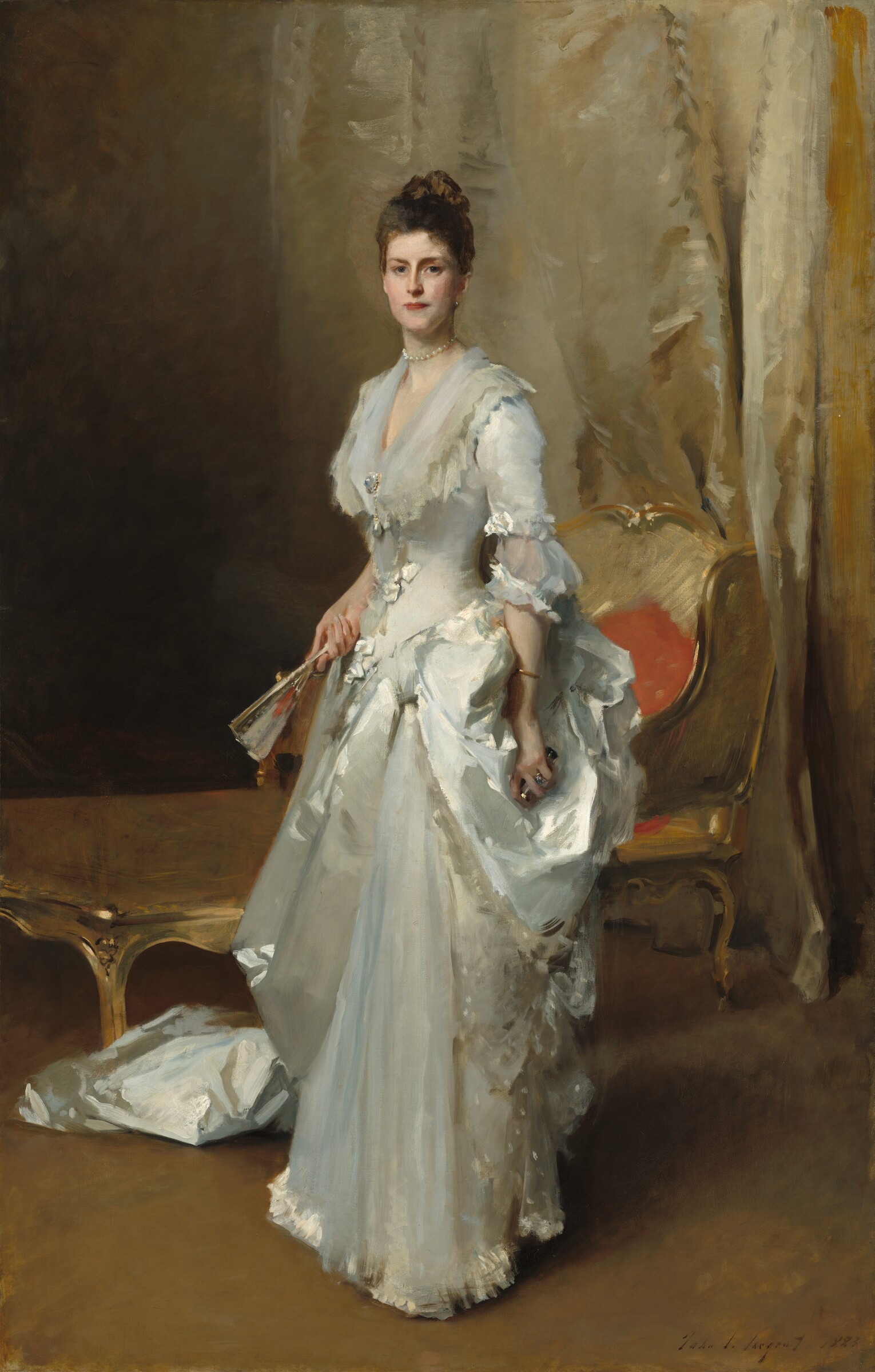
Even before arriving in England Sargent begins sending paintings for exhibition at the Royal Academy: “Dr. Pozzi at Home” (1881), a flamboyant essay in red and his first full-length male portrait, and the more traditional “Mrs. Henry White” (1883).
1882
The start of a long friendship with Albert de Belleroche
In 1882 Sargent meets the aristocratic artist Albert de Belleroche, with whom he later travels frequently; scholars regard him as Sargent's likely lover.
1882
Henry James urges him to move to London
As early as 1882 Sargent considers moving to London, repeatedly urged to do so by his new friend, the novelist Henry James, who had praised the artist's early work.
1884
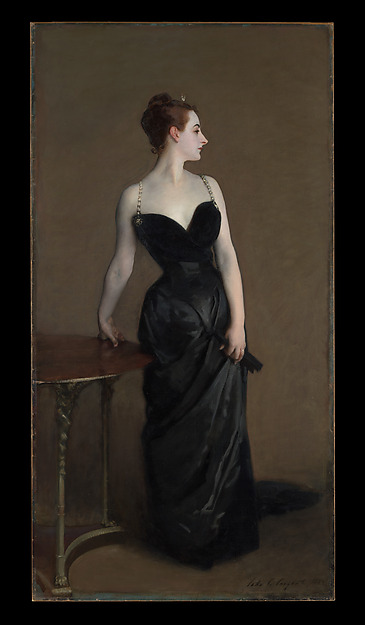
“Madame X” at the Salon: a scandal
Sargent himself pursued Virginie Gautreau for the opportunity to paint her and worked on the portrait for well over a year; unveiled at the 1884 Salon it arouses such a negative reaction that it likely prompts his move to London, and repainting the dress strap does not undo the damage: French commissions dry up.