 Kitagawa UtamaroGiappone, 1754–1806
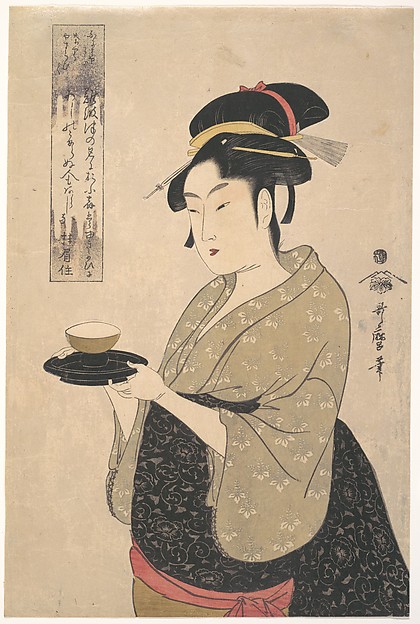
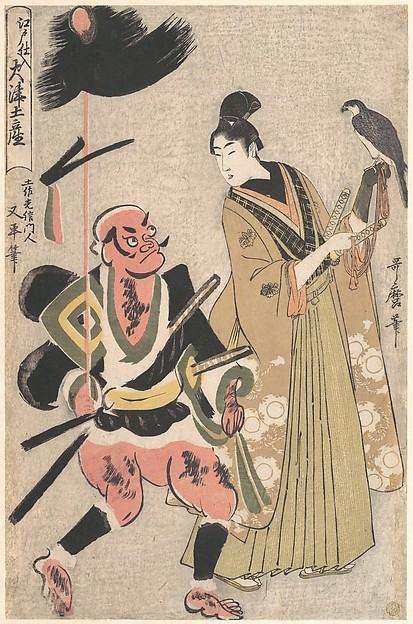
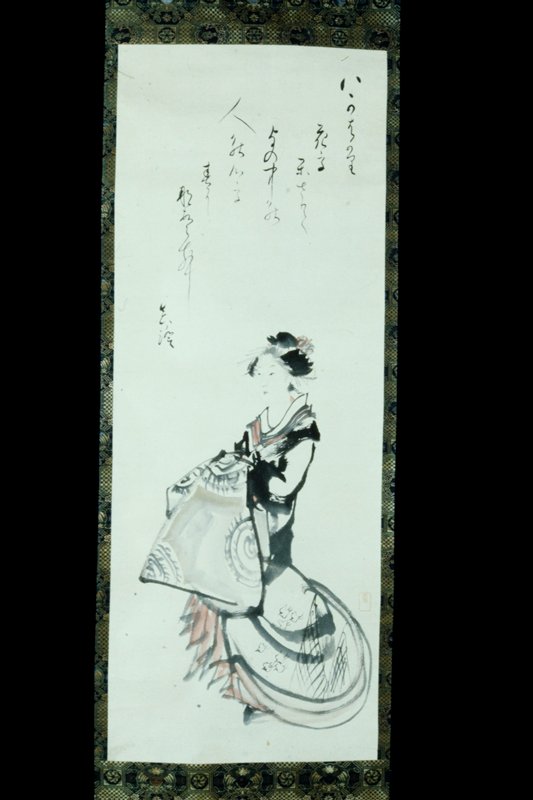
Standing Courtesan
Si può ammirare?
Al momento non riceve

Minneapolis Institute of Art
Minneapolis, Stati Uniti
Appartiene alla collezione, ma al momento non è esposta.
- Verificato
- Ultimo cambio di stato
- Fonte
- Il museo
Scheda
- Numero di inventario
- 81.2.12
In catalogo
Fonti
- Minneapolis Institute of Art
- Immagine: Minneapolis Institute of Art — public domain
Nel frattempo, nella vita di Kitagawa Utamaro
Tutta la vita1753/1754
Born
1775
Meeting the publisher Tsutaya Jūzaburō
By some accounts, in 1775 Utamaro meets the publisher Tsutaya Jūzaburō, who had an enormous influence on his work: many of his finest albums, illustrated books and series of single-sheet prints came out of their long collaboration. His first known work for Tsutaya, however, dates only from 1783.
autumn 1782
A banquet for his new name, Utamaro
In the autumn of 1782, it is believed, Utamaro hosts a lavish banquet whose guests include the artists Kiyonaga, Kitao Shigemasa and Katsukawa Shunshō and the writers Ōta Nanpo and Hōseidō Kisanji. It is here that he is thought to have announced his new art name, handing out, as custom required, a specially made print, a self-portrait bowing deeply before a screen bearing his guests' names. By other accounts, he has used the pseudonym since 1781.
c. 1783 – 1788
Years in the publisher Tsutaya's house
Probably from 1783, Utamaro lives for about five years in the house of Tsutaya Jūzaburō and becomes one of the principal artists of the Tsutaya firm. Evidence of his prints from these years is sporadic: he mostly illustrates books of kyōka, “crazy verse”, a parody of the classical waka form.
c. 1791
Giving up book prints for half-length portraits of beauties
Around 1791 Utamaro gives up designing prints for books and concentrates on single portraits of women shown half-length, rather than the group scenes favoured by other ukiyo-e artists. He was the first in Japanese woodblock printing to use half-length compositions for women's portraits; none of his work from 1790–1792 has survived.
1797
The death of his friend and patron Tsutaya Jūzaburō
In 1797 Utamaro's long-time friend and supporter, the publisher Tsutaya Jūzaburō, dies; the artist is apparently very upset by the loss, and some commentators feel that his work never reached its former heights afterwards. He later lives in Kyūemon-chō, then Bakuro-chō, and finally near the Benkei Bridge.