ART WIKI32.979 in sala
MappaCollezioneArtistiMuseiMostreRivista
Accedi

ART WIKI

Dove è appeso il capolavoro, e quando si può entrare.

Collezioni: Art Institute of Chicago, Cleveland Museum of Art, Ermitage, Galleria Tret'jakov, Getty Museum, Harvard Art Museums, Hirshhorn Museum and Sculpture Garden, Metropolitan Museum of Art, Minneapolis Institute of Art, Museo del Louvre, Museo Puškin delle belle arti, Museo russo, Museum of Modern Art, National Gallery of Art, National Museum of Asian Art, National Portrait Gallery, Rijksmuseum, Smithsonian American Art Museum, Statens Museum for Kunst, Victoria and Albert Museum, Villa Getty, Whitney Museum of American Art, Catalogo statale del fondo museale russo (274 musei), Europeana (19 musei), Wikidata (6 musei), Paris Musées (12 musei) e Joconde, la banca dati dei musei del Ministero della Cultura francese (495 musei). Le immagini appartengono ai titolari dei diritti.

Sezioni

  • Mappa
  • Ricerca
  • Collezione
  • Capolavori
  • Esposte ora
  • Artisti

Altro

  • Musei e gallerie
  • Mostre
  • Rivista
  • Da dove vengono i dati
  • Privacy e cookie
HomeMappaCatalogo
  1. Collezione/
  2. Rijksmuseum/
  3. Staande figuur
Staande figuur, Karel Appel, 1949
Karel Appel, ritrattoKarel AppelPaesi Bassi, 1921–2006

Staande figuur

1949 · sculpture

Si può ammirare?

Non si sa

Rijksmuseum

Amsterdam, Paesi Bassi

Il proprietario è noto; non si sa se oggi sia esposta.

Fonte
Il museo
Sulla mappaPagina del museo

Sulla scultura

Shortly after the Second World War a new generation of young artists stepped into the limelight. With their unpolished and improvised painting and sculptures they celebrated their regained freedom after years of German occupation. Karel Appel looked at artefacts from Africa and Oceania. He thought they were exemplary models of the unspoilt creativity and drive that should form the basis of art in a free society.

Rijksmuseum

Scheda

1949 · a 28 anni
19212006
Numero di inventario
BK-C-2015-1

In catalogo

SculturaMetalloArte del dopoguerraXX secolo

Fonti

  • Rijksmuseum
  • Immagine: Rijksmuseum — © the artist or rights holder

Nel frattempo, nella vita di Karel Appel

Tutta la vita
  1. 1947

    Begins assembling sculptures from used materials

    Appel began making sculptures from all kinds of used materials, in the technique of assemblage, and painting them in bright white, red, yellow, blue and black.

  2. 1948

    Co-founds the CoBrA group

    With Corneille, Constant and Jan Nieuwenhuys, Appel was among the founders of CoBrA: the Dutch Experimental Group was joined by the Belgian Pierre Alechinsky and the Dane Asger Jorn, and the Belgian poet Christian Dotremont coined the name from the initials of Copenhagen, Brussels and Amsterdam. The group set out to express instinct and the subconscious through painting, in loud, bright colors and fantastic imagery.

  3. 1949

    The scandalous CoBrA show at the Stedelijk Museum

    Appel exhibited with the other CoBrA artists at the Stedelijk Museum Amsterdam; the show caused a huge scandal and many objections in the press and among the public.

  4. 14 March 1949

    Scandal over his fresco in Amsterdam City Hall

    Appel completed the fresco “Questioning Children” commissioned for the canteen of Amsterdam City Hall, whose sketch had been approved by a city council committee. It drew a wave of harsh criticism and was covered up for ten years; after the scandal Appel began calling himself a barbarian and kept up the image, literally hurling paint at the canvas and groaning loudly as he worked.

  5. 1950

    Moves to Paris

    Because of the controversy and other negative Dutch reactions to CoBrA, Appel moved to Paris. From there he built an international reputation, traveling to Mexico, the United States, Yugoslavia, Brazil, Japan and China; he also lived in New York and Florence.

Altre opere di Karel Appel

Tutte le opere
Square Man, Karel Appel, 1951

Square Man

1951 · Rijksmuseum

Untitled, Karel Appel, 1951

Untitled

1951 · Art Institute of Chicago

Kerstkaart met geabstraheerde figuur, Karel Appel, 1931 - 2006

Kerstkaart met geabstraheerde figuur

1931 - 2006 · Rijksmuseum

Kerstkaart met geabstraheerde figuur, Karel Appel, 1931 - 2006

Kerstkaart met geabstraheerde figuur

1931 - 2006 · Rijksmuseum

Figuur met grote ronde ogen en grote oren, frontaal gezien, Karel Appel, 1948

Figuur met grote ronde ogen en grote oren, frontaal gezien

1948 · Rijksmuseum

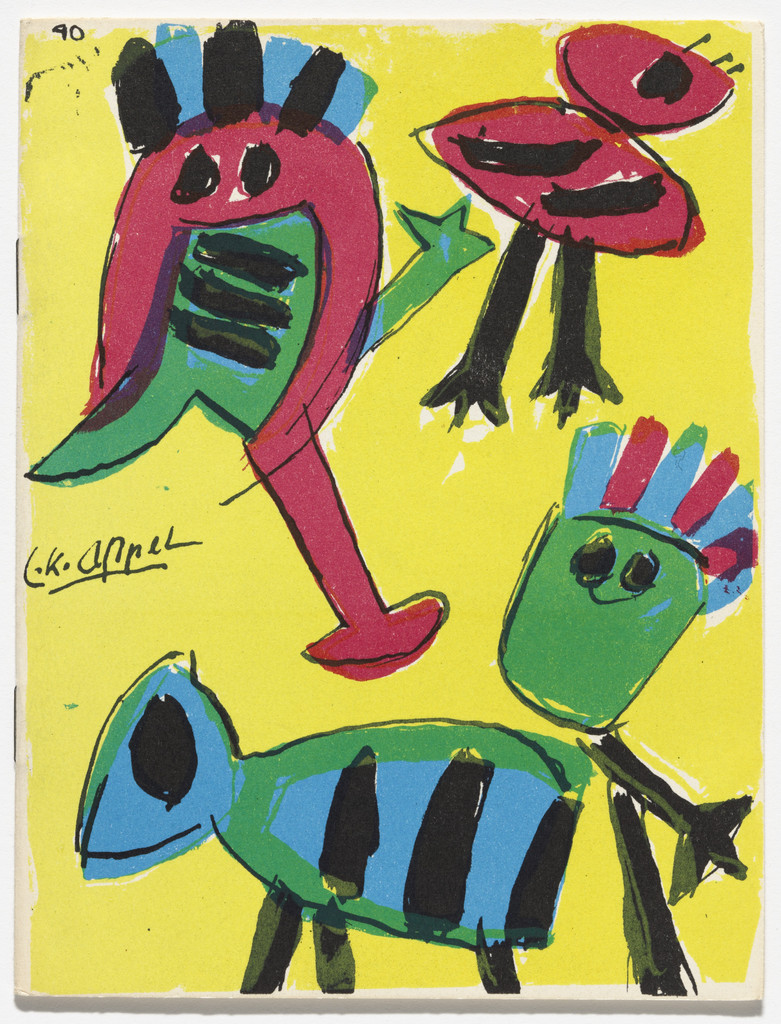
Front cover from Frie Kunstnere , Volume 3, Karel Appel, 1950

Front cover from Frie Kunstnere , Volume 3

1950 · Non esposta · Museum of Modern Art

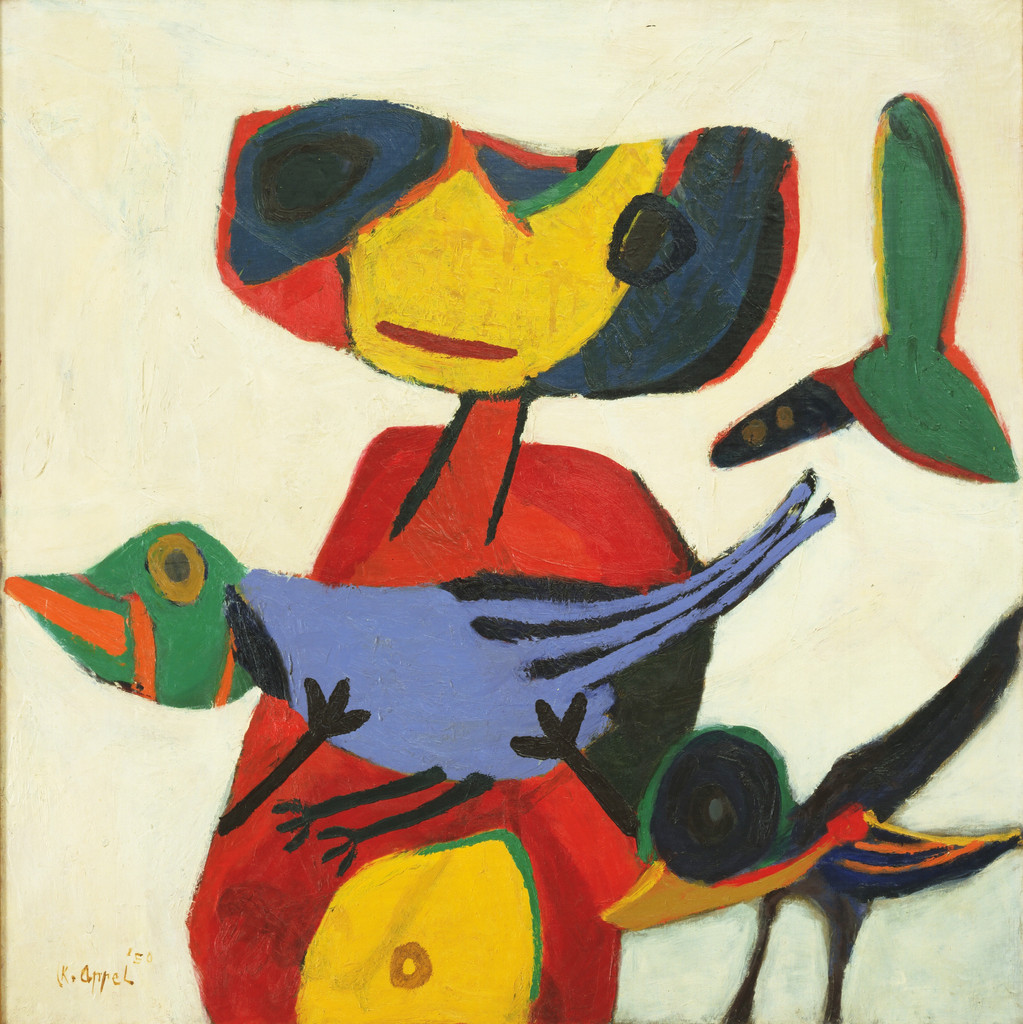
Child with Birds, Karel Appel, 1950

Child with Birds

1950 · Non esposta · Museum of Modern Art

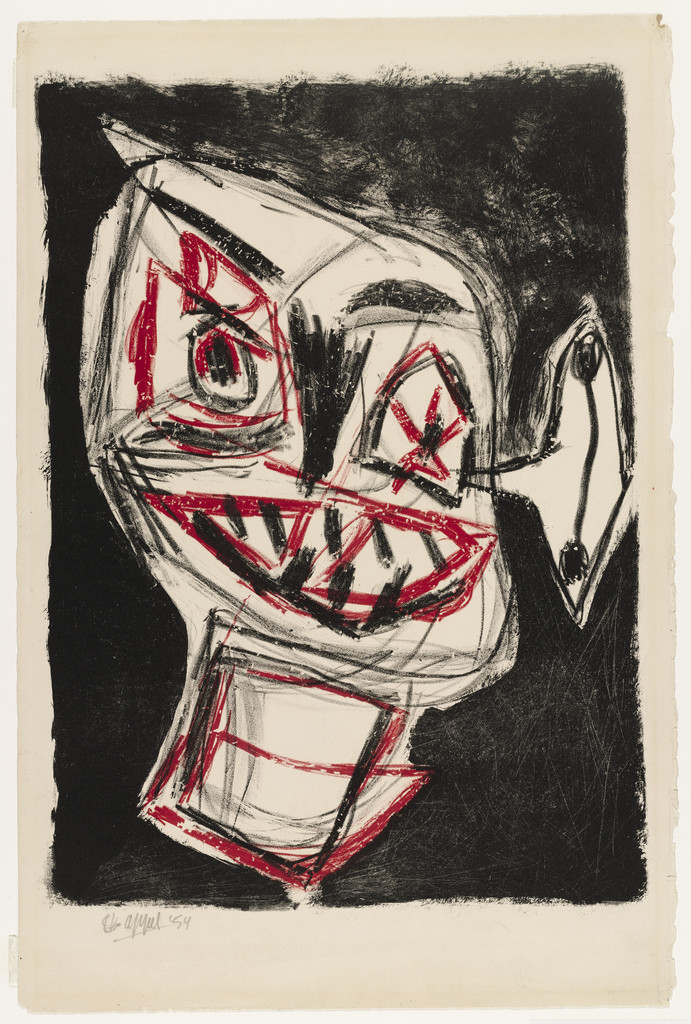
The Big Ear, Karel Appel, 1954

The Big Ear

1954 · Non esposta · Museum of Modern Art

Sotto lo stesso tetto: Rijksmuseum

Pagina del museo
Self-portrait, Vincent van Gogh, 1887

Vincent van Gogh

Self-portrait, 1887

La Corniche near Monaco, Claude Monet, 1884

Claude Monet

La Corniche bij Monaco, 1884

De Nachtwacht, Rembrandt van Rijn, 1642

Rembrandt van Rijn

Ronda di notte, 1642

Portrait of a Woman, Probably Maria Trip (1619-1683), Rembrandt van Rijn, 1639

Rembrandt van Rijn

Ritratto di Maria Trip, 1639

Still Life with Peacocks, Rembrandt van Rijn, c. 1639

Rembrandt van Rijn

Still Life with Peacocks, c. 1639

Landscape with a Stone Bridge, Rembrandt van Rijn, c. 1638

Rembrandt van Rijn

Landscape with a Stone Bridge, c. 1638

Man in Oriental Dress, Rembrandt van Rijn, 1635

Rembrandt van Rijn

Man in Oriental Dress, 1635

Portrait of Haesje Jacobsdr van Cleyburg, Rembrandt van Rijn, 1634

Rembrandt van Rijn

Portrait of Haesje Jacobsdr van Cleyburg, 1634