 Berthe MorisotFrancia, 1841–1895
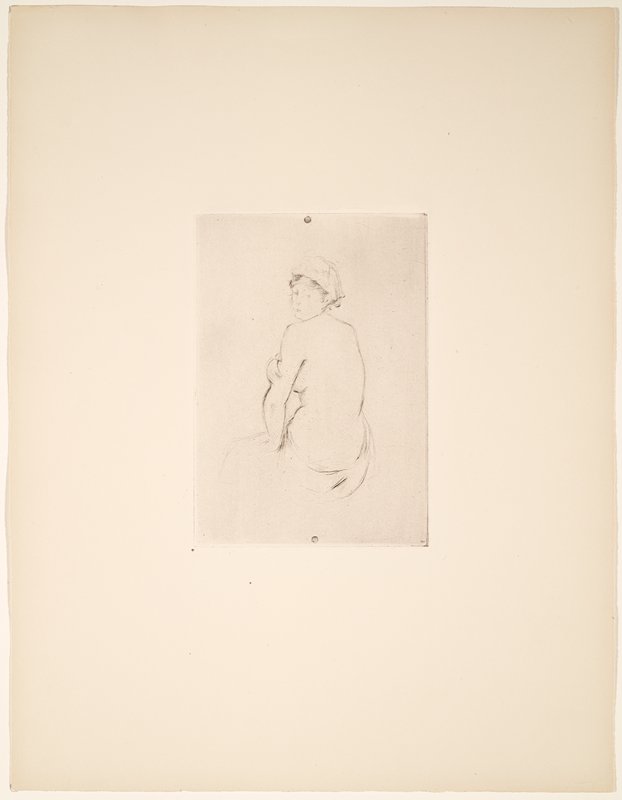
Seated Nude
Si può ammirare?
Al momento non riceve

Minneapolis Institute of Art
Minneapolis, Stati Uniti
Appartiene alla collezione, ma al momento non è esposta.
- Verificato
- Ultimo cambio di stato
- Fonte
- I dati di collezione del museo stesso
Scheda
- Numero di inventario
- P.71.195
In catalogo
Fonti
- Minneapolis Institute of Art: the museum's own open data · acquisita 6 giorni fa
- Immagine: Minneapolis Institute of Art — public domain
Nel frattempo, nella vita di Berthe Morisot
Tutta la vita1875–1885
Oil, watercolour and pastel at once
Grown more confident in oil, Morisot, like Degas, works in oil, watercolour and pastel at the same time. She paints very quickly but prepares with countless studies, so that she can paint “a mouth, eyes, and a nose with a single brushstroke”.
1885–1887
A turn to drawing: line and form
After 1885 drawing begins to dominate Morisot's work: she experiments with charcoal and coloured pencils and clarifies form and line, influenced by photography and Japonism. Like the Japanese prints of the time, she places objects away from the centre of the composition.
1887–1895
Squaring and tracing paper: the synthesis of her last years
Morisot starts to use squaring and tracing paper to transcribe her drawings exactly onto the canvas, which lets her build compositions with more complicated interaction between figures. Her late works are distinctive for their synthesis of the Impressionist touch with broad strokes and light reflections and the graphic approach of clear lines.
1888–1889
From short strokes to long, sinuous ones
In 1888–89 Morisot's brushstrokes change from short, rapid ones to long, sinuous ones that define form; the outer edges of her paintings are often left unfinished, so that the canvas shows through and increases the sense of spontaneity.