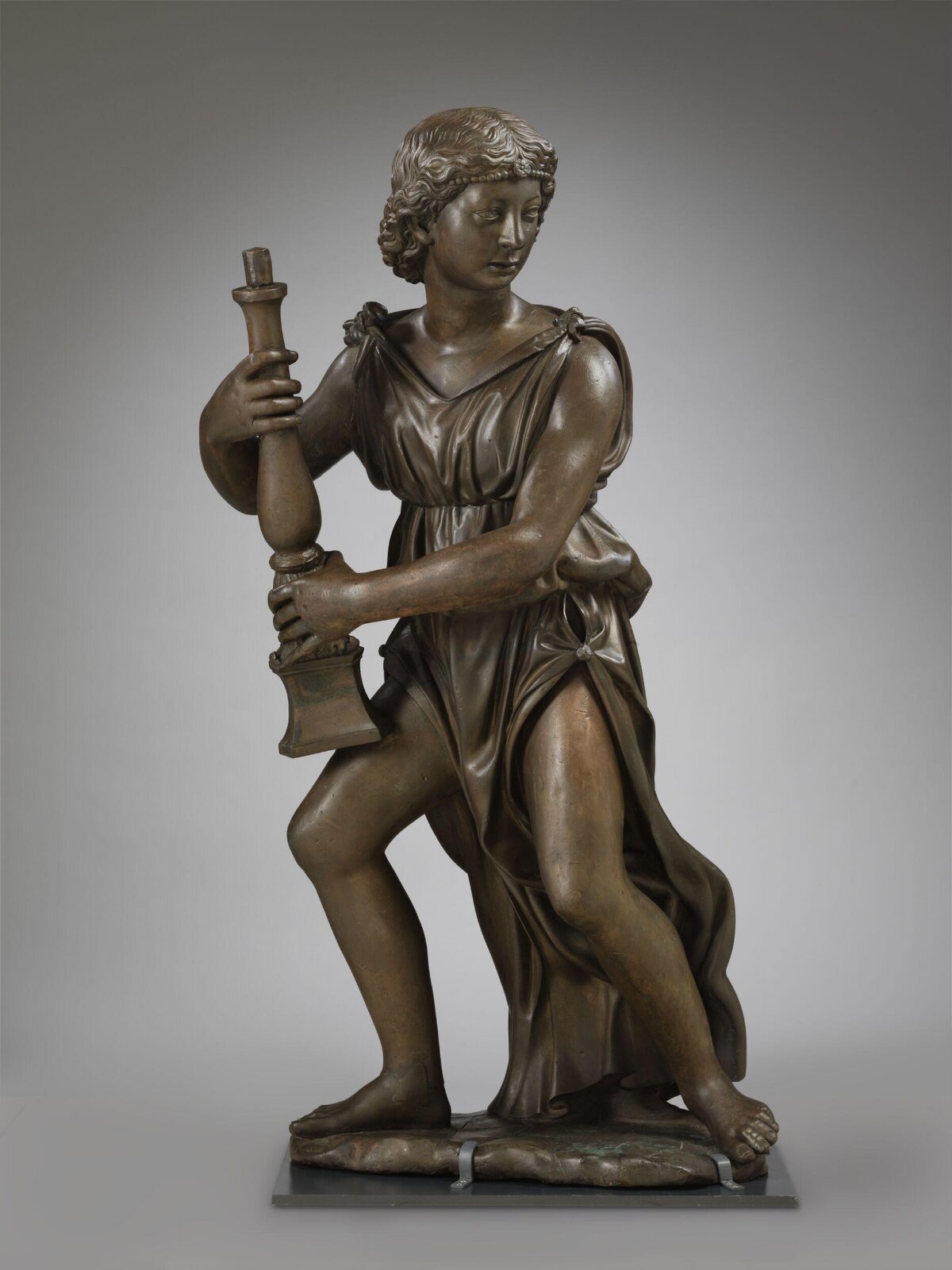
 Benedetto da RovezzanoItalia, 1474–1554
Sculpture
Si può vedere?
Sì, esposta ora
Dove si trova «Sculpture» oggi? Victoria and Albert Museum, Medieval & Renaissance, Room 63, The Edwin and Susan Davies Gallery, Londra. Sì, esposta ora. Verificato 25 settembre 2026.

Londra, Regno Unito
SalaMedieval & Renaissance, Room 63, The Edwin and Susan Davies Gallery
Aperto· fino alle 22:00
Esposta al pubblico.
- Verificato
- Ultimo cambio di stato
- Fonte
- Il museo
Sulla scultura
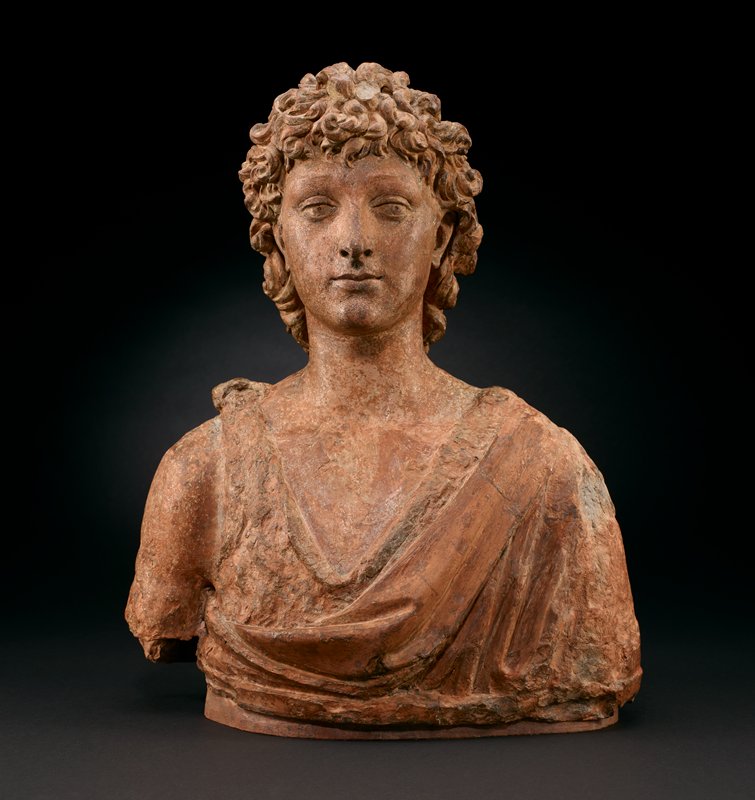
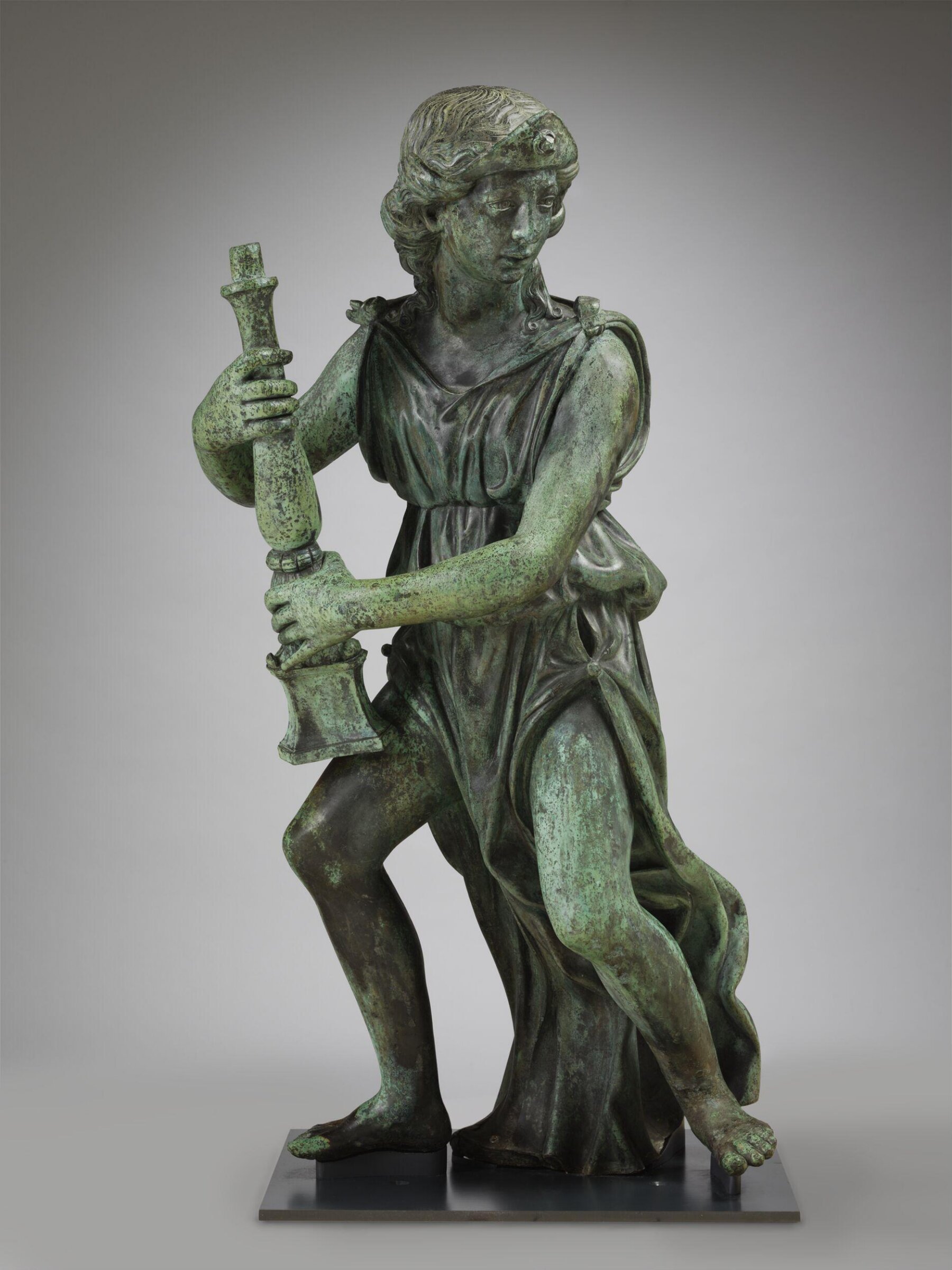
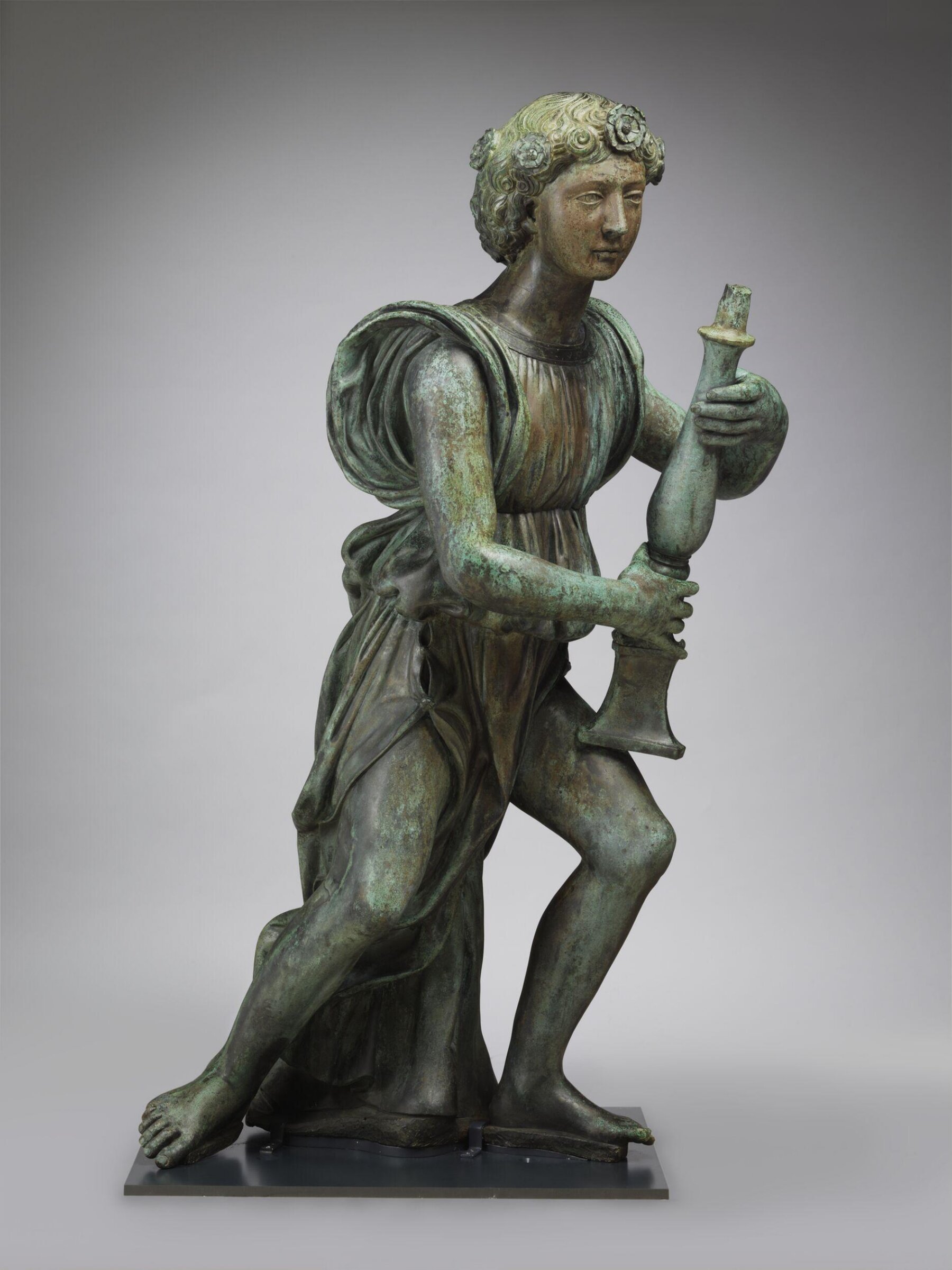
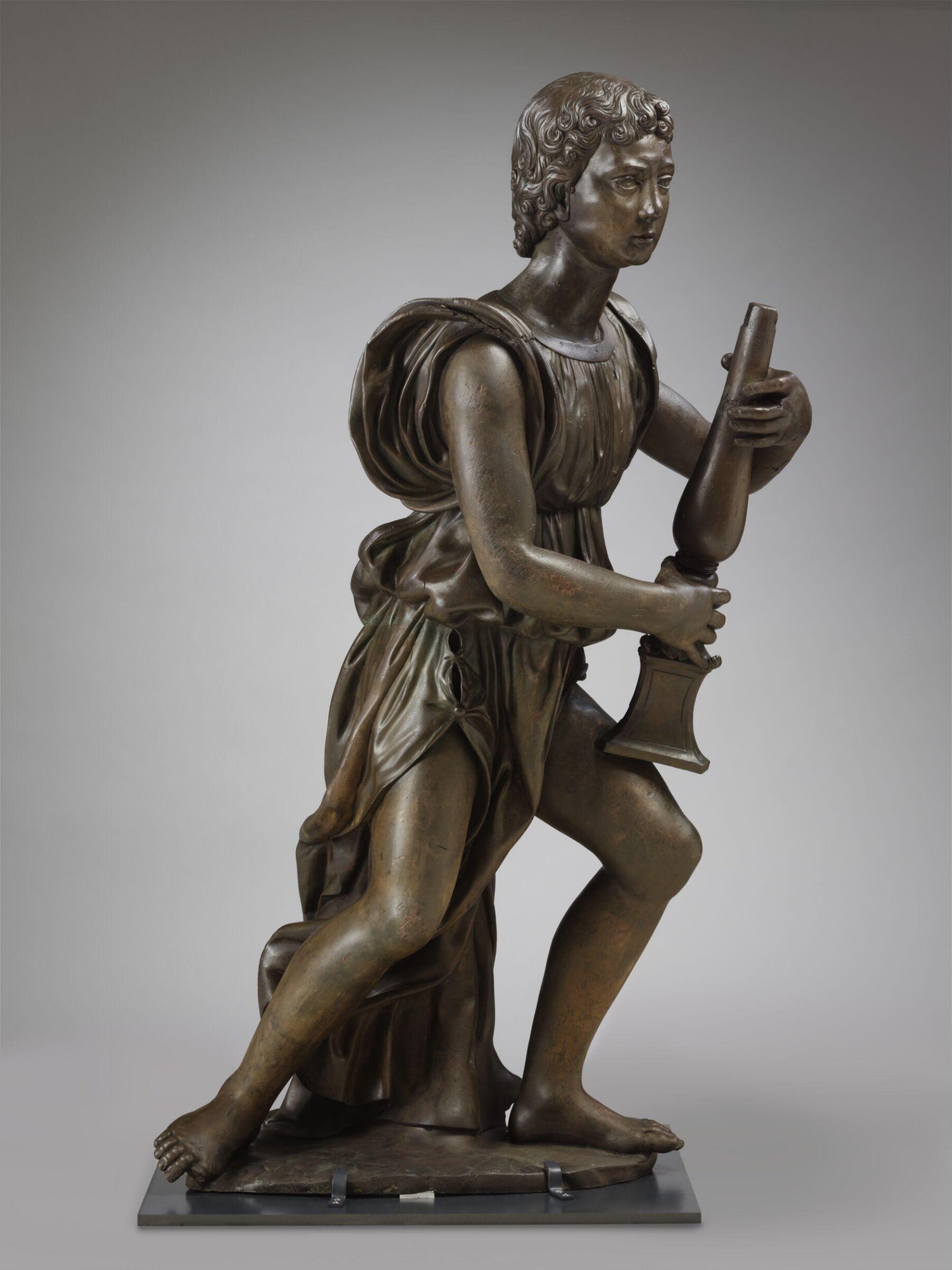
This candle-bearing angel is one of four originally designed for the tomb of Cardinal Thomas Wolsey, the principal prelate of Tudor England. It is a rare example of a large cast bronze figure from the early sixteenth century by an Italian sculptor working in England. In 1524 Cardinal Wolsey commissioned Florentine sculptor Benedetto da Rovezzano to design a magnificent tomb in the Renaissance style which would have been one of the major funerary commissions of the Tudor period. The scale of the tomb and its rich materials of black touchstone, white marble and gilded bronze would have reflected Cardinal Wolsey’s wealth and statesmanship at the height of his powers. After his downfall, the tomb parts were seized by Henry VIII to be used for his own monument.
Leggi
Benedetto da Rovezzano, who worked in England from 1519 to around 1540, was a contemporary of Michelangelo working in marble, stone and bronze. One of his earliest commissions in 1508 was to finish Michelangelo’s bronze 'David' (now lost), proving that his metal working skills were already very much in demand. This figure of a candle-bearing angel is comparable to angels used in Andrea Sansovino’s earlier altar in Santo Spirito, Florence (c. 1491-92), which would have been familiar to Benedetto. The sculptor also used a similar type of angel in the ‘Translation of the Body of San Giovanni Gualberto’, a sculpture originally in the chapel of Saint John Gualbert, now in the Museo del Cenacolo di San Salvi, Florence.
Victoria and Albert Museum
Scheda
- Numero di inventario
- A.2-2015
In catalogo
Fonti
- Victoria and Albert Museum
- Immagine: Victoria and Albert Museum — © Victoria and Albert Museum, London