
 Paul GauguinFrancia, 1848–1903
Schuffenecker's Studio
Si può ammirare?
Non si sa

Museo d'Orsay
Parigi, Francia
Il proprietario è noto; non si sa se oggi sia esposta.
- Ultimo cambio di stato
- Fonte
- Il museo
Sul dipinto
La famiglia Schuffenecker è un dipinto eseguito con la tecnica dell'olio su tela e realizzato da Paul Gauguin nel 1889, noto anche come L'atelier di Schuffenecker. Si trova al Musée d'Orsay.
L'opera ritrae Émile Schuffenecker, la moglie Louise (anche sua cugina), e i due figlioletti, Jeanne e Paul, quest'ultimo appisolato. Émile Schuffenecker, pittore anche lui, frequentò Gauguin per alcuni anni.
Scheda
- Numero di inventario
- RF 1959 8
In catalogo
Fonti
- Wikidata
- Immagine: Museo d'Orsay — Paul Gauguin · Public domain · Wikimedia Commons
Nel frattempo, nella vita di Paul Gauguin
Tutta la vita1870s–1891 · Luogo di lavoro
Paris
1886–1891 · Luogo di lavoro
Pont-Aven
1887 · Luogo di lavoro
Martinique
1887
Panama and Martinique
In 1887–1888 Gauguin visited Panama, where he observed the construction of the Panama Canal, and traveled on with the painter Laval to Martinique. Martinique helped bring about an evolution in his art, making Japanese influences apparent.
October – December 1888
Nine Weeks with Van Gogh in Arles
In 1888, at Theo's insistence, Gauguin worked for nine weeks with Vincent van Gogh in his Yellow House in Arles. Their relationship deteriorated: on the evening of 23 December 1888, according to Gauguin's later account, Vincent came at him with a razor and then cut off his own ear; Gauguin left Arles, and they never saw each other again.
1 April 1891
Departure for Tahiti
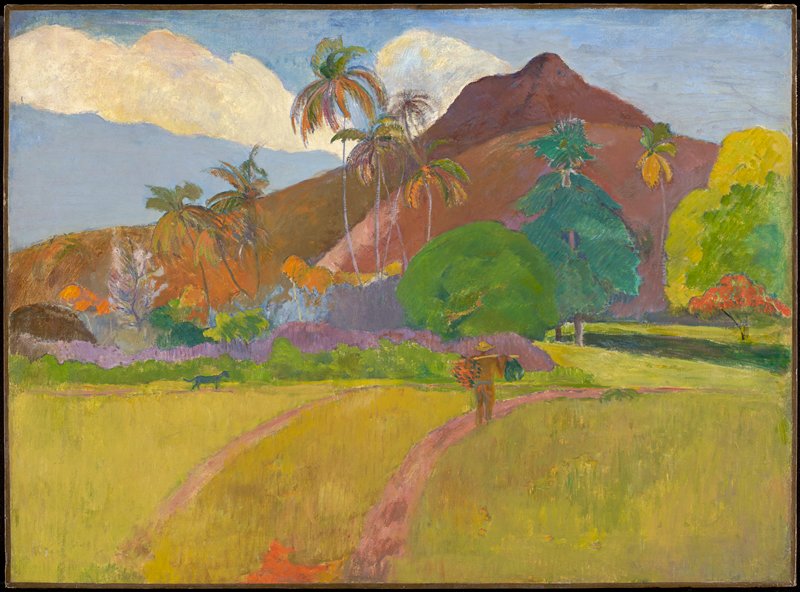
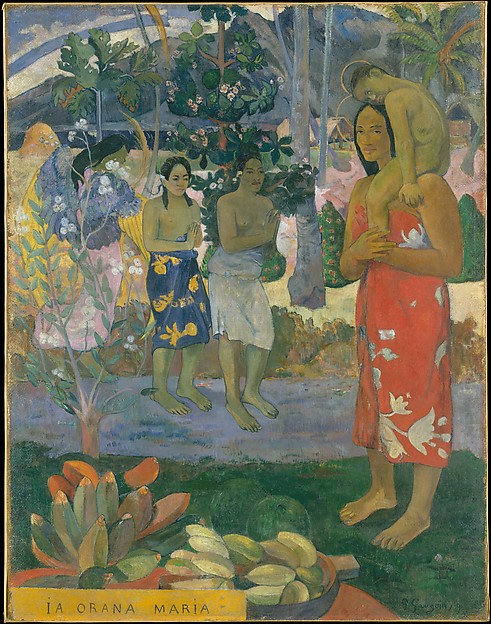
On 1 April 1891, after a final visit to his wife and children in Copenhagen, Gauguin sailed for Tahiti, intending to escape European civilization and "everything that is artificial and conventional." He spent his first three months in Papeete, then set up a studio in a bamboo hut at Mataiea.



![Pair of Wooden Shoes (Sabots) [left], Paul Gauguin, 1889/1890](https://api.nga.gov/iiif/44a731a9-e900-4898-a282-01034fcaa6ca/full/!2400,2400/0/default.jpg)


