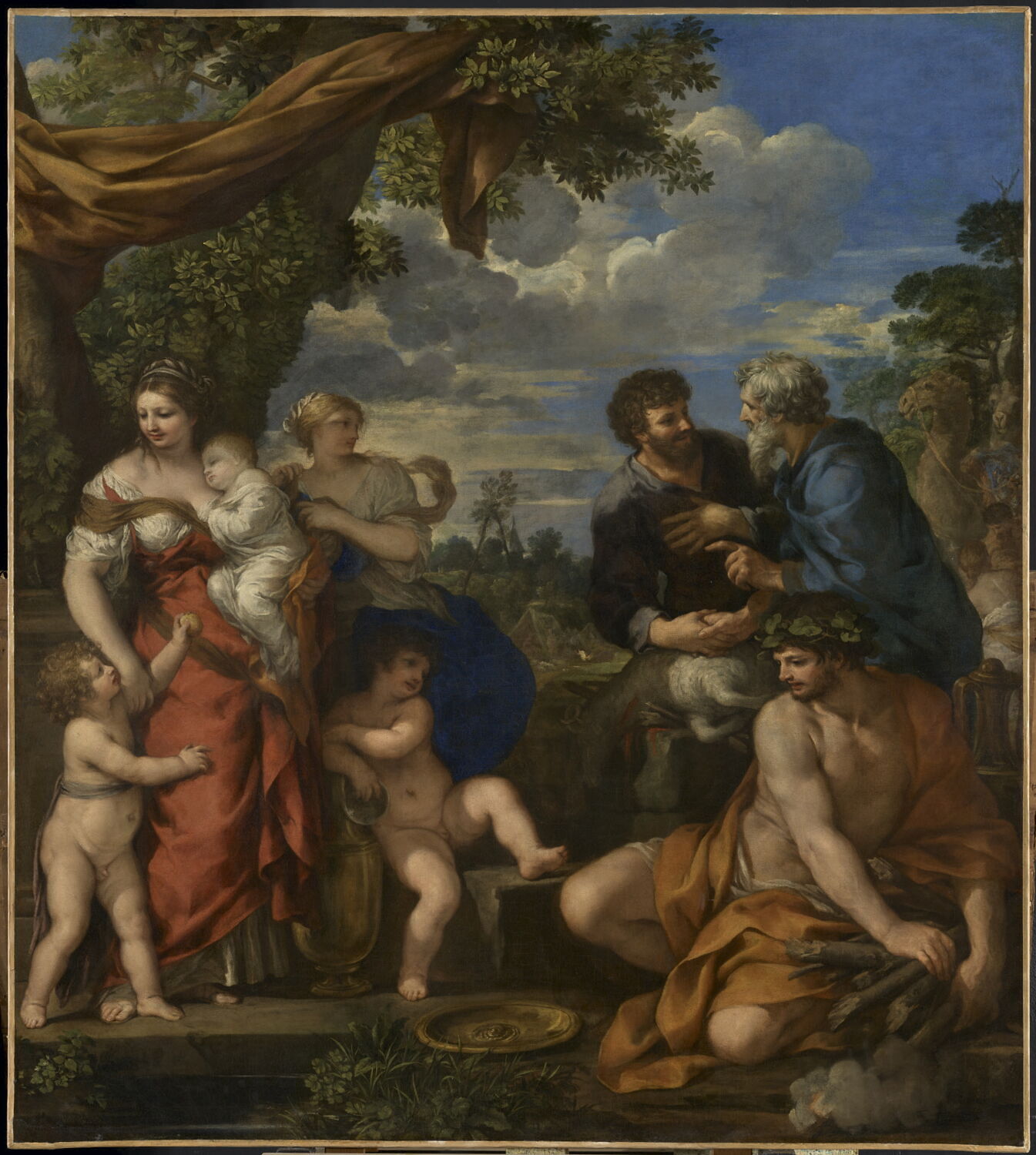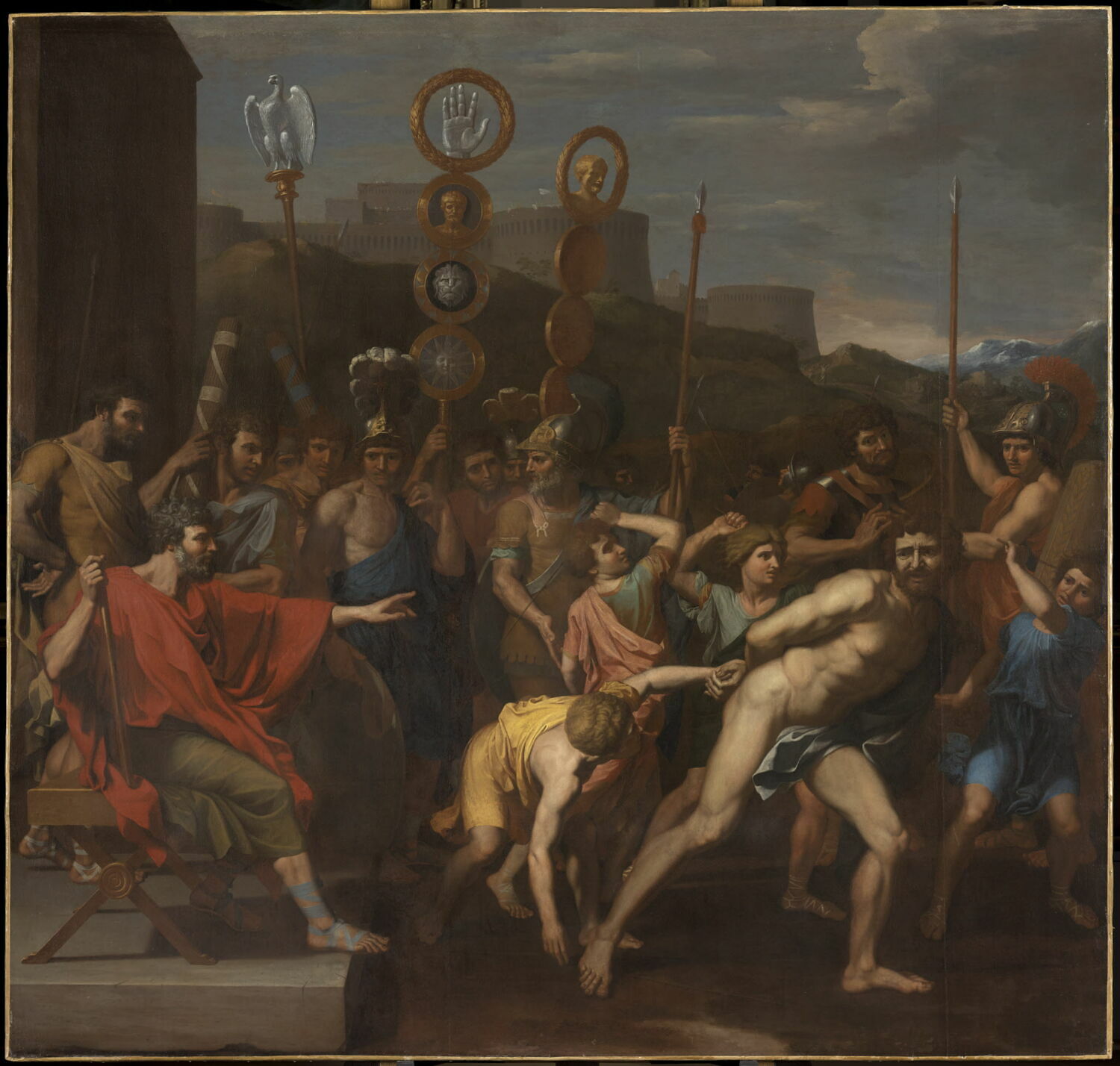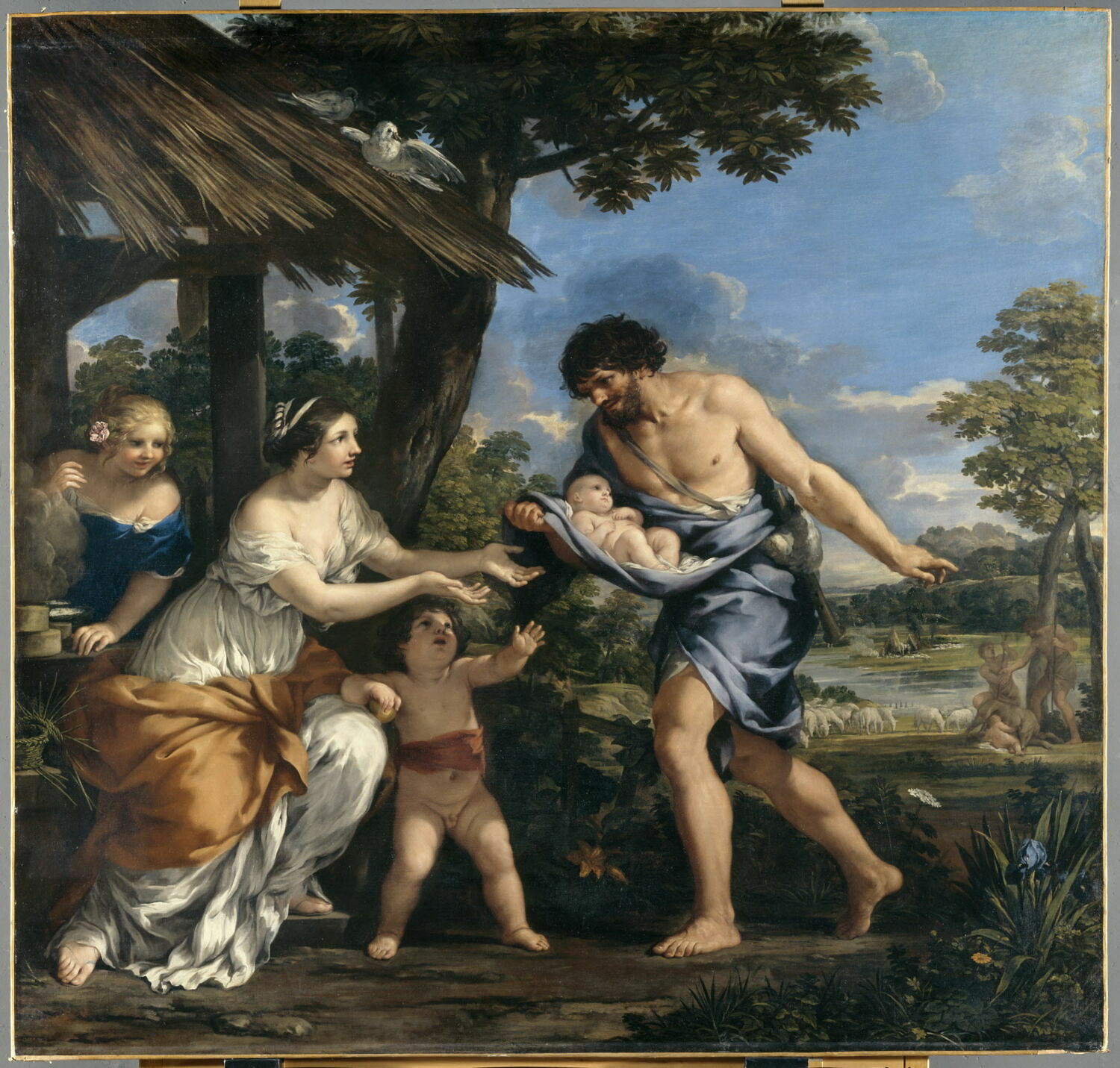
Romulus et Rémus recueillis par Faustulus
Sul dipinto
Romulus and Remus Taken in by Faustulus (also known as Faustulus Entrusting Romulus and Remus to Larentia, Romulus and Remus Sheltered by Faustulus or Remus Discovered) is an oil on canvas painting by Pietro da Cortona, created c. 1643. It is held in the Louvre, in Paris. It is one of three works by him and six by other artists commissioned by Louis Phélypeaux, Seigneur of La Vrillière for the gilded gallery at his new hôtel de La Vrillière in Paris.
Romulus and Remus and the hôtel were sold in 1705 to Louis Raulin Rouillé (contrôleur général des Postes), then in 1713 by Rouillé's widow to Louis-Alexandre de Bourbon. They both passed to his son Louis de Bourbon, duc de Penthièvre, from whom they were seized by the French revolutionary state in 1794.
Scheda
Nel frattempo, nella vita di Pietro da Cortona
Tutta la vita1614–1669 · Luogo di lavoro
Rome
early 1620s
Meets Marcello Sacchetti
His acquaintance with the Marchese Marcello Sacchetti, later papal treasurer, proved decisive for his early career: it was his copy of Raphael's “Galatea” that caught Sacchetti's eye. For Sacchetti Pietro painted “The Sacrifice of Polyxena” and “The Triumph of Bacchus” (now in the Capitoline Museums), and through him he met the poet Giambattista Marino.
c. 1626
Meets Pope Urban VIII
In the Sacchetti circle Pietro met Pope Urban VIII Barberini and his nephew Cardinal Francesco Barberini. The pope recognised his talent before others and became his chief patron; the Barberini tapestry works wove the series “The History of Alexander the Great” and “From the Life of Pope Urban VIII” after Cortona's designs.
1626
The Sacchetti commission: canvases and frescoes at Castelfusano
In 1626 the Sacchetti family commissioned three large canvases (“The Sacrifice of Polyxena”, “The Triumph of Bacchus” and “The Rape of the Sabine Women”; other accounts date the first two to the early 1620s) and a fresco cycle in their villa at Castelfusano near Ostia. The young Andrea Sacchi was in his team.
8 January 1634
Elected head of the Academy of Saint Luke
Cortona was elected president of the Roman Academy of Saint Luke (he led it until 1638). By then he had a large workshop where pupils finished the details of big canvases; among them were Francesco Romanelli, Giovanni Maria Bottalla, Ciro Ferri and Guglielmo Cortese, known as il Borgognone.