 Claude LorrainFrancia, 1600–1682
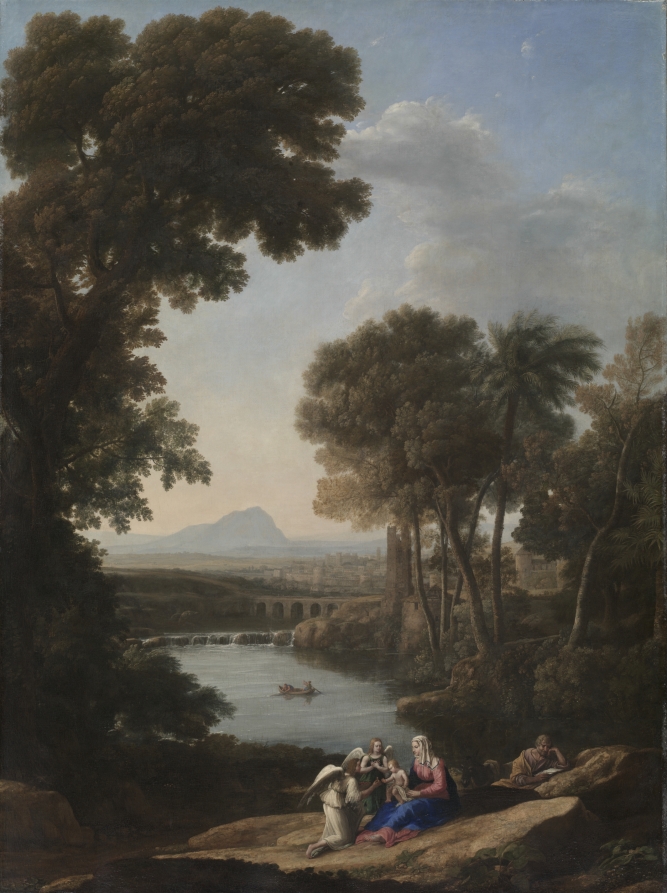
Rest on the Flight into Egypt
Si può ammirare?
Sì, riceve visite

Esposta al pubblico.
- Verificato
- Ultimo cambio di stato
- Fonte
- Il museo
Sul dipinto
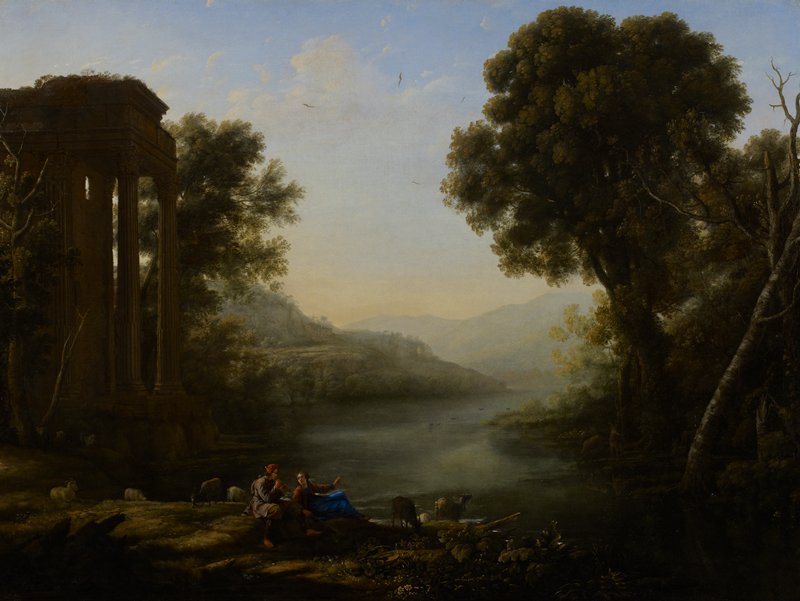
One of the most influential landscape painters of the early modern era, Lorrain was a master of the “ideal landscape,” which combined lush foliage and a tranquil atmosphere with allusions to an idyllic, imaginary past. The intention was to create views more beautiful and harmonious than nature itself. In the foreground of this soaring landscape, the Holy Family rests on a shady bank as kneeling angels offer fruit to the Christ child. Landscape paintings like this were much in demand among wealthy collectors throughout Europe, for whom these expansive idealized scenes represented a calm retreat from their hectic city lives.
Cleveland Museum of Art
Scheda
- Numero di inventario
- 1962.151
In catalogo
Fonti
- Cleveland Museum of Art
- Immagine: Cleveland Museum of Art — Museum open access
Nel frattempo, nella vita di Claude Lorrain
Tutta la vita1635–1638
Pope Urban VIII commissions four paintings
According to Baldinucci, Cardinal Guido Bentivoglio, impressed by the two landscapes Claude painted for him, recommended the artist to Pope Urban VIII; four paintings were made for the Pope in 1635–38, two large and two small on copper.
late 1630s
Italy’s leading landscapist, with large fees
By the end of the 1630s Claude was established as the leading landscapist in Italy and enjoyed large fees; his landscapes gradually became larger but with fewer figures, more carefully painted and produced at a lower rate.
1639
Philip IV commissions seven paintings
In 1639 Philip IV of Spain commissioned seven paintings from Claude, now in the Prado, among them two landscapes with hermits.
1642
Gives up etching for painting
Claude was a skilful etcher but gave up etching for good in 1642, choosing painting.
1650
Declines to head the Academy of Saint Luke
In 1650 Claude was offered the post of princeps (president) of the Academy but declined, preferring to work in peace.
1650
Moves to the Via Paolina
In 1650 Claude moved to a neighbouring house on the Via Paolina (today the Via del Babuino), where he lived until his death.