 Amedeo ModiglianiItalia, 1884–1920
Reclining Nude
Si può ammirare?
Al momento non riceve

Museum of Modern Art
New York, Stati Uniti
Appartiene alla collezione, ma al momento non è esposta.
- Verificato
- Fonte
- I dati di collezione del museo stesso
About the painting
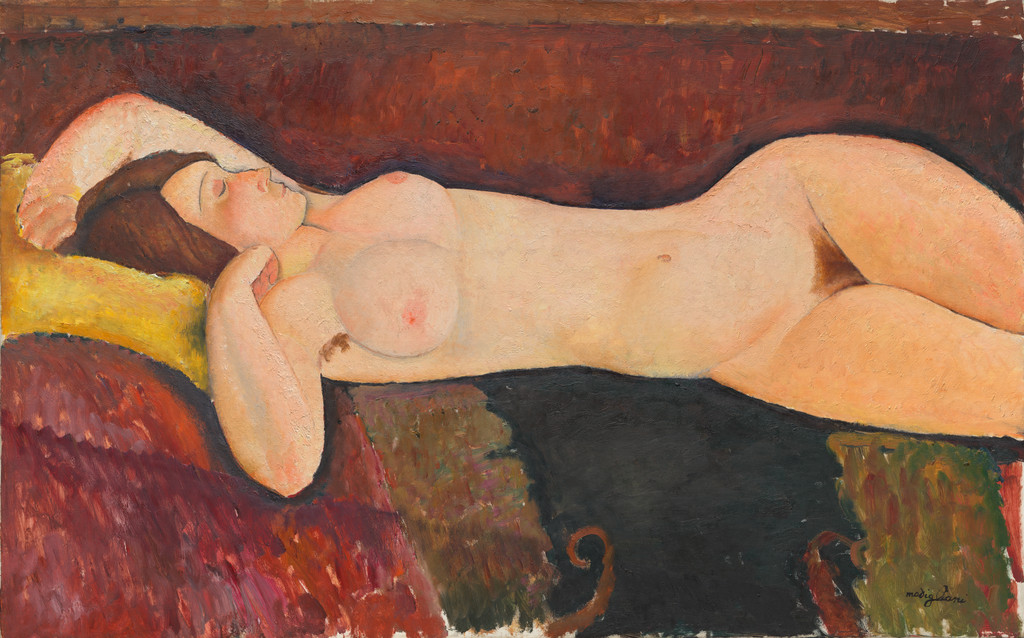
Grande nudo disteso è un dipinto a olio su tela (73 x116 cm) realizzato nel 1917 dal pittore italiano Amedeo Modigliani.
Originariamente il quadro fu acquistato da Léopold Zborowski: passò poi in numerose collezioni fino ad arrivare al Museum of Modern Art di New York, attuale sua collocazione.
Interessante notare la differenza della pennellata con cui l'artista ha voluto contrapporre la pelle della modella, con tratto sottile e preciso, allo sfondo in cui ha utilizzato, invece, un tratto più grasso e largo. La posizione assunta dalla donna accentua la sensazione di distensione espressa già dai lineamenti del volto.
Scheda
- Numero di inventario
- 13.1950
Fonti
- Museum of Modern Art: the museum's own open data · acquisita 13 giorni fa
- Immagine: Museum of Modern Art — © the artist or rights holder
Nel frattempo, nella vita di Amedeo Modigliani
Tutta la vitaspring 1917
Meets Jeanne Hébuterne
In the spring of 1917 the Ukrainian sculptor Chana Orloff introduces Modigliani to a 19-year-old art student, Jeanne Hébuterne, who has posed for Foujita. Her conservative, devoutly Catholic family renounces her for her liaison with a Jew, but she soon lives with Modigliani anyway and becomes a principal subject of his art.
3 December 1917
His first solo exhibition — and the police
An exhibition of Modigliani’s nudes opens at Berthe Weill’s gallery in Paris, his first solo show in the city. The gallery stands opposite a police station, and the officers, outraged by the nudes, force the show to close on its opening day.
1918
Flight to the south: Cagnes-sur-Mer and Nice
Fearing a German invasion, Modigliani leaves Paris with Jeanne Hébuterne, the Zborowskis and Chaïm Soutine for the south of France, first to Cagnes-sur-Mer and then to Nice. He returns to portraiture and sends the finished canvases to Paris for sale.
1920
A neighbour finds him delirious
Modigliani still goes on painting, but his health deteriorates rapidly and his alcohol-induced blackouts grow more frequent. After several days without word from him, a neighbour checks on the family and finds Modigliani in bed, delirious and holding on to Jeanne Hébuterne; the doctor summoned can do little, as he is in the final stage of the disease, tubercular meningitis.
24 gennaio 1920
Died
27 gennaio 1920 · Sepoltura
Père Lachaise Cemetery