Benjamin Cheverton
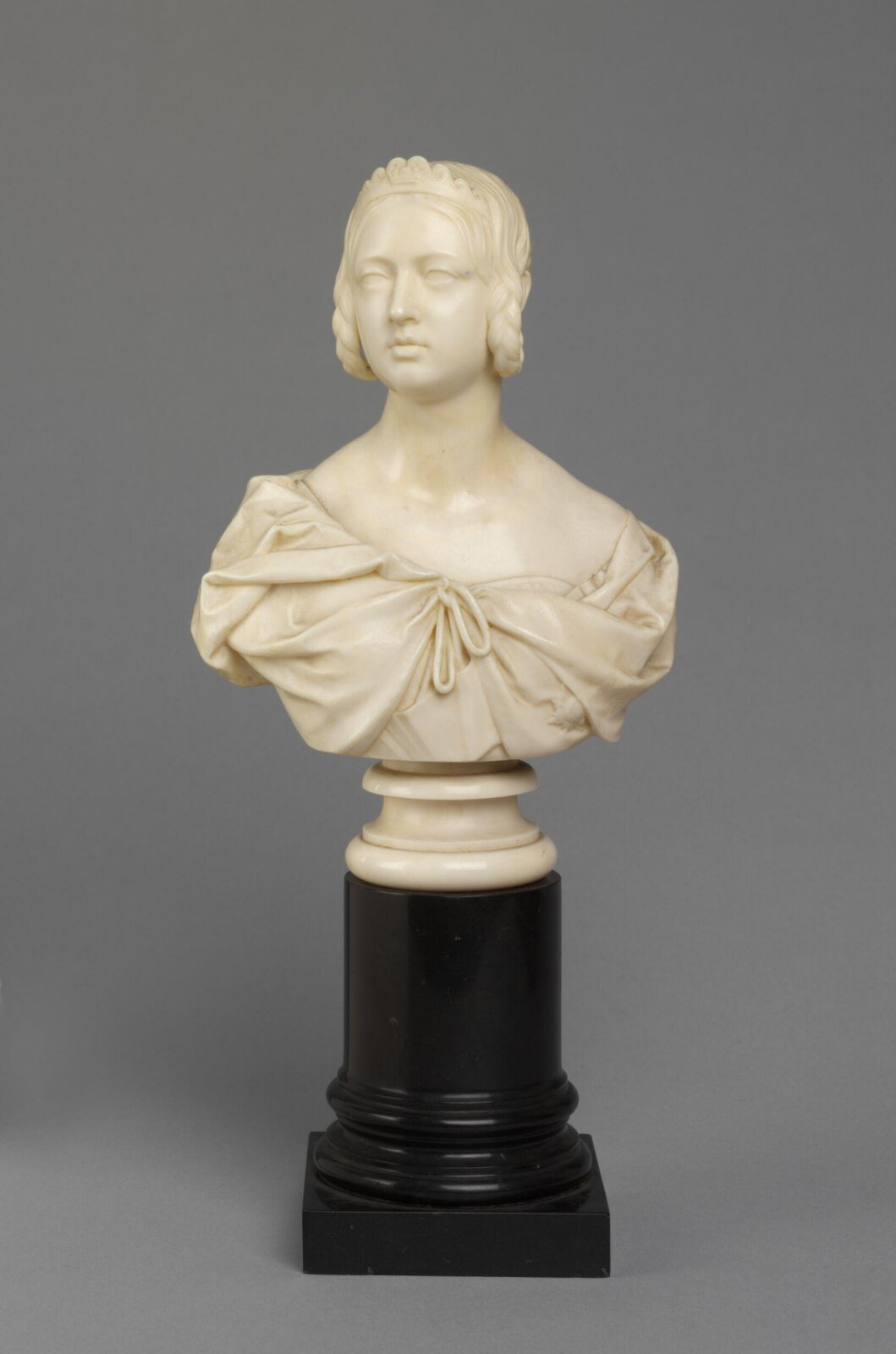
Queen Victoria
Si può ammirare?
Al momento non riceve

Victoria and Albert Museum
Londra, Regno Unito
Appartiene alla collezione, ma al momento non è esposta.
- Verificato
- Ultimo cambio di stato
- Fonte
- I dati di collezione del museo stesso
About the sculpture
The ivory is a small-scale reproduction of the marble bust by Francis Chantrey (1781-1841), the first version of which is signed and dated 1839. This was exhibited at the Royal Academy in 1840, and is now in the Royal Collection at Windsor Castle. A slightly later replica, of higher quality, was acquired by Sir Robert Peel from Chantrey's studio in 1844, and is now in the National Portrait Gallery. Cheverton’s work was evidently esteemed within the highest levels of society. In 1845, this ivory bust was shown at the Royal Society, at a soirée hosted by the President, the Marquis of Northampton, and attended by Prince Albert.
Read on
Benjamin Cheverton (1796-1876) was the son of a farmer and a small landowner. During the 1820s he perfected a machine capable of producing reduced miniature versions, usually in ivory, of full-size sculptures. This had been invented by his mentor, John Isaac Hawkins, and was similar to machines devised by the engineer and inventor James Watt (1736-1819). Cheverton’s machine was up and running by early 1828. He first showed products at exhibitions, and issued items which might have popular appeal, such as busts of Shakespeare or Milton. Later he took commission from owners of busts or other sculptures who desired small copies. His ivories were produced to a high standard, and he maintained that the machine itself was capable of making objects of such quality.
Another version in ivory is known, as well as plaster versions signed and dated 1842 (information supplied by David Wilson, April and June 2015).
Victoria and Albert Museum
Scheda
- Numero di inventario
- A.28-1931
What it shows
In catalogo
Fonti
- Victoria and Albert Museum: the museum's own open data · acquisita 10 giorni fa
- Immagine: Victoria and Albert Museum — © Victoria and Albert Museum, London