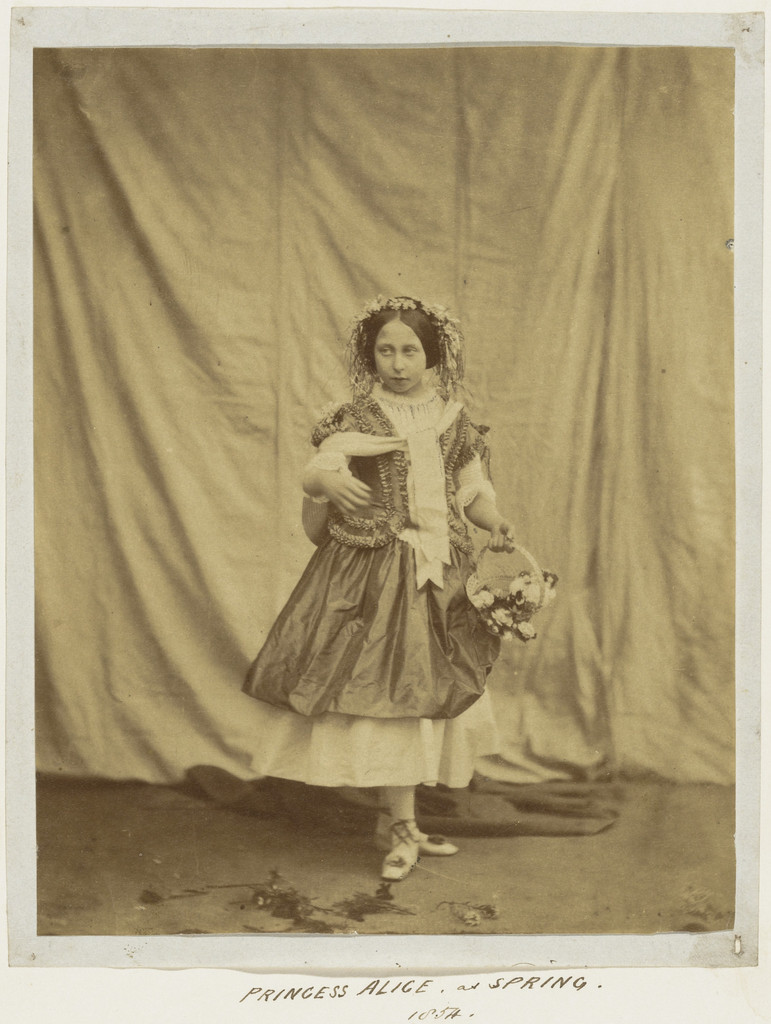
 Roger FentonRegno Unito, 1819–1869
Princess Alice as Spring
Si può ammirare?
Al momento non riceve

Museum of Modern Art
New York, Stati Uniti
Appartiene alla collezione, ma al momento non è esposta.
- Verificato
- Fonte
- Il museo
Scheda
- Numero di inventario
- 523.2009
In catalogo
Fonti
- Museum of Modern Art
- Immagine: Museum of Modern Art — © the artist or rights holder
Nel frattempo, nella vita di Roger Fenton
Tutta la vitac. 1851 – 1852
To Paris to learn the waxed paper calotype
Fenton travels to Paris to learn the waxed paper calotype process, most likely from Gustave Le Gray, who had modified the methods of its inventor, William Henry Fox Talbot.
1853
Founding the London Photographic Society
Fenton becomes a founder and first secretary of the London Photographic Society, later the Royal Photographic Society under the patronage of Prince Albert.
1854
Commissioned to document the Crimean War
Probably in autumn 1854, powerful friends and patrons — among them Prince Albert and the Duke of Newcastle, Secretary of State for War — urge Fenton to go to the Crimea; the London print publisher Thomas Agnew & Sons becomes his commercial sponsor. The photographs may have been meant to offset the war's unpopularity and to counter the critical reporting of William Howard Russell of The Times: they were to be converted into woodblocks for the less critical Illustrated London News.
1855
Cholera, heat and broken ribs in the Crimea
Despite the summer heat, breaking several ribs in a fall, suffering from cholera (the effects of which will contribute to his early death) and becoming depressed at the carnage he witnesses at Sevastopol, Fenton manages to make more than 350 usable large-format negatives.
c. 1855
An exhibition of 312 prints
Soon after his return an exhibition of 312 prints goes on show in London, and in the following months at various places across the country; Fenton also shows them to Queen Victoria and Prince Albert and to Emperor Napoleon III in Paris. He is nevertheless disappointed that sales are less than he expected.
8 March – 22 June 1855
Fenton at Balaklava
Fenton sets off aboard HMS Hecla in February, lands at Balaklava on 8 March and stays until 22 June, taking Marcus Sparling as his photographic assistant, a servant known as William, and a large horse-drawn van of equipment.