Arkhip KuindzhiUcraina, 1842–1910
After a rain
Si può vedere?
Non si sa
Dove si trova «After a rain» oggi? Collezione: Galleria Tret'jakov, Mosca. Non si sa.

Mosca, Russia
Il proprietario è noto; non si sa se oggi sia esposta.
- Fonte
- Il museo
Sul dipinto
Con le parole del museo — in russo
Пейзаж «После дождя» создавался Архипом Куинджи одновременно с полотнами «Березовая роща» и «Север» (оба — 1879, Государственная Третьяковская галерея). Все три произведения были задуманы специально для 7-й выставки Товарищества передвижных художественных выставок и обращались к единой проблеме передачи живописными средствами различного природного освещения.
На картине «После дождя» художник запечатлел природу, преображенную живительной свежестью окончившегося ливня. Свинцовая грозовая туча неспешно уходит вдаль, и первый пробившийся луч солнца освещает поляну с сочной травой, одиноко пасущуюся лошадь и небольшой хутор на пригорке. Безлюдность пейзажа усиливает ощущение покоя и тишины. Куинджи запечатлел одно из тех переменчивых состояний природы, которое трудно уловимо не только для кисти художника, но и для человеческого глаза в целом.
Leggi
Как одаренный от природы колорист, Куинджи был способен различать тончайшие оттенки цвета, чем нередко удивлял современников. Колористическое решение темно-серой тучи лишь на первый взгляд кажется простым – при длительном рассмотрении становятся различимы оттенки всех цветов радуги. Для повышения эмоционального воздействия красок Куинджи использовал контрастные цвета, которые усиливали звучание друг друга. Другой характерный для творчества мастера живописный прием — отказ от тщательной проработки второстепенных, по его оценке, деталей. Подобным образом в пейзаже «После дождя» исполнен практически весь передний план с изображением камышей и реки. Художник стремился к тому, чтобы зрительское внимание не отвлекалось от главного, в данном случае, дальнего плана, где и «разыграно» эффектное освещение. В таком способе изображения природы многие современники Куинджи увидели небрежность. Новаторские идеи живописца в полной мере были оценены лишь десятилетия спустя художниками младшего поколения.
Galleria Tret'jakov
Scheda
- Numero di inventario
- 883
In catalogo
Fonti
- Galleria Tret'jakov
- Immagine: Galleria Tret'jakov — Museum open access
Nella vita di Arkhip Kuindzhi
Tutta la vitaautumn 1877
Repin paints Kuindzhi’s portrait
In autumn 1877 Repin, briefly in the capital from Moscow, stayed in Kuindzhi’s apartment with its studio on Maly Prospekt on Vasilievsky Island and painted his portrait in a few days. In this apartment Kuindzhi later painted “Moonlit Night on the Dnieper” and “The Birch Grove”.
1878
The World Exhibition in Paris
In 1878 Kuindzhi’s works were shown at the World Exhibition in Paris in the presence of the artist and his wife; public and critics admired them and noted the absence of foreign influence. The critic Duranty called him the most interesting of the young Russian painters, in whom, more than in others, an original national character is felt.
late 1879
The break with the Peredvizhniki
By the end of 1879 Kuindzhi broke with the Peredvizhniki for good: an anonymous newspaper article sharply criticised both his work and the Society, and its author turned out to be Klodt. Kuindzhi demanded Klodt’s expulsion but, realising that Klodt, an Academy professor, would not be expelled, announced his own withdrawal despite attempts to persuade him to stay; many scholars consider the story only a pretext for a break that had long been brewing.
21 March 1879
Elected to the Peredvizhniki audit commission
On 21 March 1879 Kuindzhi and Baron M. K. Klodt were elected to the audit commission of the Peredvizhniki.
October – November 1880
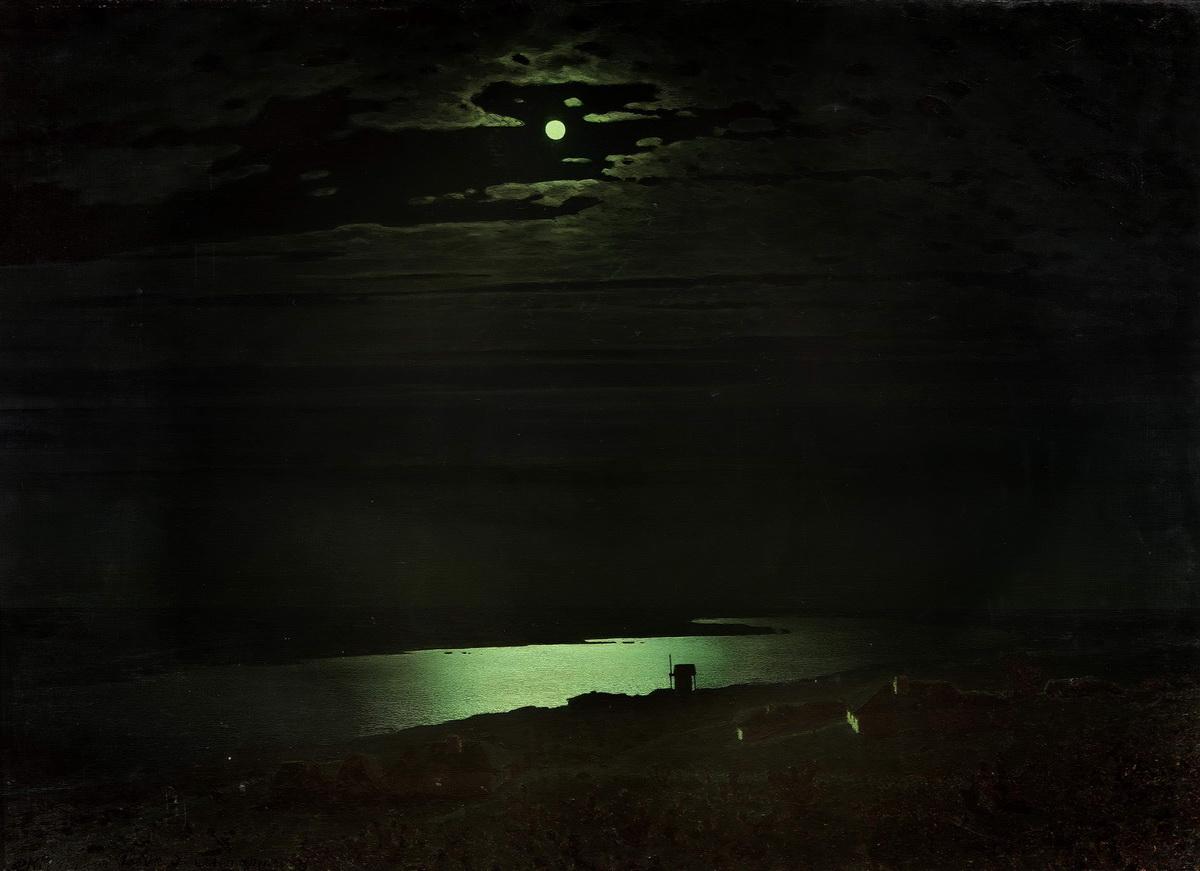
A one-painting exhibition: “Moonlit Night on the Dnieper”
In autumn 1880 Kuindzhi staged an exhibition of a single painting at the Society for the Encouragement of Artists: he draped the hall’s windows and lit the canvas with a beam of electric light. “Moonlit Night on the Dnieper” was an unprecedented success. The painting was bought by Grand Duke Konstantin Konstantinovich, who took it with him on a round-the-world voyage, and under the action of the sea air its bitumen paints darkened.
1881
A one-painting exhibition: “The Birch Grove”
In 1881 Kuindzhi staged an exhibition of another single painting, “The Birch Grove” (1879), which was just as successful.