
 El GrecoGrecia, 1541–1614
Pietà
Si può ammirare?
Al momento non riceve

National Gallery of Art
Washington, Stati Uniti
Appartiene alla collezione, ma al momento non è esposta.
- Verificato
- l’altro ieri
- Ultimo cambio di stato
- 19 ago 2026
- Fonte
- I dati di collezione del museo stesso
Scheda
- Numero di inventario
- 2016.54.1
What it shows
In catalogo
Fonti
- National Gallery of Art: the museum's own open data · acquisita 5 giorni fa
- Immagine: National Gallery of Art — Museum open access
Nel frattempo, nella vita di El Greco
Tutta la vitac. 1567 – 1570
Venice: a “disciple” of Titian
El Greco lived in Venice until 1570 and, according to a letter from his friend the miniaturist Giulio Clovio, was a “disciple” of Titian, who was by then over eighty but still vigorous. This may mean he worked in Titian's studio, or not; Clovio called him “a rare talent in painting”.
1570
Moving to Rome and the Palazzo Farnese
In 1570 El Greco moved to Rome; on Giulio Clovio's recommendation he was received as a guest at the Palazzo Farnese, which Cardinal Alessandro Farnese had made a centre of the city's artistic and intellectual life. There he met the Roman intellectual elite, including the scholar Fulvio Orsini, whose collection would later include seven paintings by him.
1570s
The quarrel with Michelangelo in Rome
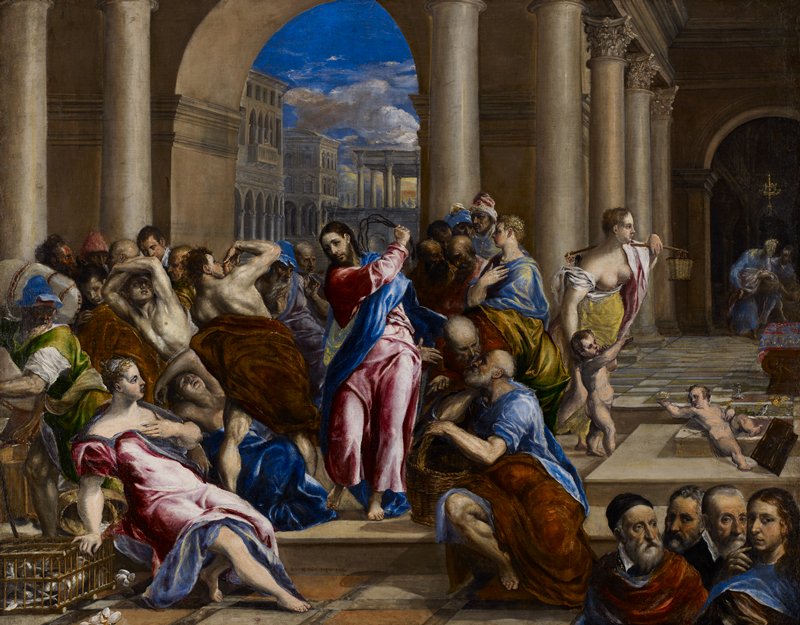
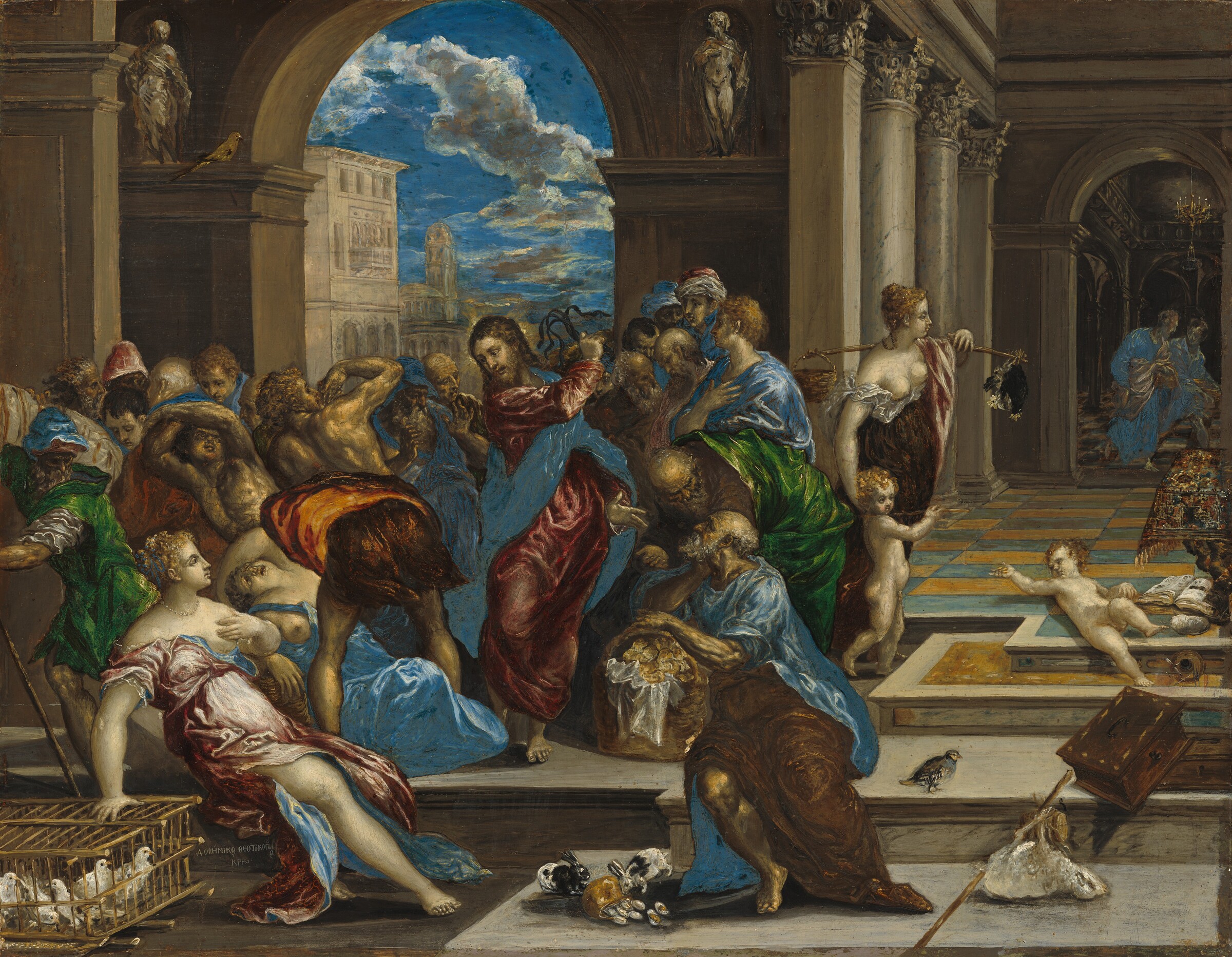
El Greco singled out Correggio and Parmigianino for praise but did not hesitate to dismiss Michelangelo's Last Judgment, offering Pope Pius V to paint over the whole fresco in accord with the new and stricter Catholic thinking; later he said Michelangelo was a good man who did not know how to paint. In The Purification of the Temple he painted portraits of Michelangelo, Titian, Clovio and presumably Raphael, advancing a claim to rival them.
late 1572
His own workshop in Rome
At the end of 1572 El Greco opened his own workshop in Rome and hired the painters Lattanzio Bonastri de Lucignano and Francisco Preboste as assistants.
1572
Enemies in Rome: the quarrel with Farnese
Because of his unconventional beliefs and personality El Greco soon made enemies in Rome: the architect Pirro Ligorio called him a “foolish foreigner”, and Farnese, after a quarrel, obliged him to leave the palace. In 1572 the painter officially complained about it.
18 September 1572
Joining the Guild of Saint Luke in Rome
On 18 September 1572 El Greco paid his dues to the Guild of Saint Luke in Rome as a miniature painter.



![Ginevra de' Benci [obverse], Leonardo da Vinci, c. 1474/1478](https://api.nga.gov/iiif/8f29e3c9-a289-4d53-abf0-31a66e9e98fa/full/!2400,2400/0/default.jpg)
![Wreath of Laurel, Palm, and Juniper with a Scroll inscribed Virtutem Forma Decorat [reverse], Leonardo da Vinci, c. 1474/1478](https://api.nga.gov/iiif/ff62e8d0-45c4-498f-ad36-6358de827e04/full/!2400,2400/0/default.jpg)


