ART WIKI32.963 in sala
MappaCollezioneArtistiMuseiMostreRivista
Accedi

ART WIKI

Dove è appeso il capolavoro, e quando si può entrare.

Collezioni: Art Institute of Chicago, Cleveland Museum of Art, Ermitage, Galleria Tret'jakov, Getty Museum, Harvard Art Museums, Hirshhorn Museum and Sculpture Garden, Metropolitan Museum of Art, Minneapolis Institute of Art, Museo del Louvre, Museo Puškin delle belle arti, Museo russo, Museum of Modern Art, National Gallery of Art, National Museum of Asian Art, National Portrait Gallery, Rijksmuseum, Smithsonian American Art Museum, Statens Museum for Kunst, Victoria and Albert Museum, Villa Getty, Whitney Museum of American Art, Catalogo statale del fondo museale russo (274 musei), Europeana (19 musei), Wikidata (6 musei), Paris Musées (12 musei) e Joconde, la banca dati dei musei del Ministero della Cultura francese (495 musei). Le immagini appartengono ai titolari dei diritti.

Sezioni

  • Mappa
  • Ricerca
  • Collezione
  • Capolavori
  • Esposte ora
  • Artisti

Altro

  • Musei e gallerie
  • Mostre
  • Rivista
  • Da dove vengono i dati
  • Privacy e cookie
HomeMappaCatalogo
  1. Collezione/
  2. Museo d'Orsay/
  3. Paysage rose
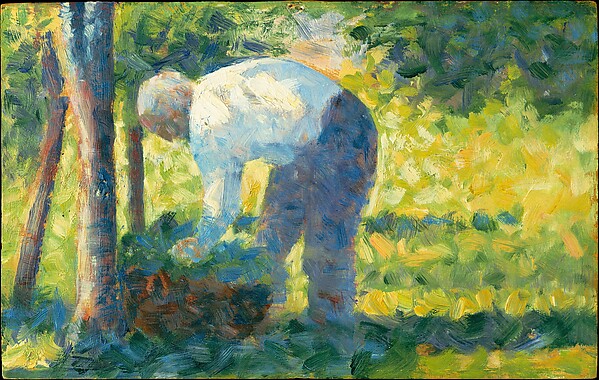
Paysage rose, Georges Seurat, 1886
Georges Seurat, ritrattoGeorges SeuratFrancia, 1859–1891

Paysage rose

1886 · Painting · 15.5 × 24.5 cm

Si può ammirare?

Non si sa

Museo d'Orsay

Parigi, Francia

Il proprietario è noto; non si sa se oggi sia esposta.

Ultimo cambio di stato
29 set 2026
Fonte
Il museo
Sulla mappaPagina del museo

Sul dipinto

Paesaggio rosa (Paysage rose) è un dipinto a olio su tavola (15,5x24,5 cm) realizzato nel 1886 dal pittore Georges-Pierre Seurat.

È conservato nel Musée d'Orsay di Parigi.

Wikipedia · CC BY-SA

Scheda

1886 · a 27 anni
18591891
Numero di inventario
RF 1965 18

In catalogo

DipintiPittura franceseImpressionismoXIX secolo

Fonti

  • Wikidata
  • Immagine: Museo d'Orsay — Georges Seurat · Public domain · Wikimedia Commons

Nel frattempo, nella vita di Georges Seurat

Tutta la vita
  1. 1880s

    Charles Henry's lectures at the Sorbonne

    In the 1880s Seurat hears lectures by the mathematician Charles Henry at the Sorbonne on the emotional properties and symbolic meaning of lines and colour; there remains controversy over how far he adopted Henry's ideas.

  2. 1884

    Meeting Paul Signac

    At the first exhibition of the Groupe des Artistes Indépendants Seurat meets Paul Signac, a future follower of pointillism; Signac later wrote that “Bathers” is painted in broad flat strokes and looks less bright than the Impressionists' canvases, but that the systematic separation of light, shade and local colour gives it harmony.

  3. 15 May – 30 June 1884

    The Salon rejects “Bathers”: a debut at the Indépendants

    The official Salon rejects “Bathers at Asnières”, and Seurat shows the painting instead at the Groupe des Artistes Indépendants, which runs from 15 May to 30 June 1884 — his debut as a painter.

  4. 1886

    Nine works, the public's mockery and the critics' defence

    At the last Impressionist exhibition Seurat presents nine works; the critics R. Marx and Félix Fénéon write favourable reviews, but the public ridicules the “pictures painted in dots”, and the Swiss critic Émile Hennequin finds them grey and poor in light. The Impressionists are sceptical: when Pissarro says that “La Grande Jatte” is very interesting, Degas replies that he would have noticed, but it is so large; Seurat himself blames the hall for being too dark and cramped to give the picture the necessary distance.

  5. 15 May – 15 June 1886

    “La Grande Jatte” is first shown at the eighth Impressionist exhibition

    “A Sunday Afternoon on the Island of La Grande Jatte” is shown to the public for the first time at the eighth Impressionist exhibition, held from 15 May to 15 June 1886. The painting will initiate Neo-Impressionism and alter the direction of modern art.

  6. 19 September 1886

    Fénéon names “Neo-Impressionism” and defends Seurat

    Félix Fénéon, who gives the new movement the name “Neo-Impressionism”, defends the artist in an article for the Belgian paper “L'Art Moderne” of 19 September 1886: here, he argues, no virtuosity of brushwork or impasto is needed, but the eye must be quick, sharp and perceptive.

Altre opere di Georges Seurat

Tutte le opere
A Sunday on La Grande Jatte — 1884, Georges Seurat, 1884–86, border added 1888–89

Una domenica pomeriggio sull'isola della Grande-Jatte

1884–86, border added 1888–89 · Art Institute of Chicago

Study for "A Sunday on La Grande Jatte", Georges Seurat, 1884

Study for "A Sunday on La Grande Jatte"

1884 · Metropolitan Museum of Art

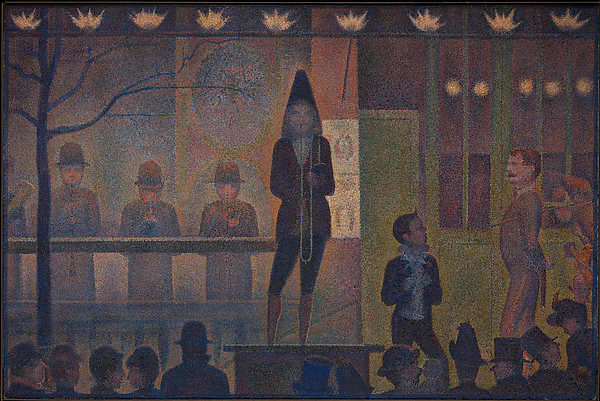
Circus Sideshow (Parade de cirque), Georges Seurat, 1887–88

La parata del circo

1887–88 · Metropolitan Museum of Art

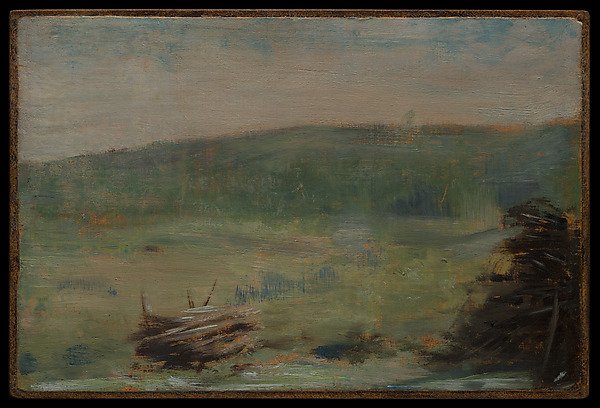
Landscape at Saint-Ouen, Georges Seurat, 1878 or 1879

Landscape at Saint-Ouen

1878 or 1879 · Metropolitan Museum of Art

The Forest at Pontaubert, Georges Seurat, 1881

The Forest at Pontaubert

1881 · Metropolitan Museum of Art

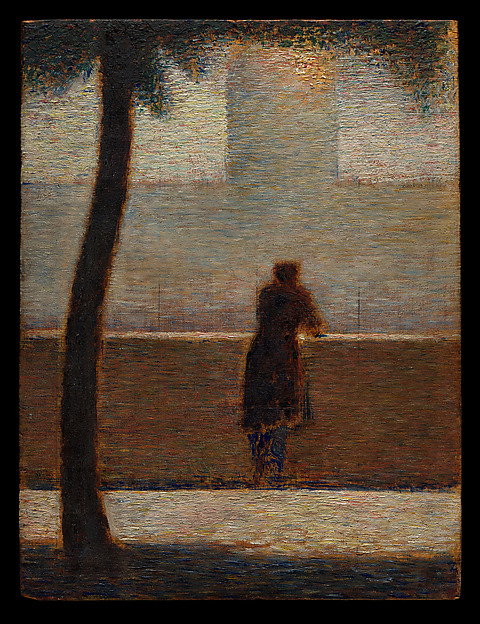
A Man Leaning on a Parapet, Georges Seurat, ca. 1881

A Man Leaning on a Parapet

ca. 1881 · Metropolitan Museum of Art

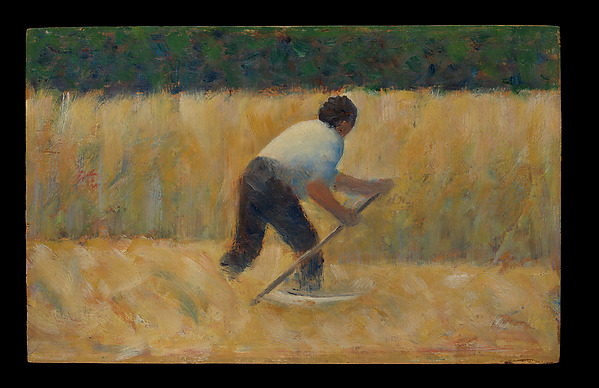
The Mower, Georges Seurat, 1881–82

The Mower

1881–82 · Metropolitan Museum of Art

The Gardener, Georges Seurat, 1882–83

The Gardener

1882–83 · Metropolitan Museum of Art

Dalla collezione: Museo d'Orsay

Pagina del museo
Still Life: Japanese Vase with Roses and Anemones, Vincent van Gogh, 1890

Vincent van Gogh

Still Life: Japanese Vase with Roses and Anemones, 1890

Chaumes de Cordeville, Vincent van Gogh, 1890

Vincent van Gogh

Chaumes de Cordeville, 1890

Doctor Gachet's Garden in Auvers, Vincent van Gogh, 1890

Vincent van Gogh

Doctor Gachet's Garden in Auvers, 1890

Two Children, Vincent van Gogh, 1890

Vincent van Gogh

Two Children, 1890

The siesta (after Millet), Vincent van Gogh, 1890

Vincent van Gogh

The siesta (after Millet), 1890

Marguerite Gachet in the Garden, Vincent van Gogh, 1890

Vincent van Gogh

Marguerite Gachet in the Garden, 1890

The Church at Auvers, Vincent van Gogh, 1890

Vincent van Gogh

La chiesa di Auvers, 1890

Portrait of Dr. Gachet, Vincent van Gogh, 1890

Vincent van Gogh

Portrait of Dr. Gachet, 1890