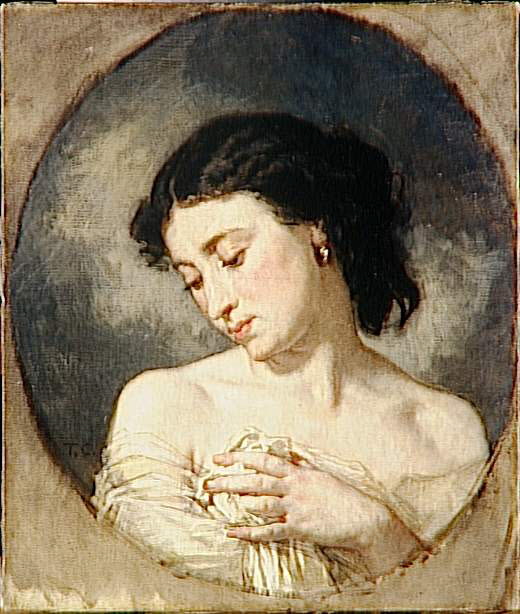
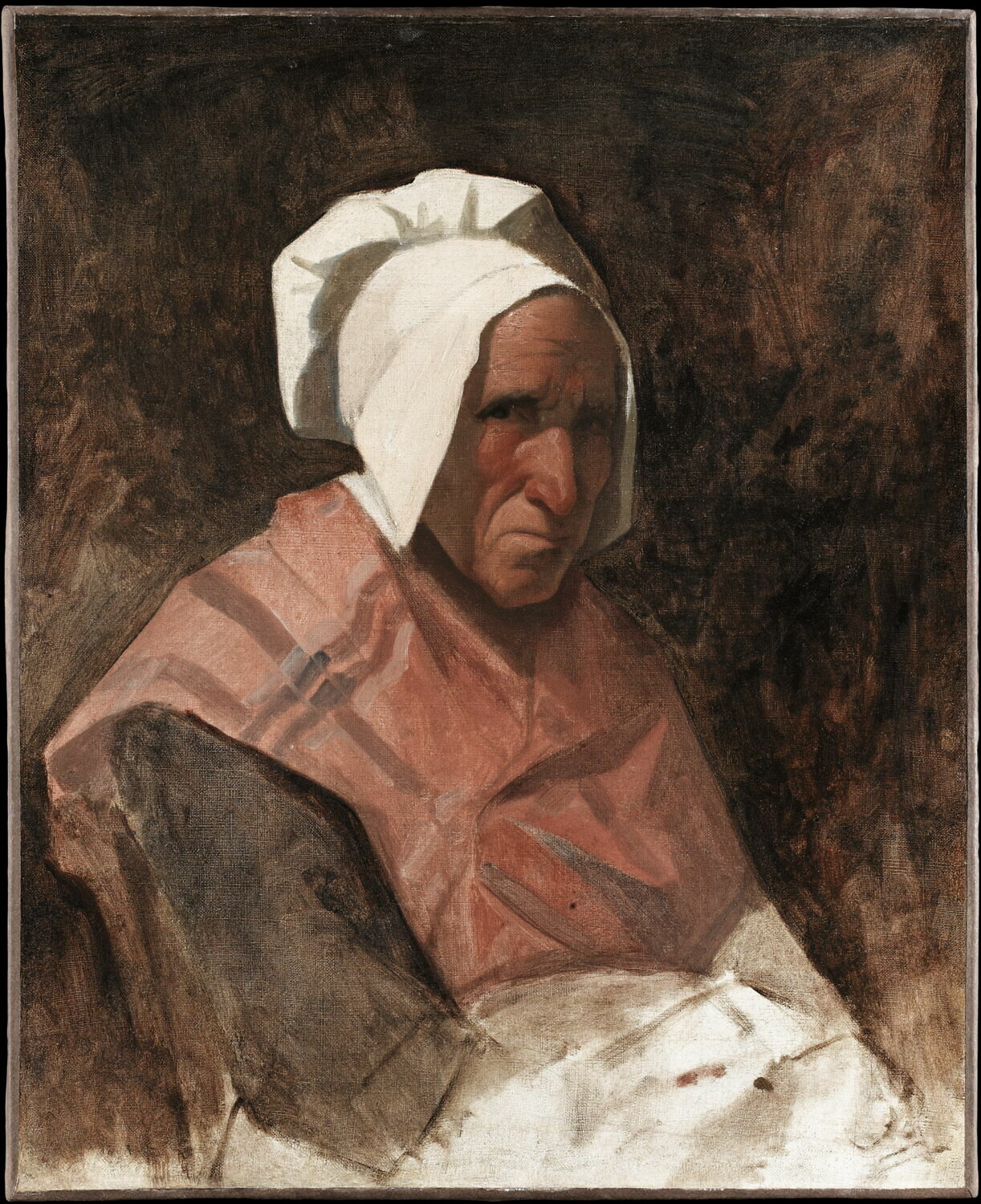
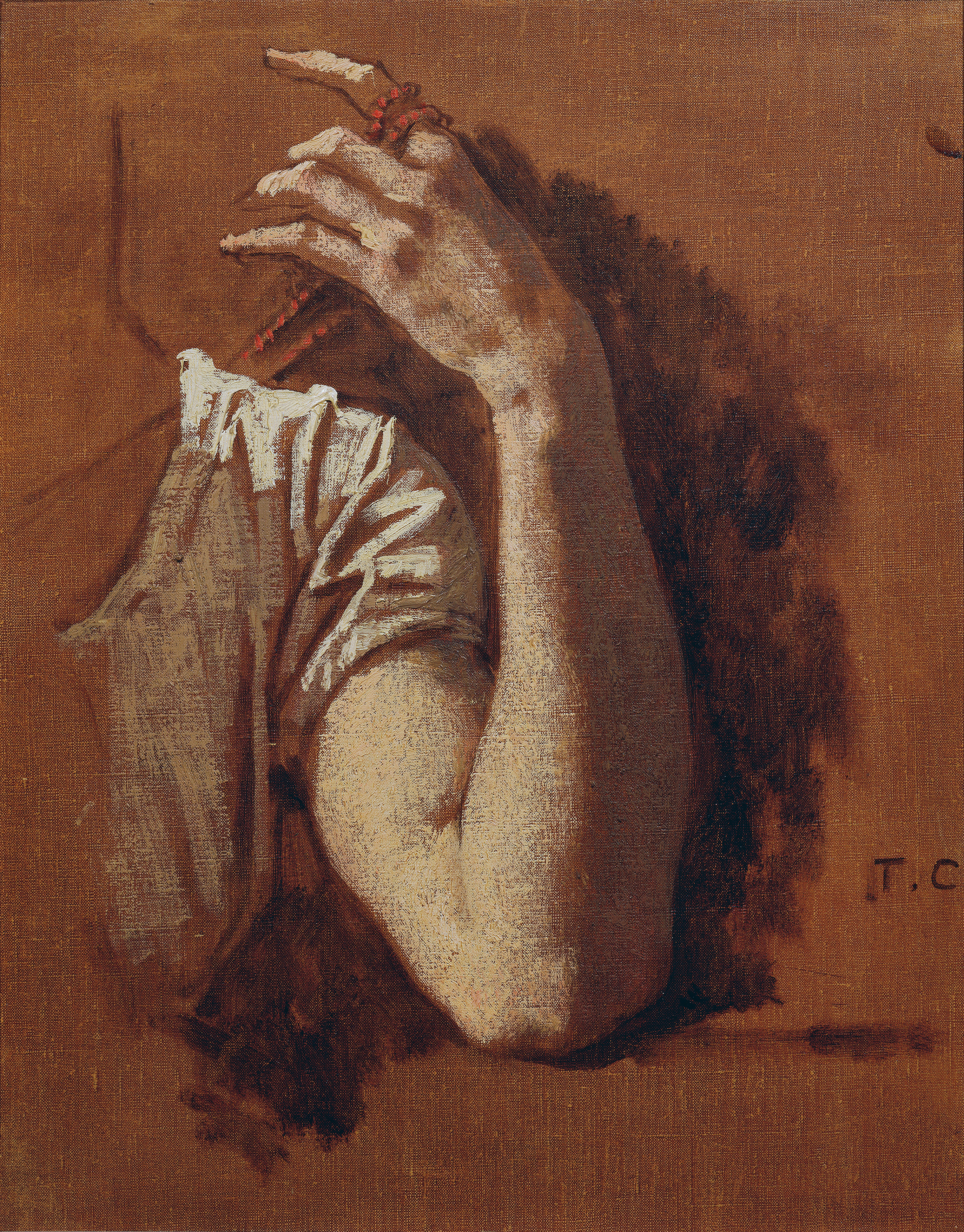
Thomas CoutureFrancia, 1815–1879
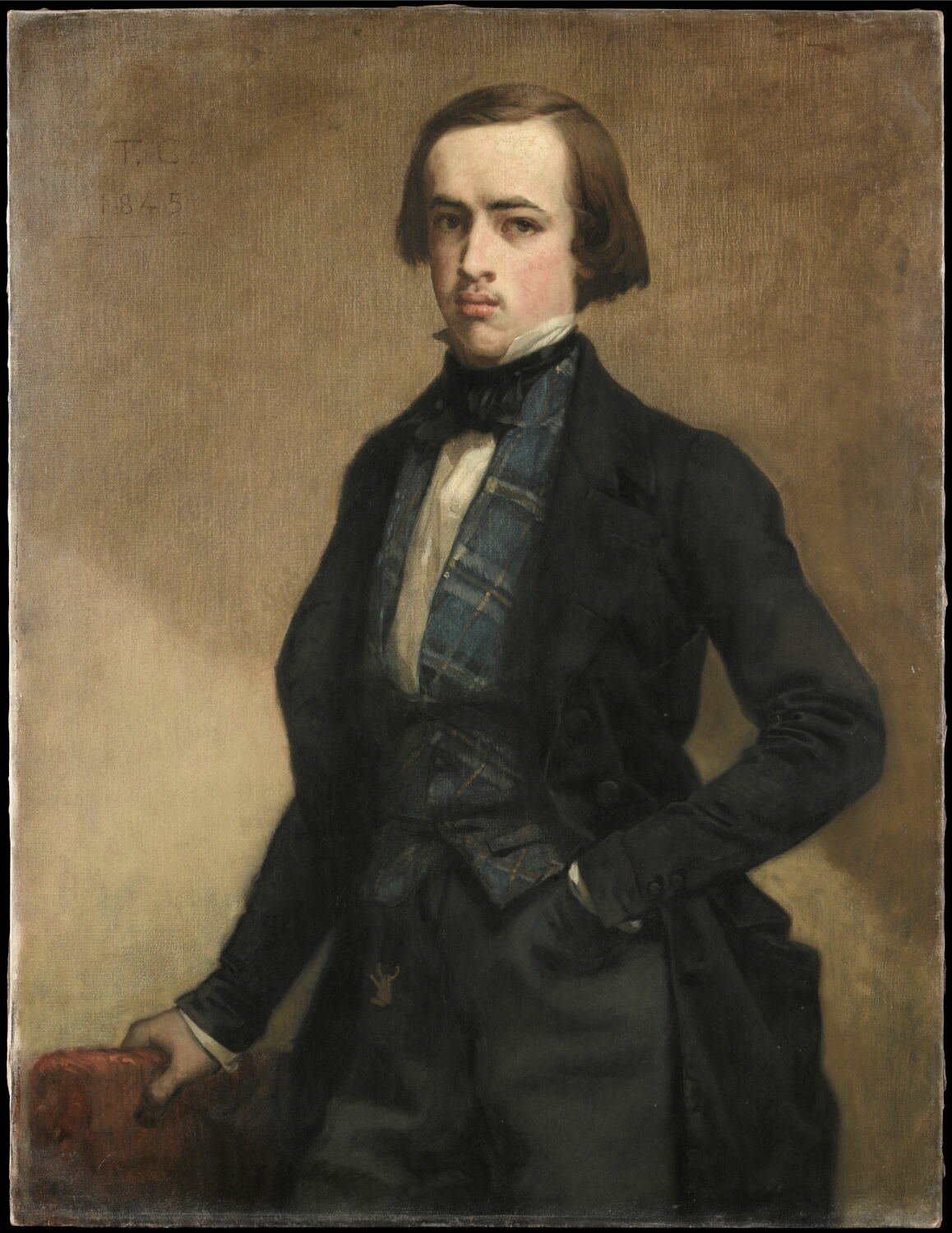
Paul Barroilhet (1810-1871)
Si può ammirare?
Al momento non riceve

Harvard Art Museums
Cambridge, Stati Uniti
Appartiene alla collezione, ma al momento non è esposta.
- Verificato
- Ultimo cambio di stato
- Fonte
- Il museo
Scheda
- Numero di inventario
- 1943.223
In catalogo
Fonti
- Harvard Art Museums
- Immagine: Harvard Art Museums — © President and Fellows of Harvard College
Nel frattempo, nella vita di Thomas Couture
Tutta la vita1847
The Salon of 1847: the triumph of “The Romans of the Decadence”
The picture meets with a resounding success and recognition: Théophile Gautier calls it the most remarkable work of the exhibition. Many find it symbolic that in the hall it takes the usual place of Veronese’s “The Wedding at Cana”, and some opinions favour the French canvas over the Italian classic.
after 1847
Opens an independent atelier in Paris
Soon after this triumph, in the wake of which he called himself the only truly serious artist of his age, Couture opens an independent atelier on the streets of Laval and Pigalle in Paris. It is conceived as a rival to the École des Beaux-Arts: several dozen pupils study there, among them students from the USA and Germany, and Couture wants to train not geniuses but painters who know their craft, demanding individuality from them rather than imitation.
1847–1848
A gold medal, and the state buys “The Romans”
“The Romans of the Decadence” is awarded a first-class gold medal, and the state buys the picture for 12,000 francs. From 1848 it is shown in the collection of the Luxembourg Museum, and later it is transferred to the collection of the Musée d’Orsay.
late 1840s – 1850s
Commissions for murals from the state and the Church
His innovative technique draws much attention, and from the late 1840s through the 1850s Couture receives government and church commissions for murals. He never completed the first two, and the third met with mixed criticism.
1848–1852
The commission for “The Enrolment of the Volunteers in 1792” is cancelled
The commission for the picture “The Enrolment of the Volunteers in 1792” (1848–1852), intended for the hall of the National Assembly and on which Couture pinned great hopes of recognition, is cancelled after Louis-Napoleon comes to power.
January 1850
Manet becomes his pupil
From January 1850 Couture teaches Édouard Manet for more than six years. In the end Manet broke with his teacher and with academism and became one of the founders of Impressionism.