 Isaak Brodsky1883–1939
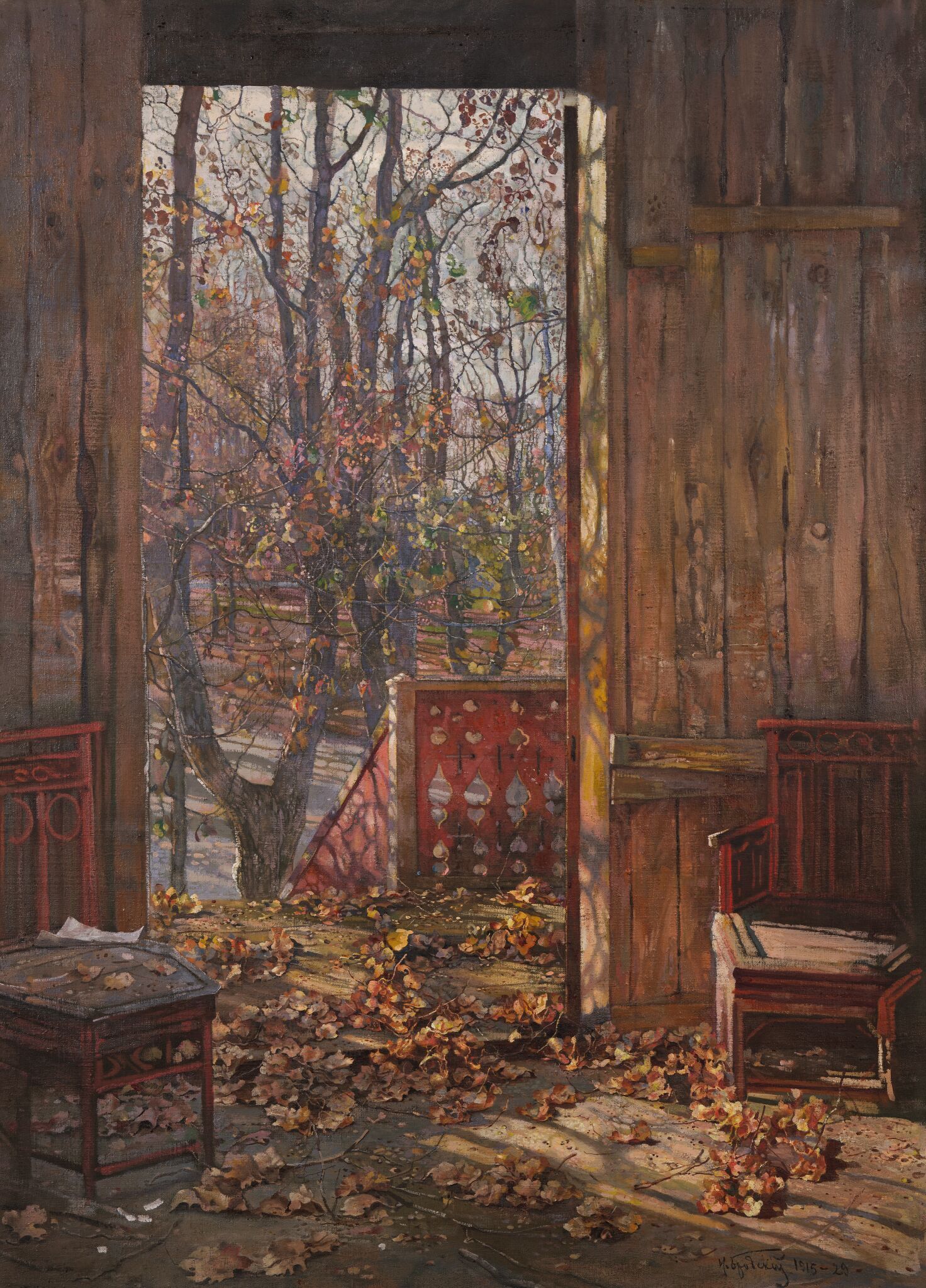
Опавшие листья
Si può vedere?
Non si sa
Dove si trova «Опавшие листья» oggi? Collezione: Galleria Tret'jakov, Mosca. Non si sa.

Mosca, Russia
Il proprietario è noto; non si sa se oggi sia esposta.
- Fonte
- Il museo
Sul dipinto
Con le parole del museo — in russo
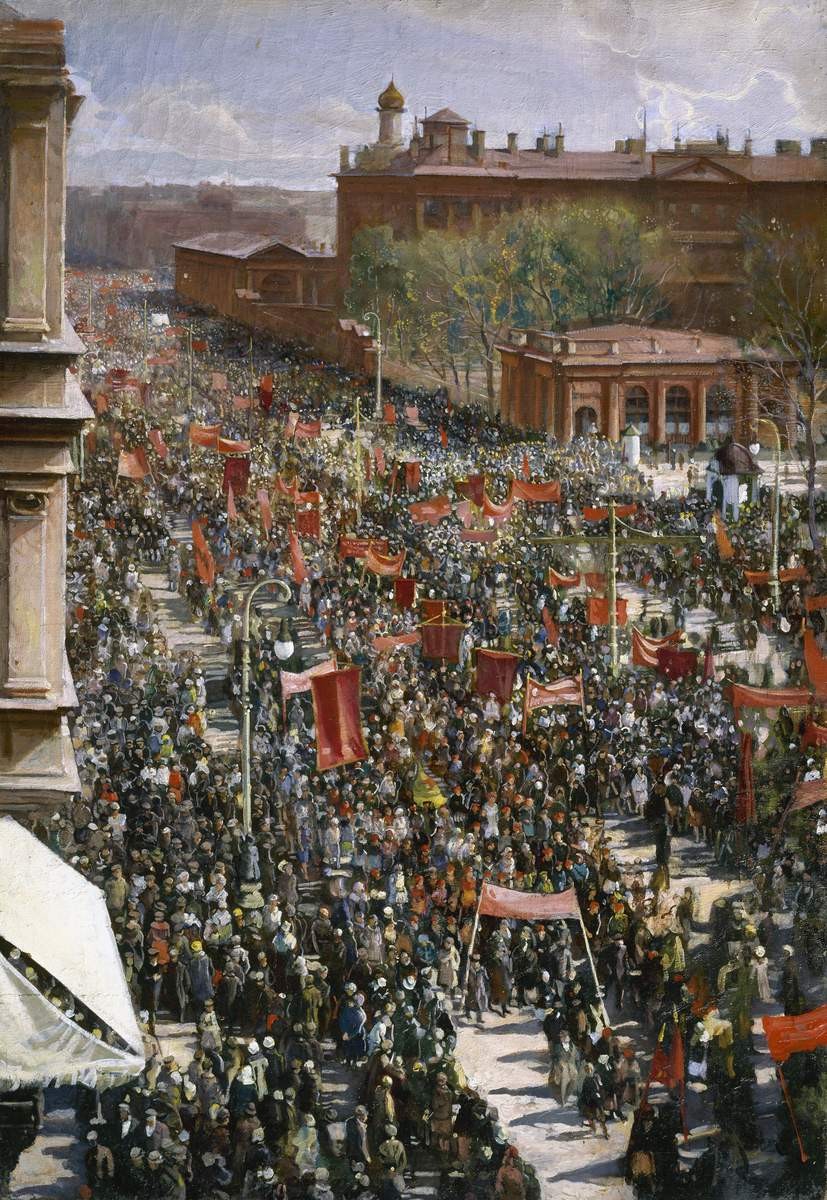
Когда-то советскому зрителю было известно, что художник Исаак Бродский – это тот, кто написал картину «Ленин в Смольном». Растиражированные в миллионах экземпляров, репродукции этого произведения смотрели на людей из школьных учебников, повторялись среди плакатов к праздникам, выставлялись в витринах магазинов. И мало кому известно, что этому художнику была свойственна в пейзажах почти элегическая грусть, не без определенного монументализма.
Leggi
Не случайно известный искусствовед и художественный критик, человек острого, парадоксального ума и не менее острого пера Абрам Эфрос еще в 1940 году писал: «Фигурально выражаясь, я определил, что Бродский стал жить в двух этажах. В одном этаже у Бродского была живопись обычного склада – пейзажная, портретная, жанровая; она канонически повторяла то, что художник делал до революции. Как о символе такого положения дела упомяну о капитальном пейзаже, на котором сам Бродский поставил две даты: 1915–1929 В другом этаже у Бродского – новая тематика, живопись на общественно-революционные сюжеты, его популярные большие полотна ».
Именно полотно «Опавшие листья» имел в виду Эфрос, говоря о «первом этаже» творческого наследия художника. Соединив интерьер и пейзаж, разделив эти жанры дверным проемом, художник соединил в одном холсте две стихии: теплоту домашнего очага (пусть даже это продуваемая ветром веранда, засыпанная листьями) и голубые, становящиеся прозрачными дали.
Большие живописные плоскости соседствуют с деталями, графически тонко прорисованными маленькой кистью. Опустевшая веранда, незапертый дом создают ощущение краткого, мимолетного взгляда на некогда уютный уголок. Не присутствует ли здесь щемящее чувство забытости, одиночества? Не потому ли работа была отложена в 1915 году, чтобы оказаться законченной совсем в другую эпоху, четырнадцать лет спустя?
Galleria Tret'jakov
Scheda
- Numero di inventario
- 15143
In catalogo
Fonti
- Galleria Tret'jakov
- Immagine: Galleria Tret'jakov — © State Tretyakov Gallery
Nella vita di Isaak Brodsky
Tutta la vita1913
Gold medal in Munich for “Winter in the Provinces”
At the International Exhibition in Munich he is awarded a gold medal for his painting “Winter in the Provinces”.
after October 1917
Becomes a portraitist of the new order
Accepting the Bolsheviks’ rise to power, he quickly emerges as a portraitist of the nascent new order. After the revolution he takes part in exhibitions of the Peredvizhniki, the Community of Artists, the Kuindzhi Society, the Sixteen group, the “First Free Exhibition” and the “Exhibition of Artists of All Trends”.
summer 1917
Invited to paint Kerensky’s portrait
Together with Ilya Repin he is invited to paint A. F. Kerensky; by the master’s own account, the life drawing stayed in the Winter Palace after the sitting and was lost in the turbulent events that followed.
1924
The Comintern Congress painting at the AKhRR exhibition
At the Association’s exhibition in Moscow he shows a vast canvas with hundreds of real historical figures, “The Ceremonial Opening of the Second Comintern Congress in the Uritsky Palace in Leningrad”. Repin later called Brodsky “the Raphael of our time” for this work.
1924
Joins AKhRR and heads its Leningrad branch
He joins the Association of Artists of Revolutionary Russia (renamed the Association of Artists of the Revolution in 1928) and is then appointed head of its Leningrad branch.
May 1928
Expelled from the AKhR
He is expelled from the Association of Artists of the Revolution for commercial activity as the owner of an auction room: he was reproached with being guided by material gain rather than ideological considerations.