 Thomas CoutureFrancia, 1815–1879
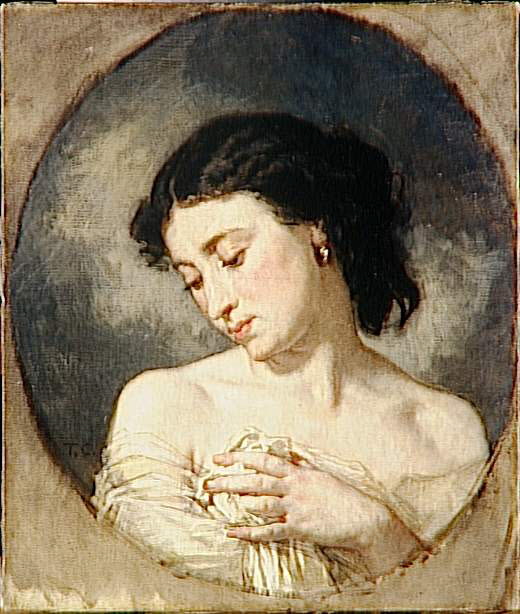
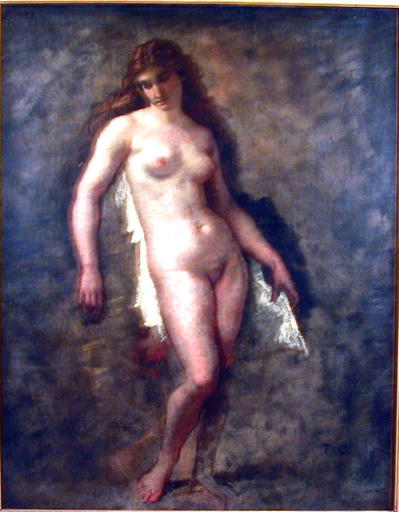
Nu féminin
Si può vedere?
Non si sa
Dove si trova «Nu féminin» oggi? Collezione: Musée d'art et d'archéologie de Senlis, Senlis. Non si sa.
Senlis, Francia
Il proprietario è noto; non si sa se oggi sia esposta.
- Ultimo cambio di stato
- Fonte
- Il museo
Scheda
- Numero di inventario
- D.A.2006.0.20.1 ; C.53.031
Che cosa raffigura
In catalogo
Fonti
- Musée d'art et d'archéologie de Senlis
- Immagine: Musée d'art et d'archéologie de Senlis — © Musées de Senlis; Ministère de la Culture (France), base Joconde
Nella vita di Thomas Couture
Tutta la vita1855
The 1855 World’s Fair: “The Falconer” misses the top award
At the 1855 World’s Fair Couture shows the picture “The Falconer”, but it does not win the highest award, which he regards as a major setback. As a result he renounces the first-class medal awarded to him for this picture and for “The Romans of the Decadence”.
1855
A major quarrel with Manet over his new work
In 1855 a major conflict breaks out between Couture and Manet over the young artist’s new work: Couture declares that if Manet claims to lead an art school, he should found it somewhere else. Their disagreements arose over other matters too: in the heat of one quarrel Manet packed his things and abandoned his studies, but returned at his father’s insistence.
after 1858
The final break with Manet over “The Absinthe Drinker”
Manet invites Couture to his home, where Couture declares himself outraged by the “drunkard” and by the “vileness” the artist has created. The cause is Manet’s “The Absinthe Drinker” (1858–1859); after that, teacher and pupil never meet again.
1860
Leaves Paris for his native Senlis
Upset by the unfavourable reception of his murals, Couture leaves Paris in 1860 and for a time returns to his hometown of Senlis, where he goes on teaching the young artists who come to him.
1863
Forced to close his atelier
In 1863 Couture is forced to close his atelier, among other reasons because a year earlier many of his pupils had gone over to Courbet.
1869
Moves to Villiers-le-Bel
In 1869 Couture moves to Villiers-le-Bel. According to the critic Albert Wolff, he lives there in a seclusion which, thanks to the complete indifference of his contemporaries, turns him into a man buried alive.