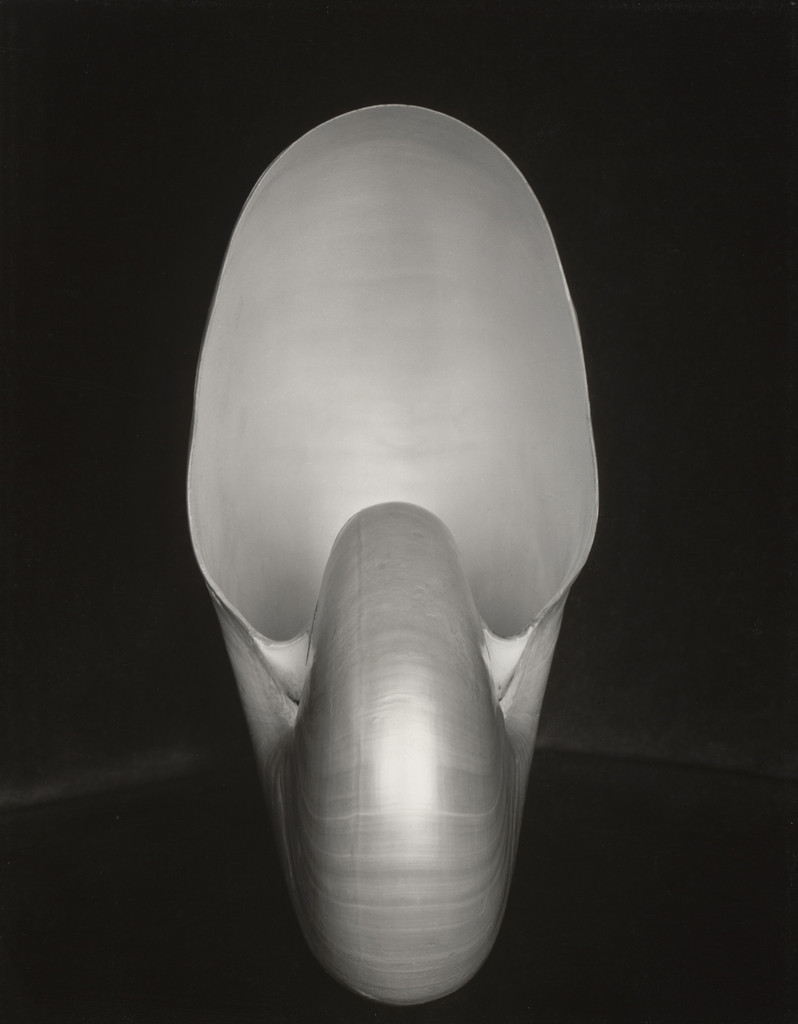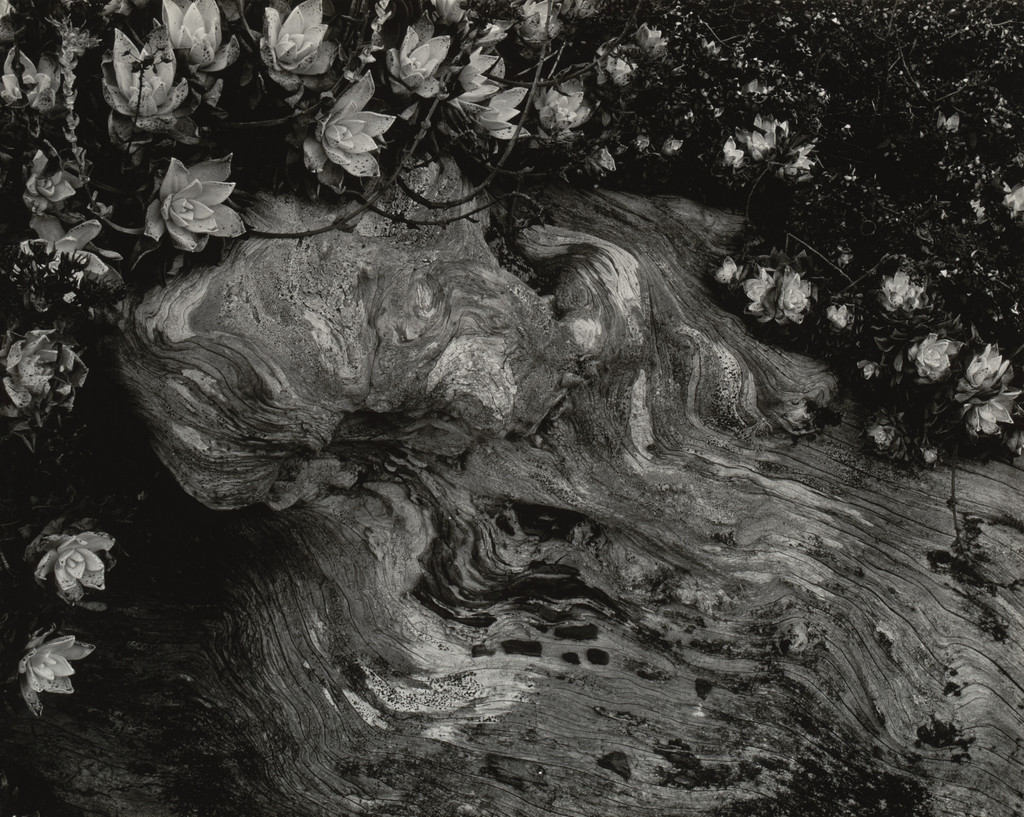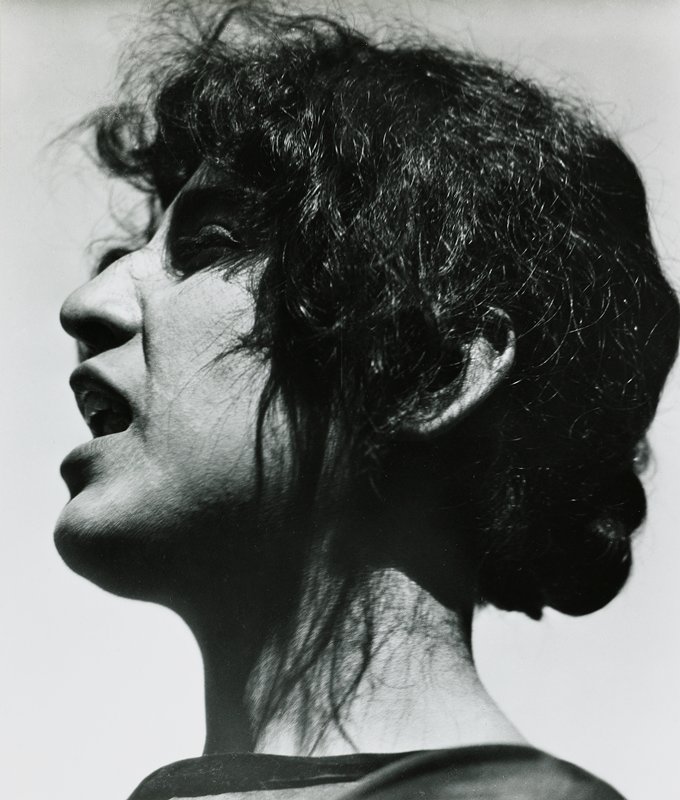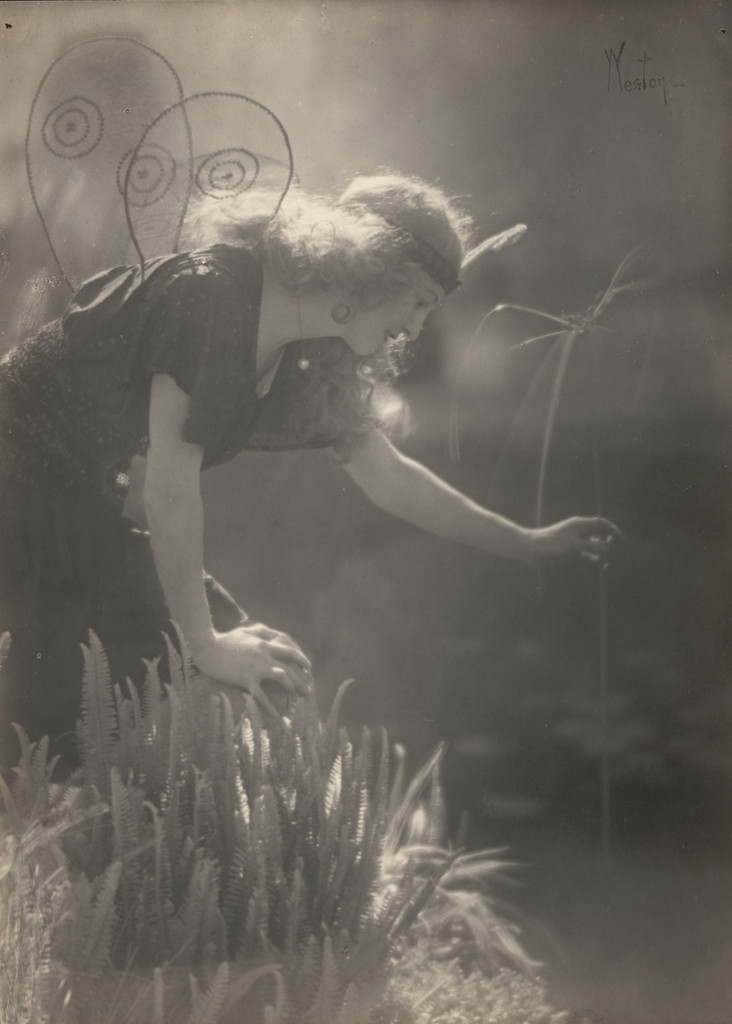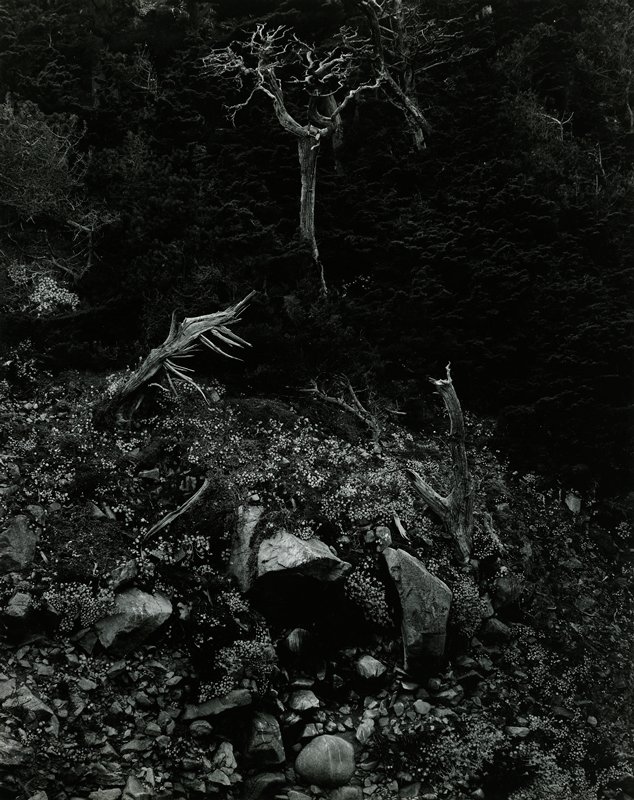
 Edward WestonStati Uniti, 1886–1958
North Dome, Point Lobos
Si può ammirare?
Al momento non riceve

Minneapolis Institute of Art
Minneapolis, Stati Uniti
Appartiene alla collezione, ma al momento non è esposta.
- Verificato
- Ultimo cambio di stato
- Fonte
- I dati di collezione del museo stesso
Scheda
- Numero di inventario
- 68.22.9
In catalogo
Fonti
- Minneapolis Institute of Art: i dati aperti del museo · acquisita 8 giorni fa
- Immagine: Minneapolis Institute of Art — Center for Creative Photography ©1981 Arizona Board of Regents
Nel frattempo, nella vita di Edward Weston
Tutta la vita1945
First symptoms of Parkinson’s disease
The year 1945 marks the beginning of significant changes: Weston begins to experience the first symptoms of Parkinson’s disease, a debilitating ailment that will gradually steal his strength and his ability to photograph. He withdraws from Wilson, who is becoming more involved in local politics and the Carmel cultural scene.
until February 1946
Separation from Charis Wilson
A strength that once brought them together — her lack of interest in becoming a photographer herself — eventually leads to their break-up. While he is working on a major retrospective for the Museum of Modern Art they separate; Weston returns to Glendale, since the land under their cabin on Wildcat Hill still belongs to Wilson’s father. Within a few months she moves out and arranges to sell the property to him. She later wrote that her flight from Edward was partly an escape from photography, which had taken up so much room in her life.
1946
Colour work for Kodak on Kodachrome
In 1946 Dr. George L. Waters of Kodak asks Weston to produce 8×10 Kodachrome transparencies for an advertising campaign. He has never worked in colour before, chiefly because he had no means of developing or printing the more complicated process, but he accepts, not least because Kodak offers $250 per image — the highest sum he will be paid for any single work in his lifetime. He eventually sells Kodak seven colour works of landscapes and scenery at Point Lobos and Monterey harbour, and over the next two years makes at least sixty 8×10 colour images.
February 1946
Retrospective at the Museum of Modern Art
In February 1946 Weston’s major retrospective opens at the Museum of Modern Art in New York. He and Beaumont Newhall select 313 prints, and eventually 250 photographs are displayed along with 11 negatives. Many of his prints are still for sale at the time, and he sells 97 prints from the show at $25 each.
1947
Diagnosed with Parkinson’s disease
He is diagnosed with Parkinson’s disease and soon stops photographing; he spends the remaining ten years of his life overseeing the printing of more than 1,000 of his most famous images.
1947
Meets Dody Thompson, his future assistant
As his Parkinson’s disease progresses, Weston begins looking for an assistant. By happy chance an eager young photography enthusiast, Dody Weston Thompson, contacts him in search of work; he mentions he had just that morning written to Ansel Adams, looking for someone who would learn photography in exchange for carrying his bulky large-format camera and providing a much-needed automobile. There is a swift meeting of creative minds: for the rest of 1947 and into early 1948 Dody commutes from San Francisco at weekends to learn the basics of photography from Weston.