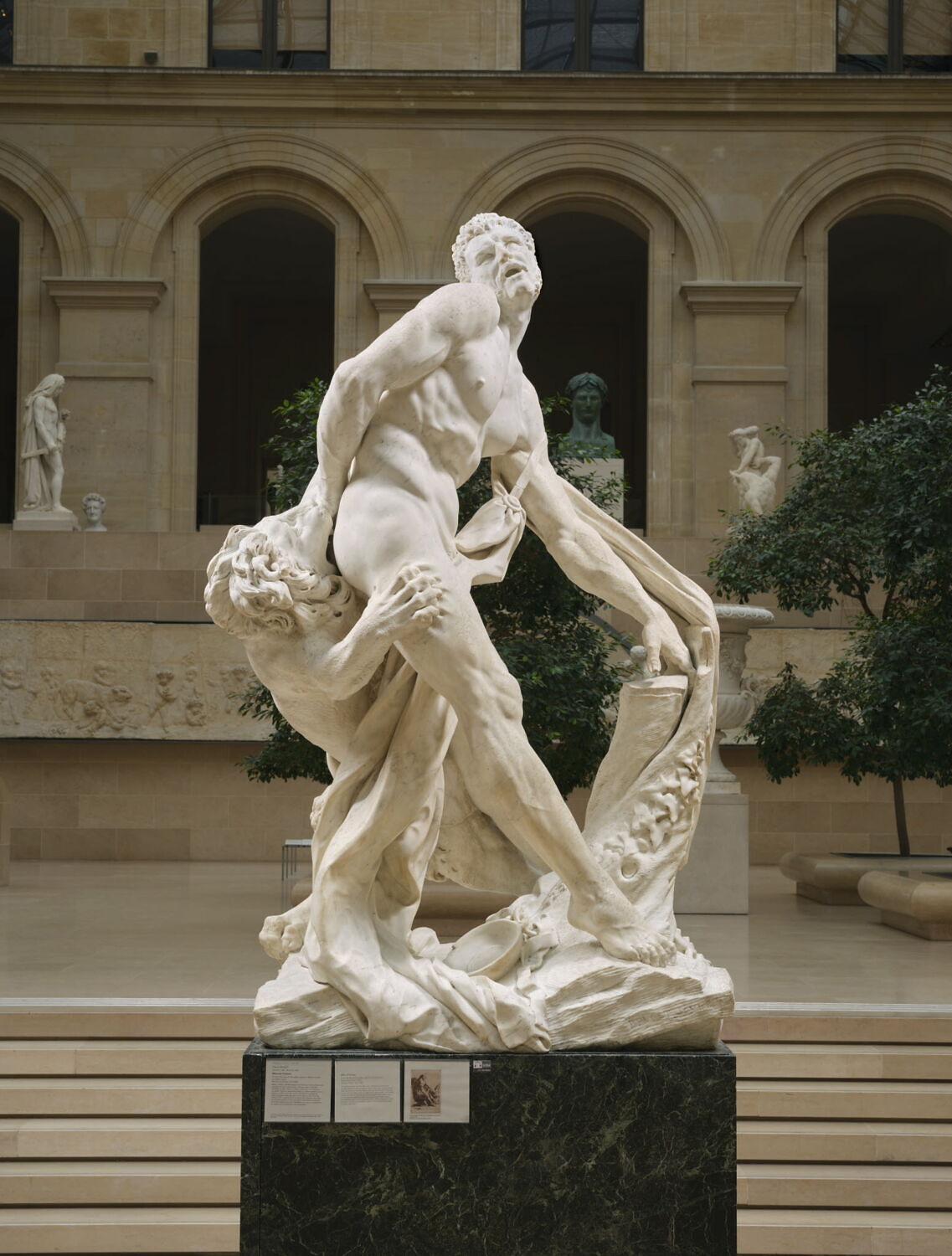
 Pierre PugetFrancia, 1620–1694
Milon de Crotone
Si può ammirare?
Sì, riceve visite

Esposta al pubblico. Chi lo garantisce è indicato qui sotto.
- Verificato
- Ultimo cambio di stato
- Fonte
- Il museo
Sulla scultura
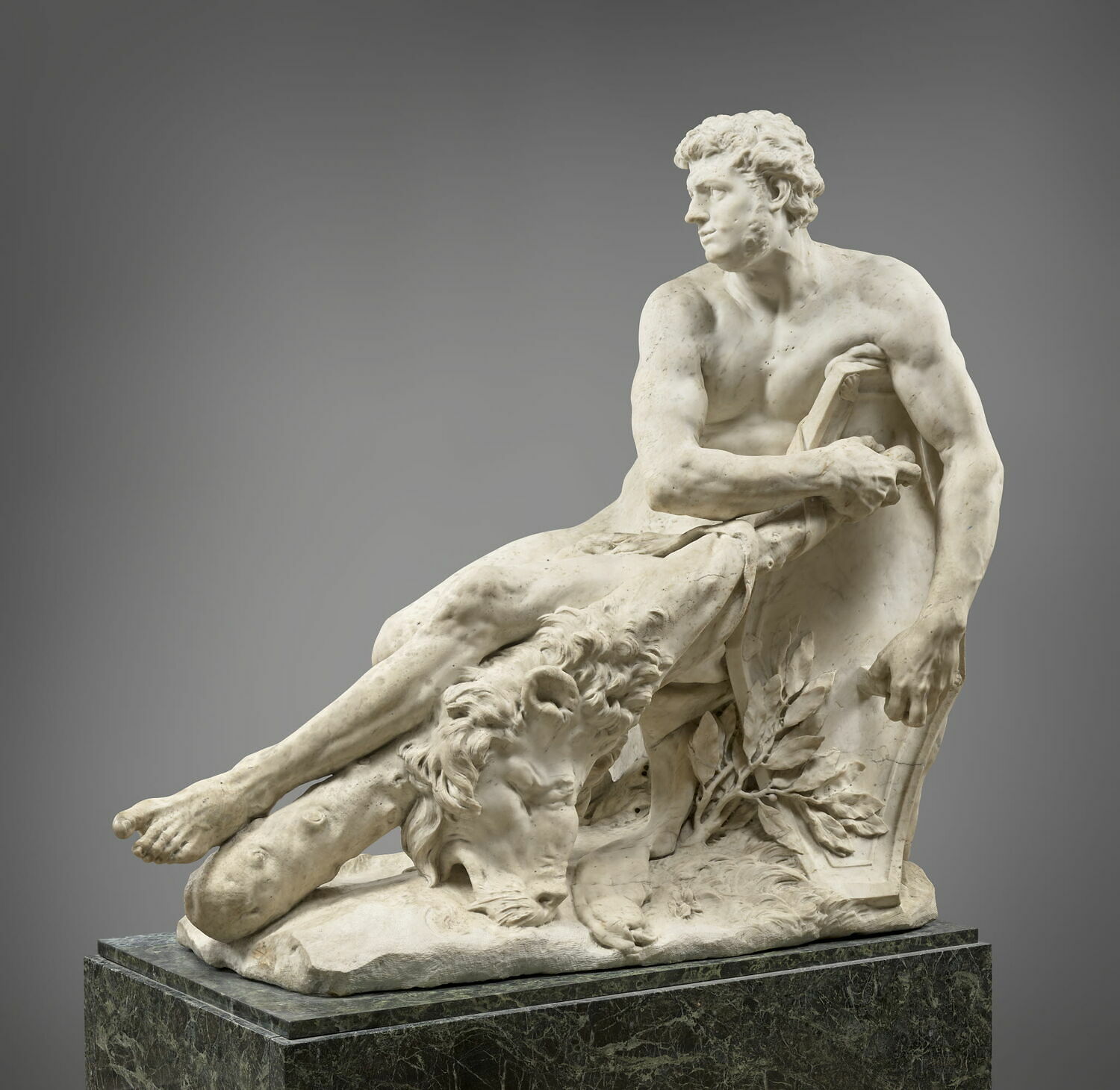
Il Milone di Crotone (Milon de Crotone) è un gruppo in marmo realizzato tra il 1671 e il 1682 dallo scultore Pierre Puget a Tolone, su commissione di Jean-Baptiste Colbert, e destinato alla reggia di Versailles. Attualmente l'opera si conserva al museo del Louvre di Parigi.
Scheda
- Numero di inventario
- MR 2075
Nel frattempo, nella vita di Pierre Puget
Tutta la vitalate 1669 – 1670
Leaves for Genoa: “The Virgin”
At the end of 1669 he took a leave of absence and left the dockyards for Genoa, his traditional sanctuary, where he made a series of works, including “The Virgin” (1670), now in the oratory of the Church of Saint Philip Neri.
June 1670
Sidelined from the decoration of the ships
When he returned to the dockyards he found a new officer in command and the decoration of ships he had begun given to others. On Colbert’s instructions any work he did had to be approved by Le Brun and the senior sculptors in Paris, and he was to design only what he was told to design; Colbert added that British ships had little or no sculptural decoration and usually won battles, so French ships should also be without it.
1672
Back in Marseille: Cours Saint-Louis and the fish market
With no further work at the Naval Arsenal, he returned to his birthplace, Marseille; his first project was a new square and street, the Cours Saint-Louis and rue Canebière, inspired by the urban planning of Genoa. He also made an ornate sculptural plaque with the King’s coat of arms for the façade of the Hôtel de Ville and designed a new fish market, completed in 1672.
13 May 1672
Colbert commissions “Milon of Croton”
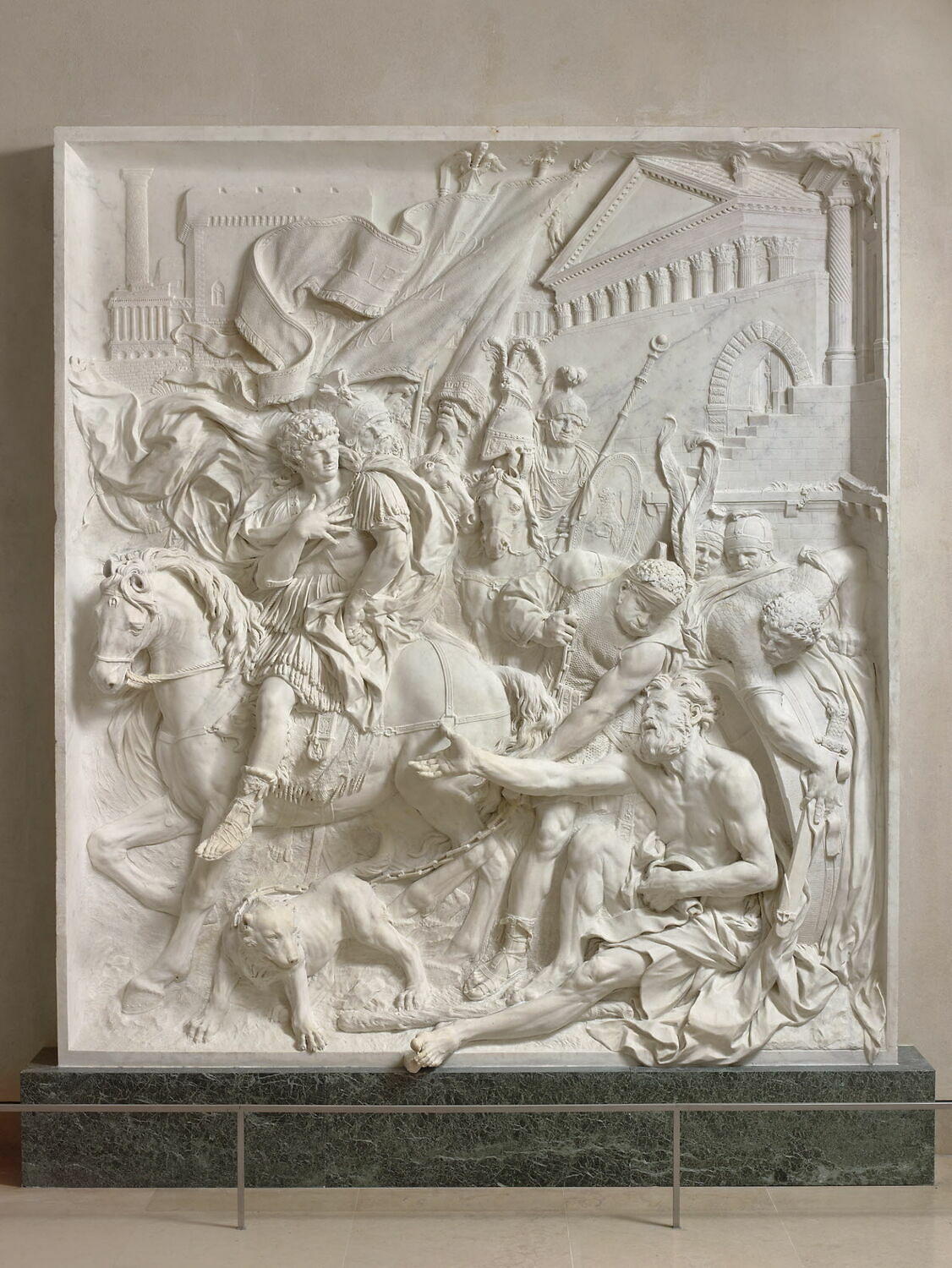
Colbert, who disliked Puget’s personality but admired his skill, offered him a commission for two large works for the gardens of Versailles, “Milon of Croton” and the bas-relief “Alexander and Diogenes”, whose designs Puget had sent in 1671. Occupied with his tasks for the city of Marseille, the sculptor did not begin work until 1672.