Alessandro VittoriaItalia, 1525–1608
Mercury
Si può ammirare?
Al momento non riceve
Los Angeles, Stati Uniti
Appartiene alla collezione, ma al momento non è esposta.
- Verificato
- Ultimo cambio di stato
- Fonte
- Il museo
Sulla scultura
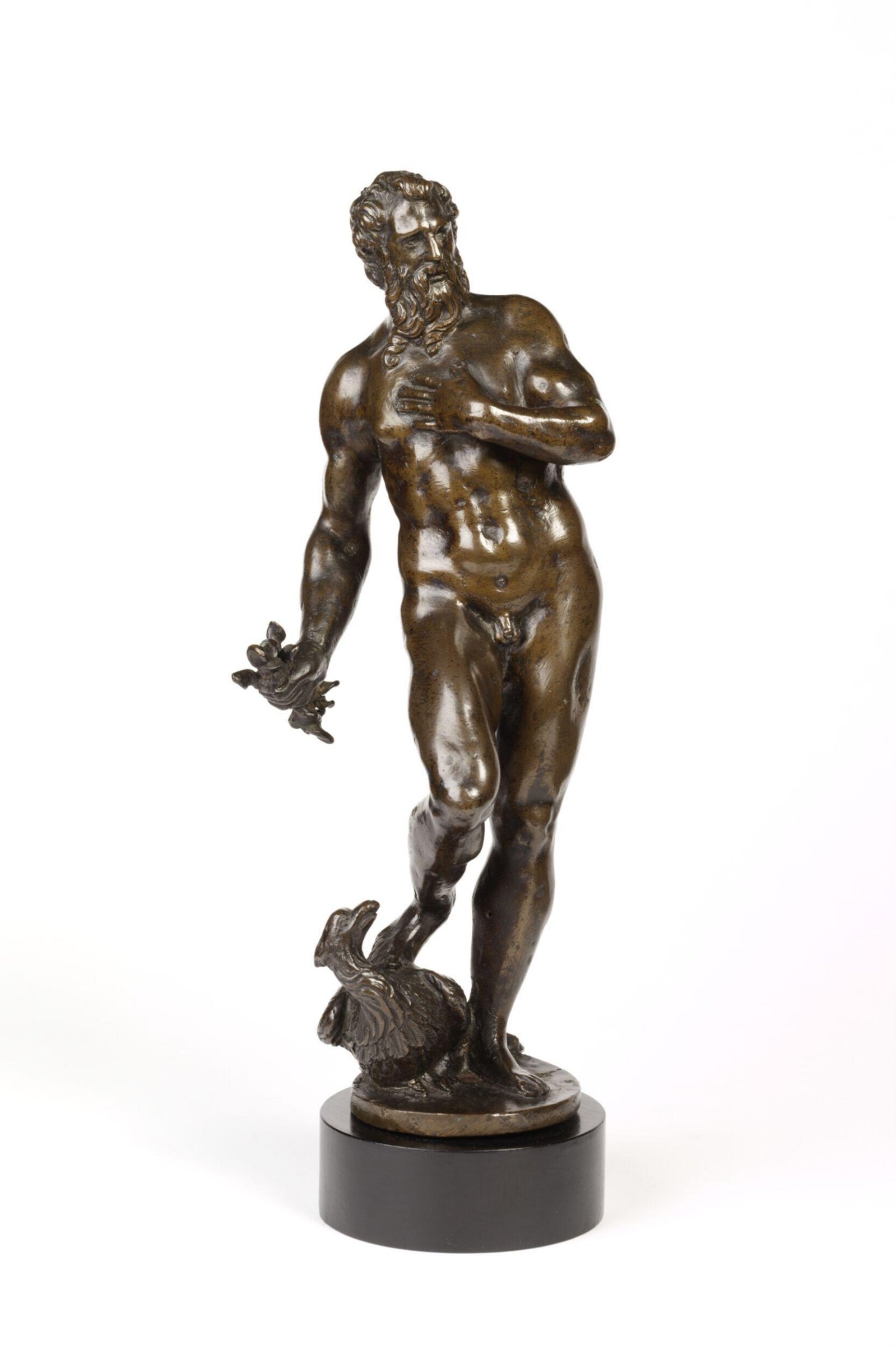
Mercury, god of science, commerce, and travel in Greek and Roman mythology, was messenger to the god Jupiter. Identified by his winged helmet, he originally held a caduceus, which is now broken. His raised left foot rests on the head of the monster Argus, whom Mercury killed to free one of Jupiter's lovers. The young god's lithe, elongated body and the pronounced shift of his body weight from one leg to the other are characteristic features of the Mannerist style. The figure's downward glance suggests that the original work was meant to be executed on a larger scale and to be seen from below. Alessandro Vittoria probably designed this freestanding figure and a bronze Minerva as pendants, both of which he signed. The drapery support behind the figure suggests that the bronze is a copy of a work originally carved in marble and then reproduced in metal.
Leggi
In marble statues a support bears the weight of the piece, but it has no function in bronze statues. The bronze bears little evidence of work after the casting. All the details were worked out in the wax core, attesting to the high quality of the casting technique.
Getty Museum
Scheda
- Numero di inventario
- 85.SB.184
In catalogo
Fonti
- Getty Museum
- Immagine: Getty Museum — Open Content