Baccio BandinelliItalia, 1493–1560
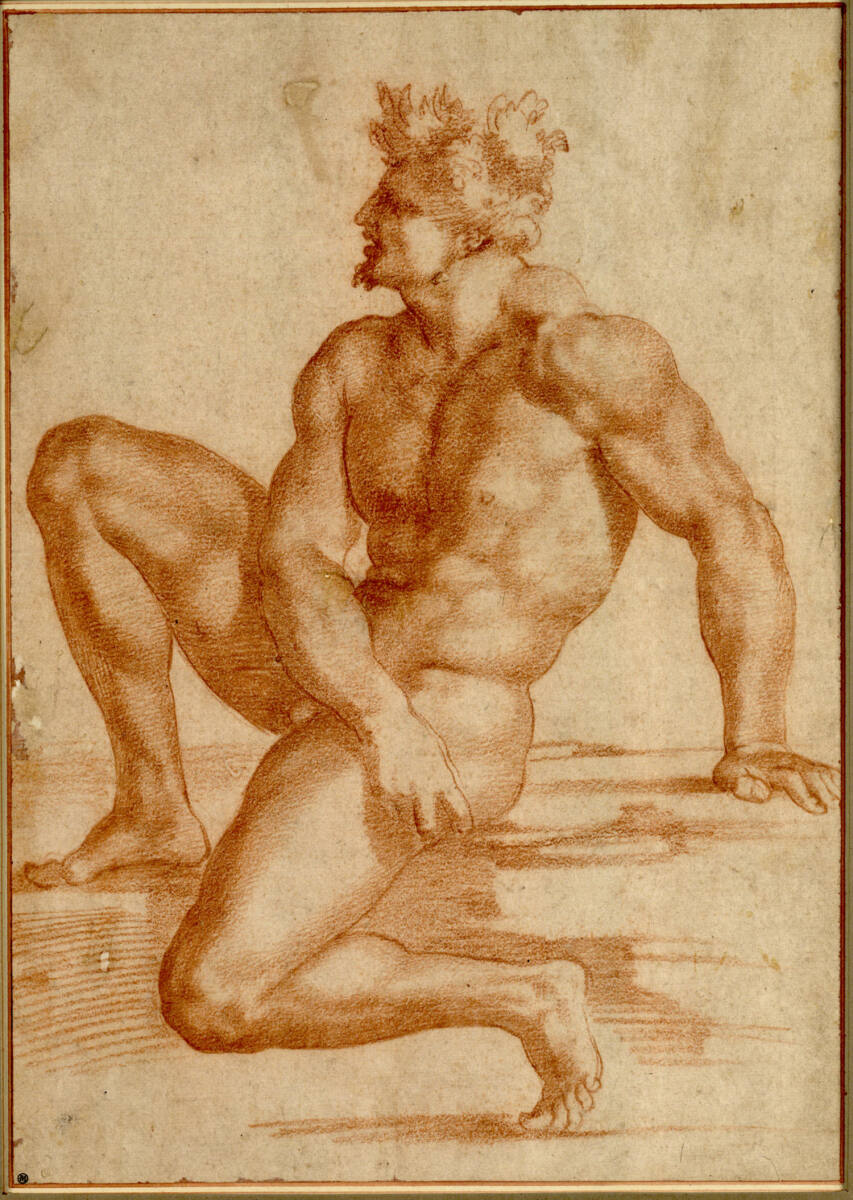
Main tenant la poignée d'une épée
Si può vedere?
Non si sa
Dove si trova «Main tenant la poignée d'une épée» oggi? Collezione: Palais des Beaux-Arts de Lille, Lilla. Non si sa.
Lilla, Francia
Il proprietario è noto; non si sa se oggi sia esposta.
- Ultimo cambio di stato
- Fonte
- Il museo
Scheda
- Numero di inventario
- Pl. 13 ; B. 20 (Autre N°)
In catalogo
Fonti
- Palais des Beaux-Arts de Lille
- Immagine: Palais des Beaux-Arts de Lille — © Stéphane MARECHALLE (Photographe); Ministère de la Culture (France), base Joconde
Nella vita di Baccio Bandinelli
Tutta la vita1512
Destroys Michelangelo's cartoons
Michelangelo's cartoons for the Battle of Cascina were put on display in the Palazzo Medici, and Baccio went with other young artists to study and copy them; according to Vasari, during the turmoil over the expulsion and return of the Medici in 1512 he stole a key, secretly entered the room, cut the cartoons into squares and destroyed them in a fit of rage. Various reasons are given: wanting to keep a piece of the cartoon, not wanting other young men to use it, love of Leonardo, or hatred of Michelangelo.
1515
Goes to Rome at the invitation of Leo X
Pope Leo X, a Florentine of the Medici family, invites him to Rome, where Bandinelli gains access to the many antiquities found there, notably the famous Laocoön, which he restores and copies. He enjoys the Medici's patronage and receives regular commissions from them, among them the tombs of Leo X (d. 1521) and Clement VII (d. 1534) in the Roman church of Santa Maria sopra Minerva.
1530
Gives up the surname Brandini
While preparing papers to receive the Order of St James from Emperor Charles V, Baccio falsifies his pedigree, tracing it to the noble Bandinelli family of Siena and abandoning his father's name, Brandini. His father was the Florentine goldsmith Michelangelo Brandini, the teacher of Benvenuto Cellini.
late 1530s
Returns to Florence to serve Cosimo I
Bandinelli returns from Rome to Florence and becomes court artist to Duke Cosimo I de' Medici, and after Michelangelo leaves for Rome, the foremost sculptor of Florence.
1555
Death of his son Clemente
His son Clemente, also a sculptor, dies before his father.
7 febbraio 1560
Died