 Otto DixGermania, 1891–1969
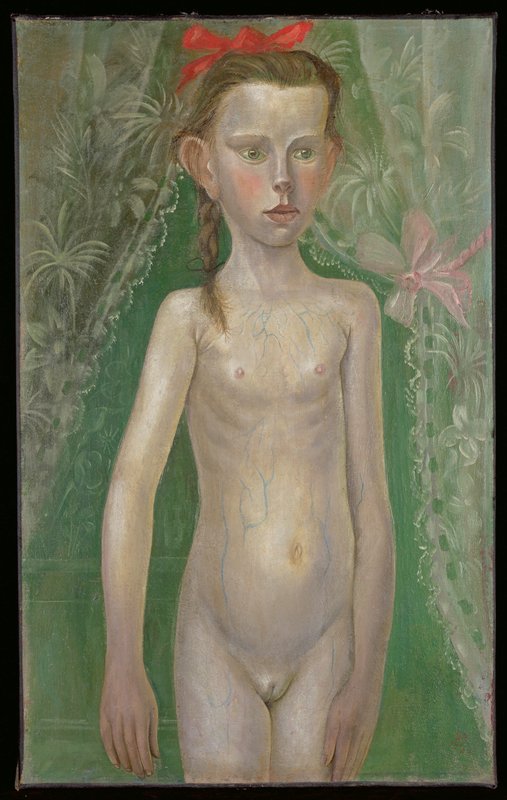
Little Girl
Si può vedere?
Non esposta al momento
Dove si trova «Little Girl» oggi? Collezione: Minneapolis Institute of Art, Minneapolis. Non esposta al momento. Verificato 29 settembre 2026.

Minneapolis, Stati Uniti
Appartiene alla collezione, ma al momento non è esposta.
- Verificato
- Ultimo cambio di stato
- Fonte
- Il museo
Sul dipinto
In the early 1920s, Otto Dix determined to make a name for himself. Saying, “I will either become notorious or famous, ” he challenged artistic conventions, painting subjects considered ugly or taboo in a realistic manner that became known as the Neue Sachlichkeit (New Objectivity). Here, a young naked girl is depicted in an uncomfortably close and realistic manner, her blue veins recorded with unsettling accuracy. Yet the portrayal is matter-of-fact rather than provocative; she has an innocence devoid of shame about her natural state.
Minneapolis Institute of Art
Scheda
- Numero di inventario
- 75.72.3
In catalogo
Fonti
- Minneapolis Institute of Art
- Immagine: Minneapolis Institute of Art — © Artists Rights Society (ARS), New York / VG Bild-Kunst, Bonn
Nella vita di Otto Dix
Tutta la vita1920
The first Dada Fair in Berlin
Dix exhibits some of his collage-influenced works at the first Dada Fair in Berlin.
1920
Meeting George Grosz
Dix meets George Grosz, his friend and fellow veteran, and, influenced by Dada, begins to incorporate collage elements into his works.
1920
The German Expressionists exhibition in Darmstadt
In 1920 Dix takes part in the German Expressionists exhibition in Darmstadt.
1920s
A ruthless chronicle of Weimar Germany
Like Grosz, Dix is extremely critical of contemporary German society, unsparingly depicting prostitution, violence, old age and death and often dwelling on Lustmord, or sexualized murder. His legless and disfigured veterans, a common sight on Berlin's streets in the 1920s, reveal the ugly side of war and the forgotten status of these men in German society.
1921
Meeting Martha Koch
Dix meets the metalsmith Martha Koch; they will marry in 1923 and have three children, and she becomes a frequent subject of his portraits.
1 febbraio 1923
Married: Martha Dix
![Young Family (Lovers) (Junge Familie [Liebespaar]), also known under the title "Homunkulus", Otto Dix, 1918](https://api.nga.gov/iiif/df009930-91ff-4d00-85c7-6a52083047ce/full/!2400,2400/0/default.jpg)