 Alfred StevensRegno Unito, 1817–1875
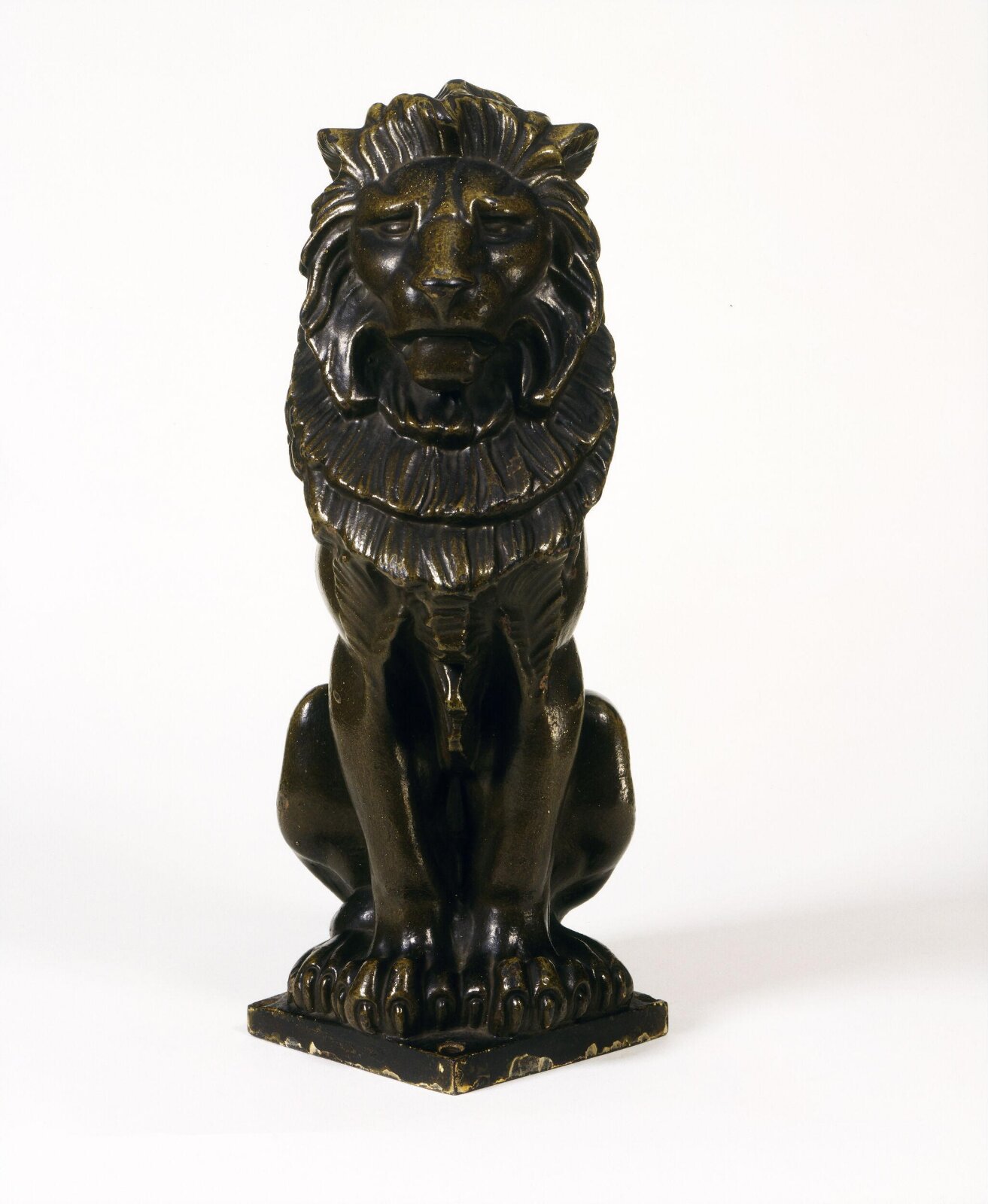
Lion
Si può ammirare?
Al momento non riceve

Victoria and Albert Museum
Londra, Regno Unito
Appartiene alla collezione, ma al momento non è esposta.
- Verificato
- Ultimo cambio di stato
- Fonte
- I dati di collezione del museo stesso
About the sculpture
This bronze is copied from a model made by Stevens in about 1852 for the seated lions he cast for tops of the dwarf posts by the entrance lodges outside London's British Museum. According to one admirer, 'the number of imitations of this lion by other artists is their sincerest tribute; and technically it is equally a triumph for Stevens in the small number (20) of pieces which are necessary in the mould for casting it'. Armstrong commented, 'They display, perhaps, the nearest approach to the Gothic spirit of which Stevens was capable (Armstrong 1881, p. 15). The lions are no longer in position, having been removed in 1896 to railings outside the Charles Holden part of the Law Society building in Chancery Lane. Others were placed on the railings around the Wellington monument in St Paul's Cathedral, London after Stevens's death, between 1892 and 1912, when the tomb was removed from the Consistory Chapel in St Paul's. Two further plaster versions of the British Museum lion figure were acquired by the Museum in 1975 from the Tate Gallery, London.
Read on
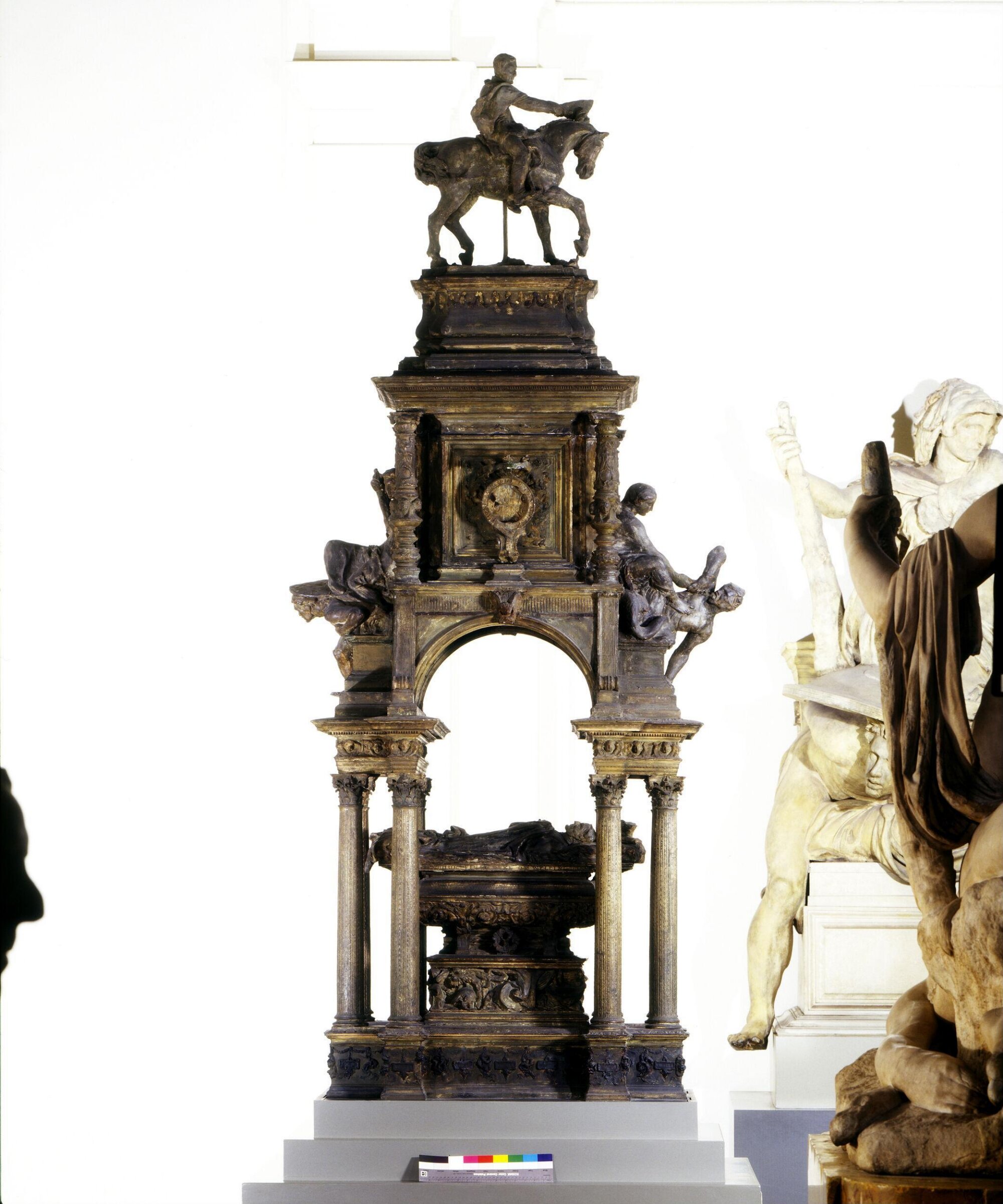
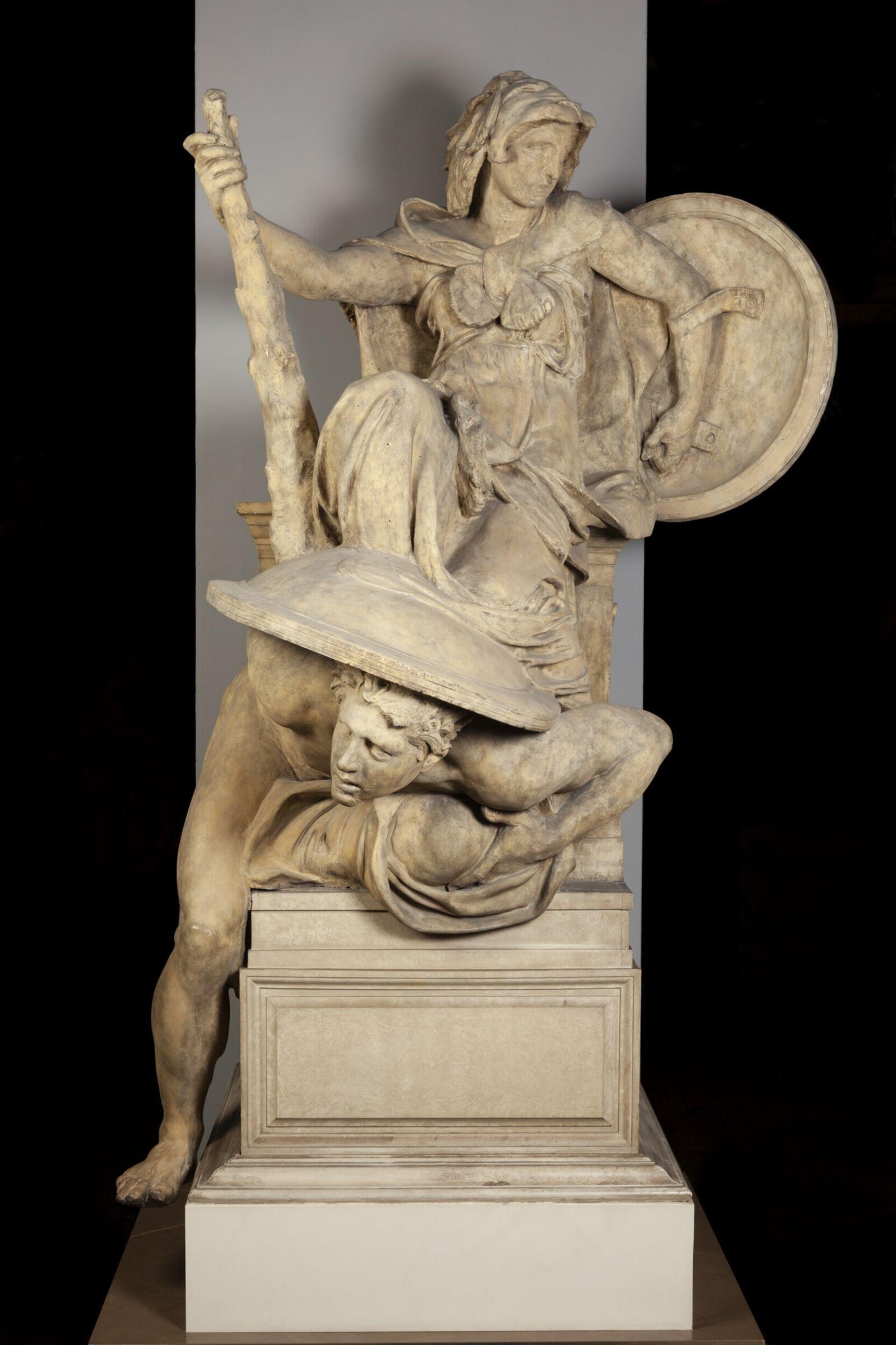
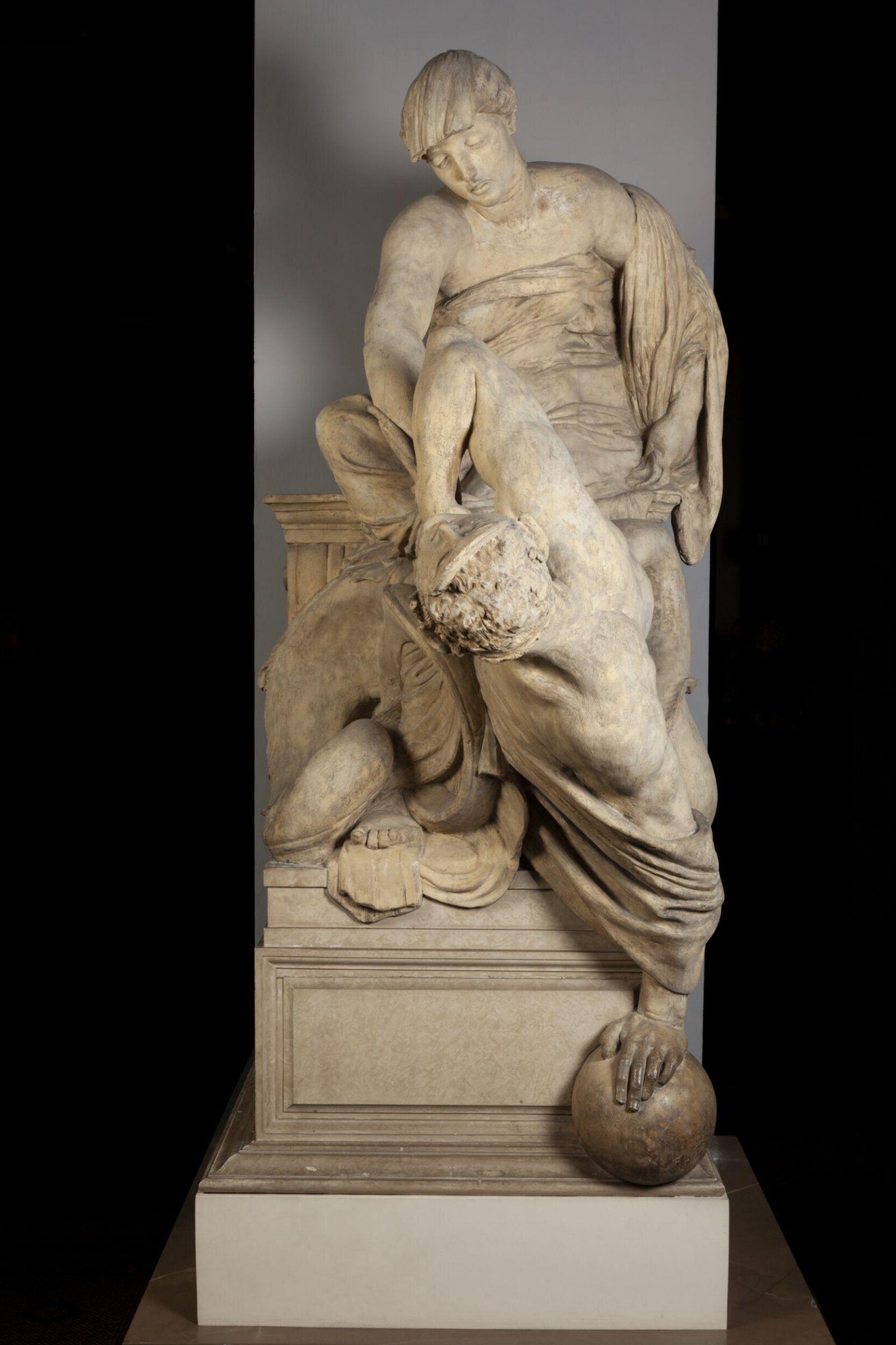
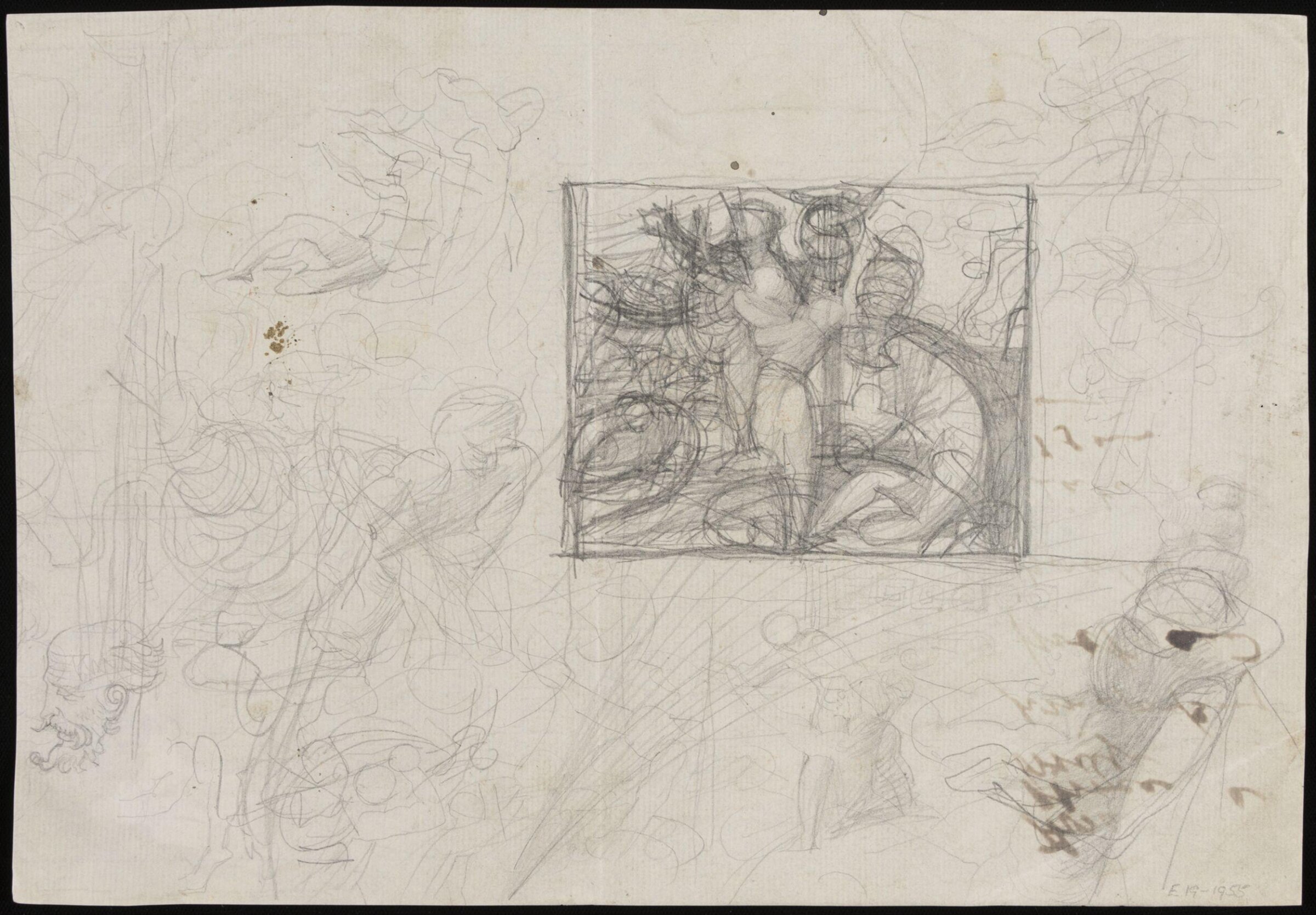
A sculptor, designer and painter, Alfred Stevens (1817/18-1875) rejected contemporary distinctions between fine art and design. From 1850 to 1857 he was chief designer to Hoole & Co., Sheffield, where he produced award-winning designs for metalwork, majolica, terracotta ornaments and chimney-pieces. Perhaps his two greatest works were the decorations for the dining-room at Dorchester House, London (about 1856), for which he made countless drawings inspired by the Italian High Renaissance style, in particular the work of Michelangelo and the monument to the Duke of Wellington for St Paul's Cathedral, London, which was completed after his death. The two allegorical groups from this monument made a lasting impact on the New Sculpture movement.
The influence of the Italian Renaissance is evident in much of Steven's work, and is perhaps best reflected in the Wellington monument.
Victoria and Albert Museum
Scheda
- Numero di inventario
- A.21-1945
In catalogo
Fonti
- Victoria and Albert Museum: the museum's own open data · acquisita 10 giorni fa
- Immagine: Victoria and Albert Museum — © Victoria and Albert Museum, London