 DonatelloItalia, 1386–1466
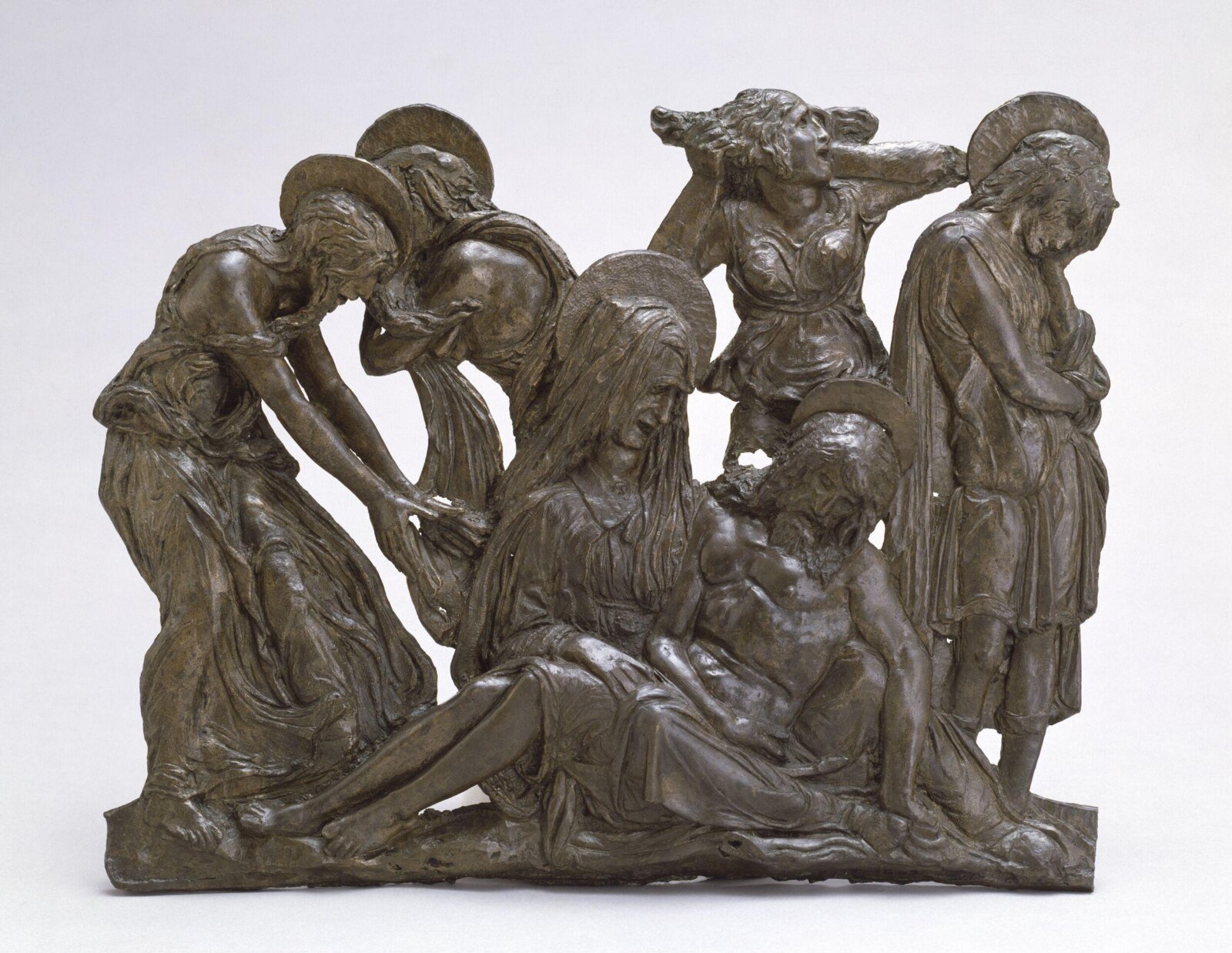
Lamentation over the Dead Christ
Si può ammirare?
Sì, riceve visite

Victoria and Albert Museum
Londra, Regno Unito
SalaMedieval & Renaissance, Room 64a, The Robert H. Smith Gallery
Esposta al pubblico. Chi lo garantisce è indicato qui sotto.
- Verificato
- Ultimo cambio di stato
- Fonte
- Il museo
Sulla scultura
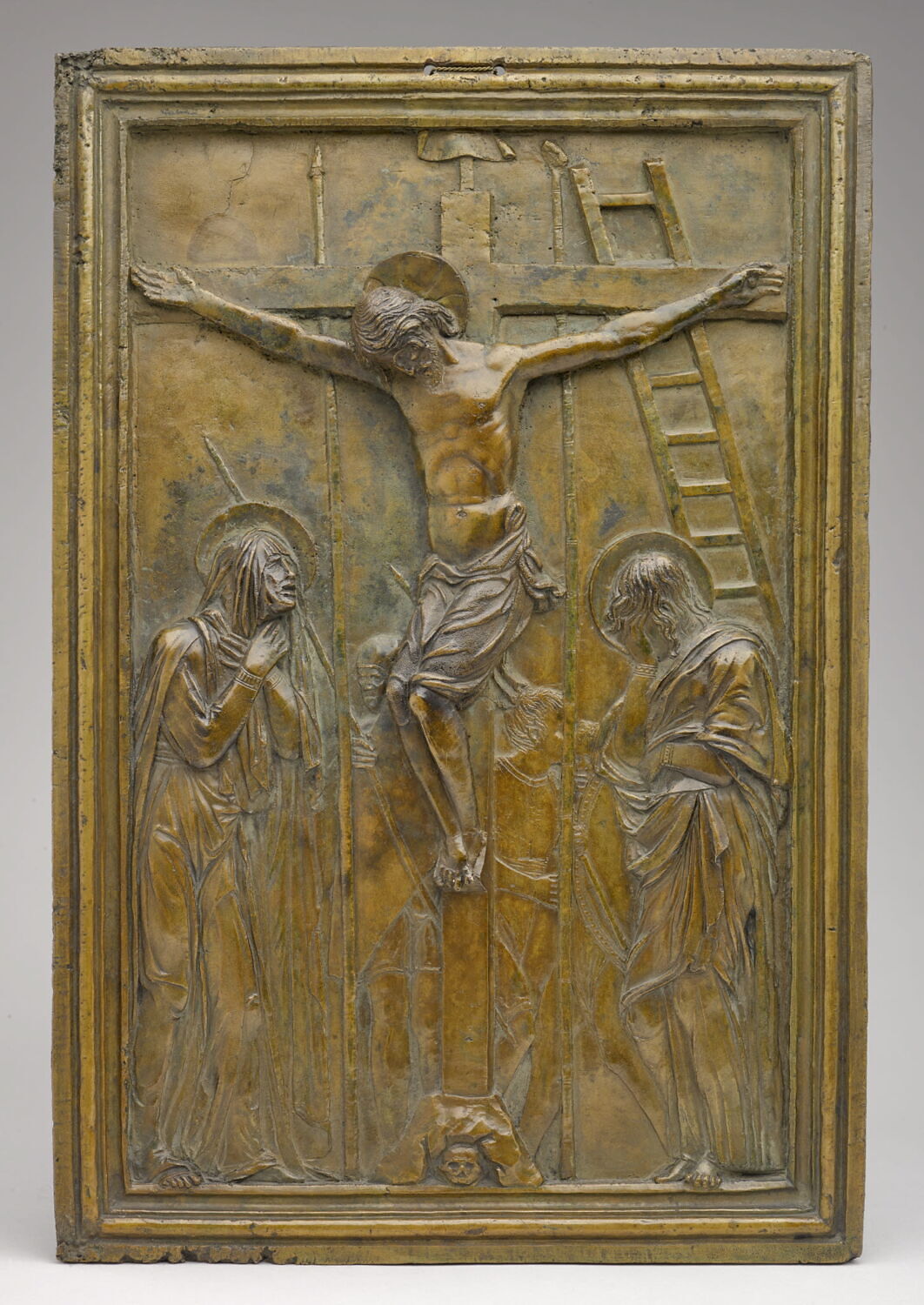
Il Compianto di Cristo è un frammento bronzeo attribuito a Donatello, conservato al Victoria and Albert Museum di Londra. Misura 33,50x41,50 cm ed è databile al periodo senile dell'artista, verso il 1457-1459.
Con le parole del museo
This unusual bronze shows the dead Christ, supported by his mother Mary and encircled by other mourners including St John the Evangelist and Mary Magdalene. It was probably made by Donatello, but we do not know when or for whom. It has been variously dated to Donatello's Florentine period just before he left for Padua in 1453 and to after his return. It has also been suggested that it may be a trial piece for a commission to decorate the doors of Siena cathedral, on which Donatello was working in 1457-9, and has been associated with the bronze relief of approximately this size mentioned in the cathedral records in 1639. The gaps between the figures appear to have been a deliberate feature of the design and may have been intended to allow a background of coloured stone to show through. The surface has been taken to various levels of treatment, enhancing the raw emotion evident in the scene. This perhaps suggests that it was intended as a finished work for private devotion.
Victoria and Albert Museum
Scheda
- Numero di inventario
- 8552-1863
Che cosa raffigura
In catalogo
Fonti
- Victoria and Albert Museum
- Immagine: Victoria and Albert Museum — © Victoria and Albert Museum, London
Nel frattempo, nella vita di Donatello
Tutta la vita1453–1454
Return to Florence and a house by the Duomo
Leaving Padua at the end of 1453, Donatello returned to Florence, but the tastes of the Florentines had changed in his absence, and the return was not easy. On 15 November 1454 he rented a house on Piazza del Duomo, at the corner of Via dei Servi.
1457
Moves to Siena
In 1457 Donatello moved to Siena, probably intending to settle there for the rest of his life; there he worked on a sculpture of John the Baptist, the patron saint of Florence.
1457–1461
Work in Siena: cathedral doors, “John the Baptist”
Between 1457 and 1461 Donatello, now ageing, was active in and for Siena, perhaps contributing mostly designs and modelli rather than carving himself. The bronze doors for the cathedral were never realised, the bronze “John the Baptist” was delivered minus a forearm, and the relief “Madonna delle Grazie” (1459) was largely made by another sculptor, perhaps Urbano da Cortona.