 Henri Edmond CrossFrancia, 1856–1910
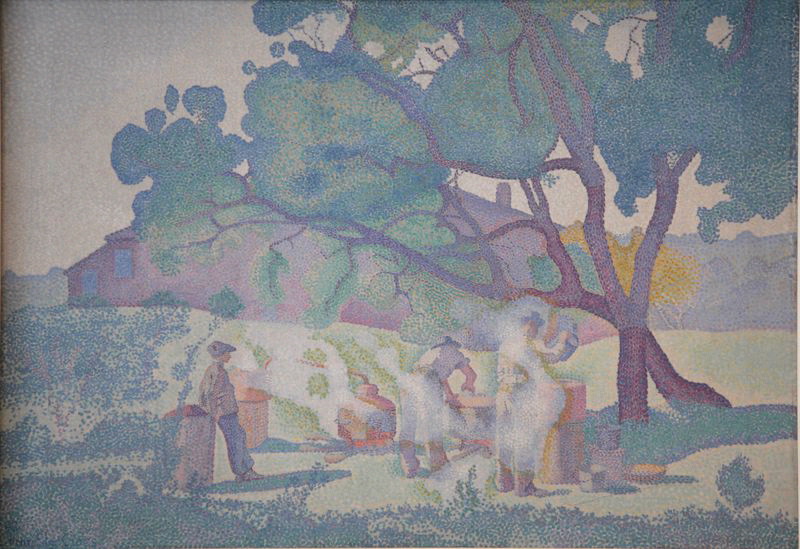
La Ferme, matin
Si può vedere?
Non si sa
Dove si trova «La Ferme, matin» oggi? Collezione: Musée des Beaux-Arts, Nancy. Non si sa.
Nancy, Francia
Il proprietario è noto; non si sa se oggi sia esposta.
- Ultimo cambio di stato
- Fonte
- Il museo
Scheda
- Numero di inventario
- 98.1.1
Che cosa raffigura
In catalogo
Fonti
- Musée des Beaux-Arts
- Immagine: Musée des Beaux-Arts — Delaunay; Ministère de la Culture (France), base Joconde
Nella vita di Henri Edmond Cross
Tutta la vita1890s
Meets Fénéon, Gide and Verhaeren
In the 1890s he works alongside Signac and gets to know the writers and critics Félix Fénéon, André Gide and Emile Verhaeren.
1891
Turns to Neo-Impressionism
In 1891 he begins painting in the Neo-Impressionist style and shows his first large piece in this technique at an Indépendants exhibition — a divisionist portrait of Madame Hector France, née Irma Clare.
1891
Moves to the south of France because of rheumatism
Having wintered in the south for years, he moves there for good in 1891 because of rheumatism. He lives first in Cabasson near Le Lavandou, then settles nearby in the small hamlet of Saint-Clair, where he stays for the rest of his life, leaving only for Italy and for the annual Indépendants exhibitions in Paris.
1892
Signac settles nearby: gatherings in Cross’s garden
His friend Paul Signac moves to nearby Saint-Tropez; in Cross’s garden they often host gatherings attended by Henri Matisse, André Derain and Albert Marquet.
1893
Married: Irma Clare
c. 1895
Moves from Pointillism to a mosaic-like brushstroke
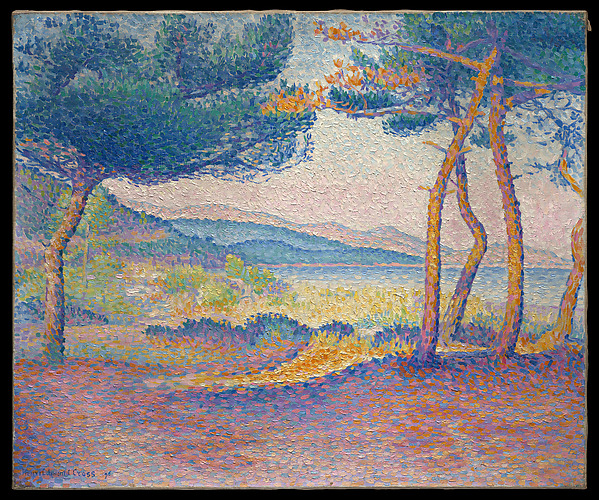
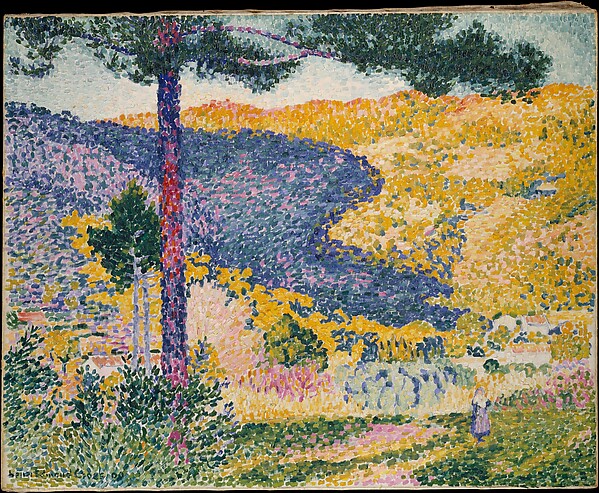
From about 1895 he gradually changes his technique: instead of tiny dots, broad blocky brushstrokes with small areas of bare canvas left between them. The surfaces resemble mosaics, and such paintings are seen as precursors of Fauvism and Cubism.